Crisis in Venezuelan Oil: Arrest of Pedro Tellechea

Venezuela's oil sector is shaken by the arrest of former minister Pedro Tellechea, revealing ongoing political and economic tensions within the industry.

Share:

Comprehensive energy news coverage, updated nonstop

Annual subscription

8.25$/month*

*billed annually at 99$/year for the first year then 149,00$/year ​

Unlimited access • Archives included • Professional invoice

OTHER ACCESS OPTIONS

Monthly subscription

Unlimited access • Archives included

5.2$/month*
then 14.90$ per month thereafter

FREE ACCOUNT

3 articles offered per month

FREE

*Prices are excluding VAT, which may vary depending on your location or professional status

Since 2021: 35,000 articles • 150+ analyses per week

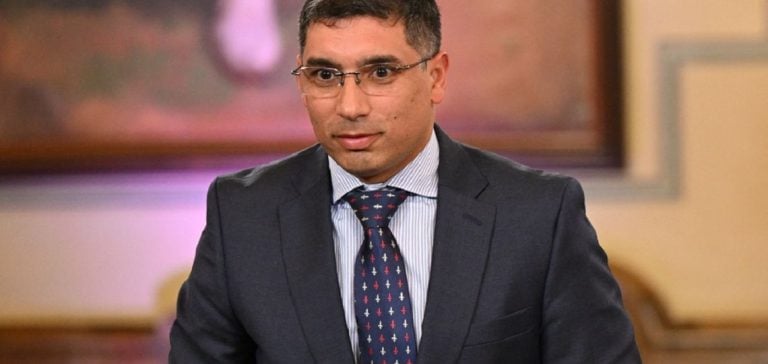
The Venezuelan oil sector, holder of one of the world’s largest reserves, is undergoing a period of major turmoil with the arrest of Pedro Tellechea, former Minister of Petroleum and ex-CEO of Petroleos de Venezuela (PDVSA). This event occurs nearly three months after the country’s controversial presidential election.

Arrest and Accusations

Pedro Tellechea, aged 48 and a career colonel, was apprehended alongside his close collaborators on serious charges targeting the nation’s superior interests. According to a statement from Attorney General Tarek William, the accused allegedly transferred PDVSA’s automated command and control system to a company controlled by United States intelligence services. No additional company names were disclosed in the official announcement.

Political and Economic Context

These arrests come less than three months after the July 28 presidential election, an election in which President Nicolas Maduro was declared the winner despite fraud allegations and opposition claims of victory. Several nations, including the United States and the European Union, refuse to recognize the election results, thereby exacerbating internal political tensions.

Impact on PDVSA and the Oil Sector

Pedro Tellechea had surprised the public in August by leaving his roles as minister and CEO of PDVSA to become Minister of Industry and National Production, replaced at the ministry by Vice President Delcy Rodriguez. President Maduro had praised this appointment, emphasizing the need to rectify PDVSA and revitalize the national industrial fleet. However, this stability appears fragile, as evidenced by Tellechea’s recent ousting by Alex Saab, a Colombian businessman.

Recovery of Oil Production

Under Tellechea’s leadership, Venezuela’s oil production improved, reaching nearly one million barrels of crude oil per day, an unprecedented level in five years. This increase was facilitated by operating licenses granted by the U.S. Treasury to multinationals such as Chevron, Repsol, and Maurel et Prom, allowing operations despite sanctions imposed by the United States. However, the future of these licenses remains uncertain due to internal political tensions and ongoing sanctions.

Scandals and Corruption in PDVSA

Tellechea’s appointment also aimed to cleanse the oil sector in response to the scandal involving former Petroleum Minister Tareck El Aissami. Arrested in April, El Aissami is accused of massive embezzlement, including the black market sale of oil and the use of cryptocurrencies to circumvent U.S. sanctions. Embezzlement estimates amount to approximately $17 billion, with over 60 arrests related to this case.

Repercussions and Prospects

Venezuela’s oil sector remains vulnerable to corruption scandals and political fluctuations. In 2020, oil production had fallen to below 400,000 barrels per day, the lowest in three decades, before rebounding due to recovery efforts. However, Tellechea’s arrest and uncertainties related to U.S. sanctions pose new challenges for the sector’s stability and growth.
The agreement signed with Afreximbank marks a strategic shift for Heirs Energies, aiming to scale up its exploration and production operations on Nigeria's OML 17 oil block.
Oritsemeyiwa Eyesan’s appointment as head of Nigeria’s oil regulator marks a strategic shift as the country targets $10bn in upstream investment through regulatory reform and transparent licensing.
Baghdad states that all international companies operating in Kurdistan’s oil fields must transfer their production to state marketer SOMO, under the agreement signed with Erbil in September.
Chinese oil group CNOOC continues its expansion strategy with a new production start-up in the Pearl River Basin, marking its ninth offshore launch in 2025.
A train carrying over 1,200 tonnes of gasoline produced in Azerbaijan entered Armenia on December 19, marking the first commercial operation since recent conflicts, with concrete implications for regional transit.
Subsea 7 has secured a new extension of its frame agreement with Equinor for subsea inspection, maintenance and repair services through 2027, deploying the Seven Viking vessel on the Norwegian Continental Shelf.
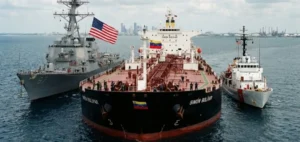
Caracas says Iran has offered reinforced cooperation after the interception of two ships carrying Venezuelan crude, amid escalating tensions with the United States.
US authorities intercepted a second oil tanker carrying Venezuelan crude, escalating pressure on Caracas amid accusations of trafficking and tensions over sanctioned oil exports.
California Resources Corporation completed an all-stock asset transfer with Berry Corporation, strengthening its oil portfolio in California and adding strategic exposure in the Uinta Basin.
The Ugandan government aims to authorise its national oil company to borrow $2 billion from Vitol to fund strategic projects, combining investments in oil infrastructure with support for national logistics needs.
British company BP appoints Meg O'Neill as CEO to lead its strategic refocus on fossil fuels, following the abandonment of its climate ambitions and the early departure of Murray Auchincloss.
The Venezuelan national oil company has confirmed the continuity of its crude exports, as the United States enforces a maritime blockade targeting sanctioned vessels operating around the country.
Baker Hughes will supply advanced artificial lift systems to Kuwait Oil Company to enhance production through integrated digital technologies.
The United States has implemented a full blockade on sanctioned tankers linked to Venezuela, escalating restrictions on the South American country's oil flows.
Deliveries of energy petroleum products fell by 4.5% in November, driven down by a sharp decline in diesel, while jet fuel continues its growth beyond pre-pandemic levels.
ReconAfrica is finalising preparations to test the Kavango West 1X well in Namibia, while expanding its portfolio in Angola and Gabon to strengthen its presence in sub-Saharan Africa.
Shell has reopened a divestment process for its 37.5% stake in Germany's PCK Schwedt refinery, reviving negotiations disrupted by the Russia-Ukraine conflict and Western sanctions.
Aliko Dangote accuses Nigeria’s oil regulator of threatening local refineries by enabling refined fuel imports, while calling for a corruption probe against its director.
Shell Offshore approves a strategic investment to extend the life of the Kaikias field through a waterflood operation, with first injection planned for 2028 from the Ursa platform.
Oil prices drop amid progress in Ukraine talks and expectations of oversupply, pushing West Texas Intermediate below $55 for the first time in nearly five years.

All the latest energy news, all the time

Annual subscription

8.25$/month*

*billed annually at 99$/year for the first year then 149,00$/year ​

Unlimited access - Archives included - Pro invoice

Monthly subscription

Unlimited access • Archives included

5.2$/month*
then 14.90$ per month thereafter

*Prices shown are exclusive of VAT, which may vary according to your location or professional status.

Since 2021: 30,000 articles - +150 analyses/week.