Northvolt Files for Bankruptcy of Its Subsidiary Dedicated to Expanding Its Swedish Factory

Northvolt, the Swedish battery manufacturer, announces the bankruptcy filing of its subsidiary responsible for expanding its Skelleftea factory, impacting 1,600 jobs and slowing its European ambitions.

Share:

Comprehensive energy news coverage, updated nonstop

Annual subscription

8.25$/month*

*billed annually at 99$/year for the first year then 149,00$/year ​

Unlimited access • Archives included • Professional invoice

OTHER ACCESS OPTIONS

Monthly subscription

Unlimited access • Archives included

5.2$/month*
then 14.90$ per month thereafter

FREE ACCOUNT

3 articles offered per month

FREE

*Prices are excluding VAT, which may vary depending on your location or professional status

Since 2021: 35,000 articles • 150+ analyses per week

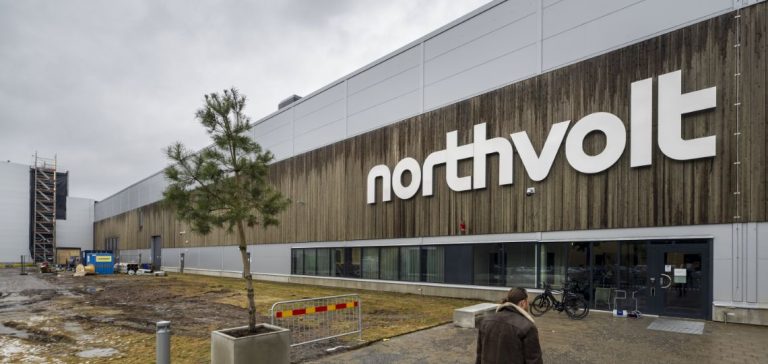
Northvolt, the Swedish battery manufacturer, has officially filed for bankruptcy of its subsidiary responsible for the expansion of its factory located in Skelleftea, northern Sweden. This decision comes as the company faces increasing financial difficulties, jeopardizing its expansion plans and significantly affecting its workforce.

Since its establishment in 2016, Northvolt has positioned itself as one of the promising leaders in the European battery sector, aiming to bridge the continent’s lag behind Asian giants such as CATL, BYD in China, and LG in South Korea. The expansion of the Skelleftea factory was intended to strengthen Northvolt’s production capacity and support the growing demand for batteries for electric vehicles and energy storage solutions.

However, last September, Northvolt had already announced the freezing of the development of this site, also announcing the elimination of 1,600 jobs out of a total of 6,500 within the group. This drastic measure reflects the financial challenges the company is facing, exacerbated by persistent production delays and high operational costs.

Impact on Employees and Suppliers

The bankruptcy filing of the expansion subsidiary will have direct repercussions on the affected employees and the suppliers involved in the project. Northvolt stated that it is in contact with its suppliers and subcontractors to discuss the consequences of this decision and seek appropriate solutions. The suspension of the expansion project works underscores a strategic reevaluation by the company, which is seeking to stabilize its financial situation before pursuing any future growth initiatives.

Northvolt’s Strategic Reorientation

Facing the encountered challenges, Northvolt has decided to refocus its activities on the production of battery cells, thereby abandoning other segments of the production chain such as cathode manufacturing and recycling. This reorientation aims to optimize resources and concentrate on the company’s core business, while seeking to improve efficiency and profitability.

Context of the European Battery Market

Europe is investing heavily to develop its battery industry, aiming to reduce its dependence on Asian suppliers and support the transition to renewable energies. Northvolt, as a European pioneer, plays a crucial role in this dynamic. However, the production delays and financial challenges faced by the company highlight the obstacles that European players must overcome to compete on a global scale.

Future Perspectives

Despite the current difficulties, Northvolt remains determined to pursue its ambition of becoming a European leader in the battery sector. The company is currently exploring various options to restructure its operations and strengthen its financial position. The priority is now to stabilize battery cell production and ensure more rigorous cost management to avoid future setbacks.

Market Reactions

The news of Northvolt’s expansion subsidiary filing for bankruptcy has elicited mixed reactions in the market. Some analysts view this as a sign of the inherent challenges in the European battery industry, while others believe that this strategic reorientation could strengthen Northvolt’s position in the long term. Investors and partners are closely monitoring future developments to assess the company’s ability to overcome this difficult period.
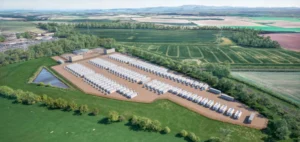
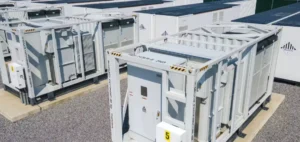
Matrix Renewables has signed a turnkey agreement with Tesla to develop a 1 GWh battery energy storage system in Scotland, marking its first standalone project of this kind in the UK.
China's electricity market overhaul improves the profitability of energy storage, supporting a rapid increase in battery exports as global demand rises with data centres and power grids.
South Korea’s Tilda accelerates its entry into Vietnam with an artificial intelligence-based energy optimisation solution for solar and energy storage systems in the manufacturing sector.
Aegis Critical Energy Defence Corp. and Seetel New Energy have created Cordelia BESS to respond to Ontario’s LT2 call for proposals, aimed at strengthening energy capacity through battery storage.
esVolta finalises investment tax credit transfer for its Black Walnut storage project to Computacenter, marking a first-of-its-kind operation within its California energy portfolio.
Peregrine Energy Solutions has begun construction on a 500 MWh storage project in Texas, relying on Wärtsilä's technology and WHC's engineering expertise to enhance ERCOT grid flexibility.
The world's largest battery energy storage system enters service in Saudi Arabia, with an annual capacity of 2.2 billion kWh spread across three strategic sites in the southwest of the country.
Masdar begins commercial operations at a Stockport battery storage unit and announces two more UK projects, part of a £1bn ($1.25bn) plan for 3GWh of BESS capacity.
Australia-based storage platform Akaysha Energy has launched its first operational project, a 155 MW battery in Queensland, while confirming its expansion to over 1 GWh.
LehmanSoft Japan connected a 2MW/8.1MWh energy storage facility to the grid in Chichibu City, marking its entry into the Japanese stationary storage market.
Akuo launches a large-scale electricity storage project in Boulouparis, with a 200 MWh capacity, to support New Caledonia’s grid stability and reinforce the integration of renewable energies.
Spie and Tesla have signed a framework agreement to install battery electricity storage systems in Europe, focusing on France, Poland and Germany.
The group has won a strategic project with operator Amprion to deploy five 50 MW batteries to ease pressure on the German power grid and optimise electricity transmission.
Vena Energy has begun construction of a 408 MWh battery energy storage system in Tailem Bend, marking a new phase in the deployment of its infrastructure in Australia.
The explosion of battery storage applications in Germany is causing grid congestion and pushing Berlin to revise its regulatory framework to prevent market saturation.
The collapse in storage costs positions batteries as a key lever for dispatchable solar, but dependence on Chinese suppliers creates growing tension between competitiveness and supply chain security.
JA Solar has launched a microgrid combining 5.2 MW of solar and 2.61 MWh of storage at an industrial site in Sicily, marking its first application of the "PV+Storage+X" model in Italy.
Sinexcel has installed a 2MW/8MWh energy storage system in Matsusaka, marking a breakthrough in a regulated market after five years of technical partnerships and gradual deployment in Japan.
Inlyte Energy has successfully completed factory validation testing of its first full-scale iron-sodium battery, witnessed by Southern Company, paving the way for a pilot installation in the United States in early 2026.
Neoen begins construction of a new 305 MW stage in Australia, raising its total battery storage capacity in the country to 2 GW, and signs two additional virtual battery contracts with ENGIE.

All the latest energy news, all the time

Annual subscription

8.25$/month*

*billed annually at 99$/year for the first year then 149,00$/year ​

Unlimited access - Archives included - Pro invoice

Monthly subscription

Unlimited access • Archives included

5.2$/month*
then 14.90$ per month thereafter

*Prices shown are exclusive of VAT, which may vary according to your location or professional status.

Since 2021: 30,000 articles - +150 analyses/week.