France: Debate on the Future Floating Wind Turbine Construction Platform Fos-sur-Mer

The Marseille-Fos port has launched a public consultation on the Deos project, a platform dedicated to the construction of floating wind turbines. The mayor of Fos-sur-Mer has raised concerns about the environmental impact of this initiative.

Share:

Comprehensive energy news coverage, updated nonstop

Annual subscription

8.25$/month*

*billed annually at 99$/year for the first year then 149,00$/year ​

Unlimited access • Archives included • Professional invoice

OTHER ACCESS OPTIONS

Monthly subscription

Unlimited access • Archives included

5.2$/month*
then 14.90$ per month thereafter

FREE ACCOUNT

3 articles offered per month

FREE

*Prices are excluding VAT, which may vary depending on your location or professional status

Since 2021: 35,000 articles • 150+ analyses per week

The Marseille-Fos port has initiated a public consultation for the Deos project, aimed at establishing a platform for the construction and assembly of floating wind turbines in the Mediterranean. The consultation will run from October 14 to December 23, 2024, and seeks to gather feedback from local residents and stakeholders on the implications and integration of this new infrastructure within the industrial-port zone of Fos-sur-Mer (Bouches-du-Rhône). According to port officials, this platform is expected to produce up to 25 wind turbines annually starting in 2028, with the capacity to manufacture concrete or steel floaters, assemble turbines, and manage anchoring systems.

Project proponents estimate that Deos could generate up to 2,000 jobs during its operational phase, aiming to establish an industrial wind turbine sector in France. The project aligns with the national offshore wind development strategy, which targets a production capacity of 18 gigawatts (GW) by 2035, compared to the current 1.5 GW. The Marseille-Fos port aims to play a pivotal role in this expansion by providing infrastructure capable of supporting the deployment of floating wind farms.

Local Challenges and Environmental Impact

René Raimondi, the mayor of Fos-sur-Mer, expressed his concerns during the project presentation, emphasizing that the town is already heavily impacted by industrial and logistical activities. The industrial-port zone of Fos-sur-Mer is currently the second-largest emitter of greenhouse gases in France, a situation frequently criticized by local associations and public authorities. The mayor fears that the addition of this new infrastructure could further deteriorate living conditions and disrupt the ecological balance of the region.

Indeed, the project’s technical documentation highlights that the platform could become a source of atmospheric pollutants and increased noise and vibration levels, potentially affecting natural habitats and marine species. The project’s developers will need to address these local concerns and ensure that the Deos platform adheres to current environmental standards while minimizing disturbances for local communities.

Strategic Positioning for Offshore Wind Development in the Mediterranean

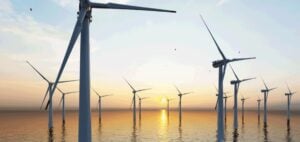
Two floating wind farms are already planned in the Mediterranean: one in Fos-sur-Mer and another in Port-la-Nouvelle, in the Aude region. Each of these farms is expected to produce 250 megawatts (MW) per year, contributing to the national objective of decarbonizing the energy mix. The Mediterranean has been chosen as an expansion zone for floating wind due to favorable maritime conditions, with steady winds and suitable depths for such installations. However, these projects often face local opposition due to their impact on the landscape, fishing, and traditional maritime activities.

For the Marseille-Fos port, successfully implementing the Deos platform is a strategic priority. This infrastructure could strengthen its position as an industrial hub for renewable energies and allow it to diversify its activities beyond its traditional logistics sector. However, local support will largely depend on the port’s ability to demonstrate that this development respects social and environmental balances.

The Role of Wind Energy in France’s Energy Transition

Wind power is currently the third-largest source of electricity production in France, behind nuclear and hydropower. The government has reinforced its commitments to the energy transition, targeting a 40% share of renewables in the electricity mix by 2030. To achieve this goal, offshore wind development is essential, especially in areas where onshore wind farms face geographical and land constraints. Infrastructure like the Deos platform will play a crucial role in supporting this growth.

However, challenges remain. Beyond environmental and neighborhood issues, the French wind industry must also contend with increasing international competition, particularly from Northern European countries that are already advanced in this sector. The success of the Deos project will depend on its ability to integrate into a competitive industrial ecosystem while meeting sustainability and social acceptability requirements.
Ocean Winds has deployed a LiDAR buoy off Gippsland to collect accurate data on wind and currents, a key step in its 1.3 GW offshore wind project in Australia.
TerraWind Renewables acquires five projects totalling 255MW in northern Japan, bringing its onshore wind development capacity to 327MW and targeting first commercial operation in 2028.
A consortium led by EDF power solutions has signed a 20-year agreement with Nama PWP to develop a 120 MW wind farm in southeastern Oman, with commissioning scheduled for Q3 2027.
Microsoft expands its partnership with Iberdrola through two new power purchase agreements in Spain, reinforcing its European energy strategy while deepening the use of cloud and artificial intelligence solutions from the US group.
Casa dos Ventos awards Vestas the supply, construction and maintenance of a 184-turbine complex in the state of Piauí, with an investment exceeding $1.01bn.
Warsaw tests long-term support for offshore wind with a structured tender to maximise competition, reduce financial risk and reassure a supply chain under pressure across Europe.
TotalEnergies has sold 50% of a portfolio of wind and solar projects in Greece to Asterion Industrial Partners, valued at €508mn ($554mn), while retaining operational control and the main share of electricity marketing.
Italy’s offshore wind rollout remains at a standstill, freezing over 18 GW of pending projects and weakening national renewable energy targets.
OX2 has started construction on three new onshore wind farms in Finland, bringing its total installed capacity in the country to 750 MW, a record level for a private energy sector player.
EDF power solutions announces commercial operation of the San Kraal wind farm, the first unit of the 420MW Koruson 1 project, with full commissioning expected in early 2026.
Q ENERGY has announced the entry of three local and citizen-based partners into the capital of the Ventajou wind farm, marking its first strategic equity opening to institutional and community investors.
The Norwegian government has allocated two areas of the Utsira Nord project to the Equinor–Vårgrønn and EDF–Deep Wind Offshore consortia, launching a preparatory phase before a competitive state aid auction.
German group RWE has replaced 27 old turbines with three new high-performance units at its Muel wind farm, doubling energy output and earning ZeroWaste certification.
Synera Renewable Energy Group has signed a long-term power purchase agreement with Taiwan Smart Electricity & Energy, securing a portion of generation from the Formosa 4 wind farm.
Italian group Agsm Aim has completed the acquisition of four wind farms in Apulia totalling 52.6 MW, marking a new step in its national growth strategy in the renewable energy production sector.
Twenty-five years after the opening of the first offshore wind farm at Blyth, offshore wind now provides nearly a fifth of the United Kingdom’s electricity and supports a domestic industry employing 40,000 people.
Edison plans to launch over 500 MW of new wind and solar construction sites in Italy in 2026, backed by a €600mn ($647mn) investment, as part of its strategic growth plan in renewable energy.
GE Vernova will equip the Gurbanesti wind farm with 42 onshore 6.1 MW turbines in a second deal with Greenvolt in Romania, consolidating a combined capacity of around 500 MW.
RWE has secured contracts for four renewable energy projects totalling 68 MW in Italy, with construction set to begin in 2026, reinforcing its expansion strategy in the market.
RWE and TotalEnergies will install 66 Reef cubes® around the foundations of 11 turbines at the OranjeWind wind farm, marking one of the largest applications of artificial reefs in the North Sea.

All the latest energy news, all the time

Annual subscription

8.25$/month*

*billed annually at 99$/year for the first year then 149,00$/year ​

Unlimited access - Archives included - Pro invoice

Monthly subscription

Unlimited access • Archives included

5.2$/month*
then 14.90$ per month thereafter

*Prices shown are exclusive of VAT, which may vary according to your location or professional status.

Since 2021: 30,000 articles - +150 analyses/week.