Sweden revises its offshore wind strategy to unblock certain projects

Sweden, despite its considerable offshore wind energy potential, is struggling to structure the development of its projects. The lack of financial support and strategic planning is slowing down the implementation of installations.

Share:

Comprehensive energy news coverage, updated nonstop

Annual subscription

8.25$/month*

*billed annually at 99$/year for the first year then 149,00$/year ​

Unlimited access • Archives included • Professional invoice

OTHER ACCESS OPTIONS

Monthly subscription

Unlimited access • Archives included

5.2$/month*
then 14.90$ per month thereafter

FREE ACCOUNT

3 articles offered per month

FREE

*Prices are excluding VAT, which may vary depending on your location or professional status

Since 2021: 35,000 articles • 150+ analyses per week

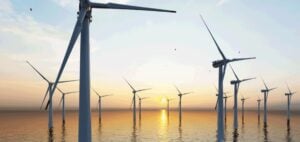
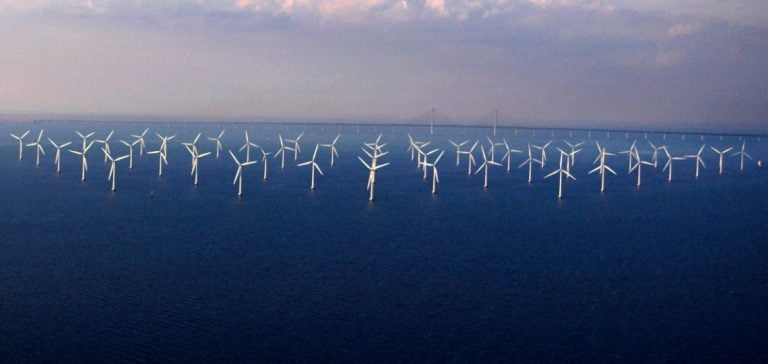
Sweden is at a decisive crossroads in the development of offshore wind power. Although the country has considerable offshore energy potential, the current licensing framework is ill-suited to the specificities of the sector.
Unlike countries such as Denmark and Germany, Sweden has yet to establish a structured, transparent system for offshore wind development.
Today, tens of gigawatts of projects are on hold, held back by poorly coordinated planning processes and late decisions by the relevant authorities.
Sweden currently uses an “open door” system, allowing companies to submit their own proposals for the development of offshore sites.
However, this model creates competition for often identical sea areas, leading to long delays and conflicts of interest between developers.
To date, only 2 GW have been licensed out of a total of over 100 GW of proposals submitted.

Rethinking the planning model

Faced with these stumbling blocks, the Swedish government has commissioned a team of advisors led by Magnus Hermansson, a judge at the Land and Environmental Court, to propose a new planning model.
This model could be inspired by systems used in other European countries, where governments designate specific areas for offshore development and award permits via competitive auction processes.
Developers such as OX2 are concerned about the impact of a change of system on projects already underway.
They point out that they have already invested considerable resources in advancing these initiatives within the existing regulatory framework.
A transition to a new planning model could result in significant economic losses for these players, requiring measures to preserve current projects.

Persistent financial challenges

In addition to planning issues, the main obstacle to offshore wind development in Sweden is the lack of financial support mechanisms.
Unlike other European markets such as the UK, where Contracts for Difference (CfDs) stabilize developers’ revenues, Sweden does not yet offer a comparable financial framework.
What’s more, grid connection costs, often borne by the state in other countries, are still borne by developers in Sweden.
This situation has recently led to the suspension of major projects.
Vattenfall, for example, has put its Kriegers Flak wind project on hold due to a lack of funding for connection infrastructure.
The question of financial incentives is therefore becoming central to the debate on the future of Swedish offshore wind power.
Without clear government support, it is difficult for companies to ensure the profitability of these projects in an environment where investment costs are high.

A competing strategy: nuclear power

At the same time, the Swedish government seems to be favoring a nuclear revival.
In August, the authorities unveiled a plan to finance the construction of 10 new nuclear reactors by 2045.
This project is based on a mechanism of contracts for difference and state-guaranteed loans, ensuring a minimum return on investment for the private players involved.
This approach contrasts sharply with the absence of similar support for offshore wind power.
Sweden plans to double its electricity consumption by 2045 in response to the increase in industrial projects aimed at decarbonization.
However, whether offshore wind or nuclear power will be the main source of energy for this expansion remains an open question.
Although nuclear power offers a credible alternative, it faces major financial and technical obstacles.
New reactors in Europe frequently face cost overruns and delays, making delivery uncertain.

Towards energy complementarity

Against this backdrop, players in the offshore wind industry are advocating a complementary mix of energy sources.
According to Emelie Zakrisson, Offshore Wind Director at OX2, Sweden cannot afford to neglect offshore wind at a time when the country is seeking to decarbonize its industry.
Wind power could play a key role in the energy transition, not least thanks to shorter commissioning times than new nuclear power plants.
However, the debate over the distribution of public subsidies between nuclear and wind power remains open.
With the recent introduction of financial support for onshore wind power projects, a similar extension for offshore wind power could reinvigorate the sector.
For the time being, no concrete decisions have been taken on such measures.
Sweden must now choose between maintaining a path towards nuclear power or diversifying its investments into renewable energies such as offshore wind.
The challenge is to strike a balance between long-term energy security and short-term return on investment.
Ocean Winds has deployed a LiDAR buoy off Gippsland to collect accurate data on wind and currents, a key step in its 1.3 GW offshore wind project in Australia.
TerraWind Renewables acquires five projects totalling 255MW in northern Japan, bringing its onshore wind development capacity to 327MW and targeting first commercial operation in 2028.
A consortium led by EDF power solutions has signed a 20-year agreement with Nama PWP to develop a 120 MW wind farm in southeastern Oman, with commissioning scheduled for Q3 2027.
Microsoft expands its partnership with Iberdrola through two new power purchase agreements in Spain, reinforcing its European energy strategy while deepening the use of cloud and artificial intelligence solutions from the US group.
Casa dos Ventos awards Vestas the supply, construction and maintenance of a 184-turbine complex in the state of Piauí, with an investment exceeding $1.01bn.
Warsaw tests long-term support for offshore wind with a structured tender to maximise competition, reduce financial risk and reassure a supply chain under pressure across Europe.
TotalEnergies has sold 50% of a portfolio of wind and solar projects in Greece to Asterion Industrial Partners, valued at €508mn ($554mn), while retaining operational control and the main share of electricity marketing.
Italy’s offshore wind rollout remains at a standstill, freezing over 18 GW of pending projects and weakening national renewable energy targets.
German manufacturer Nordex has secured an order for 34 turbines for a 200 MW project in the Canadian province of New Brunswick, marking its first entry into this region.
OX2 has started construction on three new onshore wind farms in Finland, bringing its total installed capacity in the country to 750 MW, a record level for a private energy sector player.
Italian group Enel has acquired two onshore wind farms in Germany for an enterprise value of €80mn ($86.5mn), strengthening its presence in a stable and strategic market as part of a targeted asset transfer.
EDF power solutions announces commercial operation of the San Kraal wind farm, the first unit of the 420MW Koruson 1 project, with full commissioning expected in early 2026.
Q ENERGY has announced the entry of three local and citizen-based partners into the capital of the Ventajou wind farm, marking its first strategic equity opening to institutional and community investors.
The Norwegian government has allocated two areas of the Utsira Nord project to the Equinor–Vårgrønn and EDF–Deep Wind Offshore consortia, launching a preparatory phase before a competitive state aid auction.
German group RWE has replaced 27 old turbines with three new high-performance units at its Muel wind farm, doubling energy output and earning ZeroWaste certification.
Synera Renewable Energy Group has signed a long-term power purchase agreement with Taiwan Smart Electricity & Energy, securing a portion of generation from the Formosa 4 wind farm.
Italian group Agsm Aim has completed the acquisition of four wind farms in Apulia totalling 52.6 MW, marking a new step in its national growth strategy in the renewable energy production sector.
Twenty-five years after the opening of the first offshore wind farm at Blyth, offshore wind now provides nearly a fifth of the United Kingdom’s electricity and supports a domestic industry employing 40,000 people.
Edison plans to launch over 500 MW of new wind and solar construction sites in Italy in 2026, backed by a €600mn ($647mn) investment, as part of its strategic growth plan in renewable energy.
GE Vernova will equip the Gurbanesti wind farm with 42 onshore 6.1 MW turbines in a second deal with Greenvolt in Romania, consolidating a combined capacity of around 500 MW.

All the latest energy news, all the time

Annual subscription

8.25$/month*

*billed annually at 99$/year for the first year then 149,00$/year ​

Unlimited access - Archives included - Pro invoice

Monthly subscription

Unlimited access • Archives included

5.2$/month*
then 14.90$ per month thereafter

*Prices shown are exclusive of VAT, which may vary according to your location or professional status.

Since 2021: 30,000 articles - +150 analyses/week.