DRC: An oil terminal launched in Goma to better supply Eastern DRC

The Democratic Republic of Congo is strengthening its energy infrastructure with a new oil terminal in Goma, designed to stabilize fuel supplies in the east of the country and reduce distribution costs.

Share:

Comprehensive energy news coverage, updated nonstop

Annual subscription

8.25$/month*

*billed annually at 99$/year for the first year then 149,00$/year ​

Unlimited access • Archives included • Professional invoice

OTHER ACCESS OPTIONS

Monthly subscription

Unlimited access • Archives included

5.2$/month*
then 14.90$ per month thereafter

FREE ACCOUNT

3 articles offered per month

FREE

*Prices are excluding VAT, which may vary depending on your location or professional status

Since 2021: 35,000 articles • 150+ analyses per week

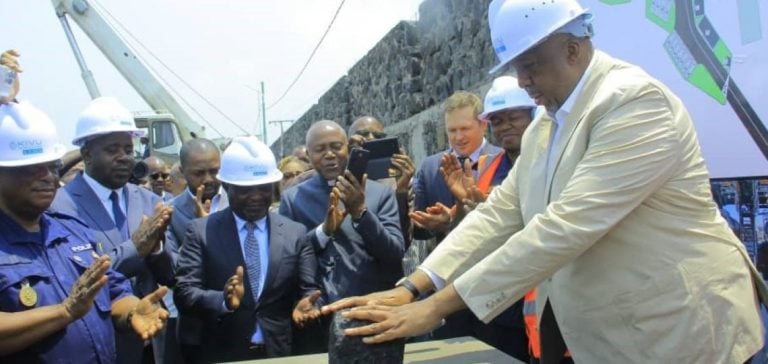
The Democratic Republic of Congo (DRC) is developing a strategic project to improve fuel supply capacity in the Eastern region, an area often affected by recurring shortages and price fluctuations. The oil terminal under construction in Goma is part of a national strategy to strengthen energy infrastructures, within the framework of a public-private partnership between the State and KPS LOG.
The terminal, dedicated to the storage of land-based and aviation petroleum products, aims to streamline the logistics chain and secure supplies, thereby reducing the costs associated with fuel distribution.
With an operational capacity of 9 million liters and a surface area of 4 hectares, the terminal will enable us to better manage fluctuating fuel needs in the Eastern region, while improving the resilience of the oil sector in the face of logistical challenges.
By relying on modernized infrastructure, the DRC aims to avoid supply interruptions that disrupt economic and industrial activities in this strategic area of the country.

The terminal’s economic and logistical objectives

The new Goma terminal meets a pressing need: to improve the efficiency of transport and storage of petroleum products.
The eastern part of the DRC, due to its landlocked geographical position, is particularly vulnerable to variations in fuel prices, with direct repercussions on the cost of living and the competitiveness of local businesses.
This terminal should help to stabilize these fluctuations, by offering a reliable storage and distribution solution tailored to the needs of businesses and individuals in the region.
Hydrocarbons Minister Aimé Molendo Sakombi emphasizes that this project is part of the government’s roadmap to modernize the DRC’s oil sector.
The aim is to guarantee a more stable supply at lower cost for local companies, while improving the transparency of fuel flows.
In a country where energy infrastructures often remain dilapidated, this terminal symbolizes a commitment to transformation, fostering more robust economic development in the eastern region.

Cutting-edge technology and fraud prevention

In addition to its storage capacity, the Goma terminal will incorporate advanced technologies to meet international standards in terms of safety and fuel flow management.
The site’s equipment will comply with the standards set by the American Petroleum Institute (API), guaranteeing a high level of operational reliability.
Among the innovations planned, a real-time oil flow monitoring system will be implemented, designed to minimize the risk of fraud.
This initiative is in line with a broader program of molecular marking of petroleum products, launched by the Congolese government to combat smuggling and optimize public revenues.
This anti-fraud program is crucial in a country where losses linked to illicit practices in fuel distribution remain high.
By integrating these technologies, the Goma project aims to enhance transparency in the oil sector, thereby attracting more investment and promoting stability of supply.

Economic impact for local players

The Goma terminal represents a major opportunity for local businesses and economic operators, offering modern infrastructure that will improve inventory management and facilitate logistics for companies in the region.
Greater efficiency in the distribution of petroleum products will enable companies to better control their operating costs, and thus improve their competitiveness on the regional market.
The DRC, rich in natural resources, is looking to exploit its energy potential more strategically, by improving its infrastructure to attract more investment in the hydrocarbon sector.
By streamlining fuel supply, the Goma terminal represents a key step towards better management of the country’s oil resources, while ensuring greater price stability for local consumers.
Strengthening energy supplies also sends a strong signal to international players, particularly those investing in the DRC’s hydrocarbon sector.
By offering infrastructure in line with international standards, the DRC is positioning itself as a reliable partner, capable of meeting the requirements of economic players operating in the region.

Woodbridge Ventures II Inc. signs definitive agreement with Greenflame Resources for a transformative merger, alongside a concurrent financing of up to $10mn.
Interceptions of ships linked to Venezuelan oil are increasing, pushing shipowners to suspend operations as PDVSA struggles to recover from a cyberattack that disrupted its logistical systems.
Harbour Energy acquires US offshore operator LLOG for $3.2bn, adding 271 million barrels in reserves and establishing a fifth operational hub in the Gulf of Mexico.
The agreement signed with Afreximbank marks a strategic shift for Heirs Energies, aiming to scale up its exploration and production operations on Nigeria's OML 17 oil block.
Oritsemeyiwa Eyesan’s appointment as head of Nigeria’s oil regulator marks a strategic shift as the country targets $10bn in upstream investment through regulatory reform and transparent licensing.
Baghdad states that all international companies operating in Kurdistan’s oil fields must transfer their production to state marketer SOMO, under the agreement signed with Erbil in September.
Chinese oil group CNOOC continues its expansion strategy with a new production start-up in the Pearl River Basin, marking its ninth offshore launch in 2025.
A train carrying over 1,200 tonnes of gasoline produced in Azerbaijan entered Armenia on December 19, marking the first commercial operation since recent conflicts, with concrete implications for regional transit.
Subsea 7 has secured a new extension of its frame agreement with Equinor for subsea inspection, maintenance and repair services through 2027, deploying the Seven Viking vessel on the Norwegian Continental Shelf.
Caracas says Iran has offered reinforced cooperation after the interception of two ships carrying Venezuelan crude, amid escalating tensions with the United States.
US authorities intercepted a second oil tanker carrying Venezuelan crude, escalating pressure on Caracas amid accusations of trafficking and tensions over sanctioned oil exports.
California Resources Corporation completed an all-stock asset transfer with Berry Corporation, strengthening its oil portfolio in California and adding strategic exposure in the Uinta Basin.
The Ugandan government aims to authorise its national oil company to borrow $2 billion from Vitol to fund strategic projects, combining investments in oil infrastructure with support for national logistics needs.
British company BP appoints Meg O'Neill as CEO to lead its strategic refocus on fossil fuels, following the abandonment of its climate ambitions and the early departure of Murray Auchincloss.
The Venezuelan national oil company has confirmed the continuity of its crude exports, as the United States enforces a maritime blockade targeting sanctioned vessels operating around the country.
Baker Hughes will supply advanced artificial lift systems to Kuwait Oil Company to enhance production through integrated digital technologies.
The United States has implemented a full blockade on sanctioned tankers linked to Venezuela, escalating restrictions on the South American country's oil flows.
Deliveries of energy petroleum products fell by 4.5% in November, driven down by a sharp decline in diesel, while jet fuel continues its growth beyond pre-pandemic levels.
ReconAfrica is finalising preparations to test the Kavango West 1X well in Namibia, while expanding its portfolio in Angola and Gabon to strengthen its presence in sub-Saharan Africa.
Shell has reopened a divestment process for its 37.5% stake in Germany's PCK Schwedt refinery, reviving negotiations disrupted by the Russia-Ukraine conflict and Western sanctions.

All the latest energy news, all the time

Annual subscription

8.25$/month*

*billed annually at 99$/year for the first year then 149,00$/year ​

Unlimited access - Archives included - Pro invoice

Monthly subscription

Unlimited access • Archives included

5.2$/month*
then 14.90$ per month thereafter

*Prices shown are exclusive of VAT, which may vary according to your location or professional status.

Since 2021: 30,000 articles - +150 analyses/week.