Pipeline fire in La Porte Impact on the natural gas liquids market

A fire on an Energy Transfer pipeline in La Porte, Texas, has raised concerns about infrastructure safety and impacted the natural gas liquids market. The economic and regulatory consequences of this incident deserve particular attention.

Share:

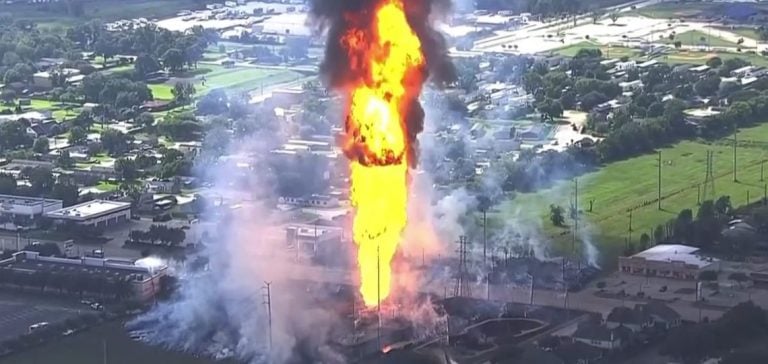
Vue de l'incendie de la pipeline près de Houston

Comprehensive energy news coverage, updated nonstop

Annual subscription

8.25€/month*

*billed annually at 99€/year for the first year then 149,00€/year ​

Unlimited access • Archives included • Professional invoice

OTHER ACCESS OPTIONS

Monthly subscription

Unlimited access • Archives included

5.2€/month*
then 14.90€ per month thereafter

FREE ACCOUNT

3 articles offered per month

FREE

*Prices are excluding VAT, which may vary depending on your location or professional status

Since 2021: 35,000 articles • 150+ analyses per week

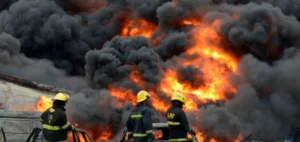
A fire on an Energy Transfer natural gas liquids pipeline has been raging for three days in La Porte, Texas.
The fire, which began earlier this week, continues to burn in a controlled manner, allowing the company to manage the situation without danger to the surrounding population.
Authorities were forced to evacuate the area due to the scale of the fire, which also caused power outages for thousands of homes and businesses.
Energy Transfer implemented measures to isolate the pipeline, allowing product residues to burn off safely.
The fire was triggered by a car accident on an above-ground pipeline tap.
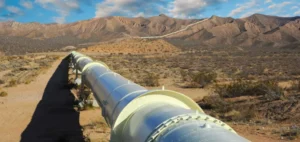
Analysts at investment firm Tudor, Pickering, Holt & Co. suggested that the incident might involve the Justice pipeline, a 20-inch conduit that connects Energy Transfer’s Liberty and West Texas Gateway pipelines.
Although the company has yet to confirm the name or capacity of the pipeline involved, the implications of this incident for the natural gas liquids market are already palpable.

Impact on the natural gas liquids market

The Justice pipeline, commissioned in 2012, has a capacity of 375,000 barrels per day and transports a blend of natural gas liquids, known as Y-grade, from the Permian and Eagle Ford shale fields.
This mixture includes components such as ethane, propane, butane, isobutane and natural gasoline, which are essential for various industrial and commercial applications.
The disruption caused by the fire has already had an impact on gas liquids prices, with propane up 7% and butane up 10% since markets closed last Friday.
Analysts believe that Energy Transfer will be able to leverage its extensive network, including its storage assets and the Lone Star NGL line, to mitigate the effects of this service interruption.
The company’s ability to manage this crisis is crucial, not only for its operations, but also for the stability of the natural gas liquids market as a whole.

Safety and regulatory implications

This incident also raises questions about the safety of pipeline infrastructures and safety regulations.
Accidents involving pipelines can have serious environmental and economic consequences.
Regulators may need to reassess current safety standards, particularly for pipelines located in densely populated areas.
Companies in the sector must also prepare for stricter audits and increased surveillance of their operations.
As one pipeline safety expert points out, “incidents like this highlight the need for constant vigilance and updated safety protocols to prevent future accidents.”

Future prospects

As the fire subsides, Energy Transfer is focusing on implementing solutions to extinguish the fire and begin the necessary repairs.
The company has announced that, once the insulation equipment has been installed, it will purge a section of the pipeline with nitrogen to extinguish the fire.
This approach demonstrates a willingness to quickly restore operations while ensuring the safety of workers and surrounding communities.
Recent events underline the importance of proactive risk management in the energy sector.
As the energy transition and decarbonization gain momentum, companies must navigate a complex landscape where safety, regulation and profitability are interconnected.
The lessons learned from this incident could influence future practices and safety policies across the industry.
The repercussions of this fire on the natural gas liquids market and on the perception of pipeline safety could also prompt investors to reconsider their strategies in the sector.
Companies must therefore remain vigilant and adaptable in the face of an ever-changing environment.
The ban on Russian liquefied natural gas requires a legal re-evaluation of LNG contracts, where force majeure, change-in-law and logistical restrictions are now major sources of disputes and contractual repricing.
Morocco plans to commission its first liquefied natural gas terminal in Nador by 2027, built around a floating unit designed to strengthen national import capacity.
An explosion on December 10 on the Escravos–Lagos pipeline forced NNPC to suspend operations, disrupting a crucial network supplying gas to power stations in southwestern Nigeria.
At an international forum, Turkmenistan hosted several regional leaders to discuss commercial cooperation, with a strong focus on gas and alternative export corridors.
The Australian government has launched the opening of five offshore gas exploration blocks in the Otway Basin, highlighting a clear priority for southeast supply security amid risks of shortages by 2028, despite an ambitious official climate policy.
BlackRock sold 7.1% of Spanish company Naturgy for €1.7bn ($1.99bn) through an accelerated bookbuild managed by JPMorgan, reducing its stake to 11.42%.
The British company begins the initial production phase of Morocco's Tendrara gas field, activating a ten-year contract with Afriquia Gaz amid phased technical investments.
The Energy Information Administration revises its gas price estimates upward for late 2025 and early 2026, in response to strong consumption linked to a December cold snap.
Venture Global denies Shell’s claims of fraud in an LNG cargo arbitration and accuses the oil major of breaching arbitration confidentiality.
The Valera LNG carrier delivered a shipment of liquefied natural gas (LNG) from Portovaya, establishing a new energy route between Russia and China outside Western regulatory reach.
South Stream Transport B.V., operator of the offshore section of the TurkStream pipeline, has moved its headquarters from Rotterdam to Budapest to protect itself from further legal seizures amid ongoing sanctions and disputes linked to Ukraine.
US LNG exports are increasingly bypassing the Panama Canal in favour of Europe, seen as a more attractive market than Asia in terms of pricing, liquidity and logistical reliability.
Indian Oil Corporation has issued a tender for a spot LNG cargo to be delivered in January 2026 to Dahej, as Asian demand weakens and Western restrictions on Russian gas intensify.
McDermott has secured a major engineering, procurement, construction, installation and commissioning contract for a strategic subsea gas development offshore Brunei, strengthening its presence in the Asia-Pacific region.
The partnership between Fluor and JGC has handed over LNG Canada's second liquefaction unit, completing the first phase of the major gas project on Canada’s west coast.
Northern Oil and Gas and Infinity Natural Resources invest $1.2bn to acquire Utica gas and infrastructure assets in Ohio, strengthening NOG’s gas profile through vertical integration and high growth potential.
China has received its first liquefied natural gas shipment from Russia’s Portovaya facility, despite growing international sanctions targeting Russian energy exports.
Brazil’s natural gas market liberalisation has led to the migration of 13.3 million cubic metres per day, dominated by the ceramics and steel sectors, disrupting the national competitive balance.
Sasol has launched a new gas processing facility in Mozambique to secure fuel supply for the Temane thermal power plant and support the national power grid’s expansion.
With the addition of Nguya FLNG to Tango, Eni secures 3 mtpa of capacity in Congo, locking in non-Russian volumes for Italy and positioning Brazzaville within the ranks of visible African LNG exporters.

All the latest energy news, all the time

Annual subscription

8.25€/month*

*billed annually at 99€/year for the first year then 149,00€/year ​

Unlimited access - Archives included - Pro invoice

Monthly subscription

Unlimited access • Archives included

5.2€/month*
then 14.90€ per month thereafter

*Prices shown are exclusive of VAT, which may vary according to your location or professional status.

Since 2021: 30,000 articles - +150 analyses/week.