Germany suspends carbon credits in China on suspicion of massive fraud

Germany blocks emission reduction certificates for projects in China after detecting irregularities, calling into question the reliability of carbon offsets on the European market.

Share:

Logo de

Comprehensive energy news coverage, updated nonstop

Annual subscription

8.25$/month*

*billed annually at 99$/year for the first year then 149,00$/year ​

Unlimited access • Archives included • Professional invoice

OTHER ACCESS OPTIONS

Monthly subscription

Unlimited access • Archives included

5.2$/month*
then 14.90$ per month thereafter

FREE ACCOUNT

3 articles offered per month

FREE

*Prices are excluding VAT, which may vary depending on your location or professional status

Since 2021: 35,000 articles • 150+ analyses per week

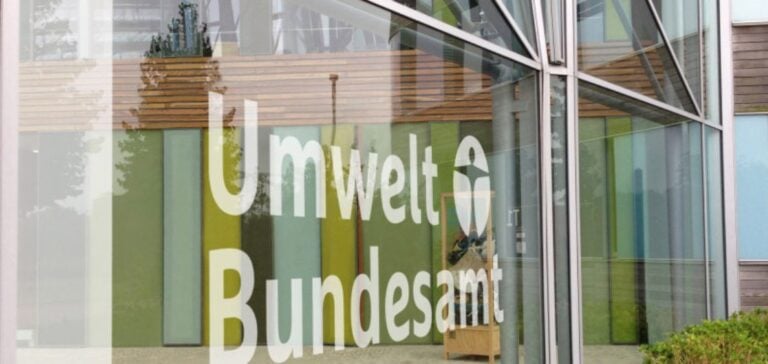
Germany’s Federal Environment Agency (Umweltbundesamt, UBA) has suspended the award of reduced emissions certificates for eight Chinese carbon offset projects following the discovery of serious “irregularities”.
These projects, designed to reduce the CO2 emissions of European companies by financing initiatives abroad, failed to meet transparency and verification requirements.
Some projects, involving oil companies, were never carried out, while others exaggerated the results obtained.
These irregularities led to the immediate suspension of certificates for seven projects presenting “legal and technical inconsistencies”, as well as for an eighth project for non-compliance with validation rules.
The UBA has extended its investigations to 40 of the 69 emission reduction projects in China.
Twenty-one of these projects are under strong suspicion of fraud, prompting UBA to enlist the help of an international law firm to determine the extent of manipulation.
In collaboration with the Berlin public prosecutor’s office, UBA is seeking to clarify the responsibilities and potential implications of these irregularities, which could seriously affect the validity of carbon credits used on the European market.

Compensation mechanisms and verification failures

Carbon credits, as defined by the Kyoto Protocol’s Emission Reduction Units (ERUs), enable companies to offset their CO2 emissions by financing projects abroad.
These credits must represent real, verifiable reductions in greenhouse gas emissions.
However, recent events in Germany have highlighted major flaws in the validation processes for these credits, particularly when audits are carried out by private bodies.
Several companies specializing in environmental audits have also been targeted, following searches carried out last July at the request of the Berlin public prosecutor’s office.
These actions illustrate the authorities’ determination to improve supervision of these projects, often criticized for their opacity and lack of transparency.
Weaknesses in the validation of carbon credits raise serious questions about the reliability of these market instruments, which are crucial to achieving international climate targets.
The potential financial damage of this fraud is estimated at 4.5 billion euros, an amount based on unpaid fines by companies that have falsified their emissions reduction reports.
This situation has prompted the UBA to suspend the approval of new emission reduction projects in China since July 1, in a bid to restore confidence in carbon offset mechanisms.

Financial and regulatory implications

Germany’s freeze on carbon credits highlights the risks associated with delegating audits to potentially non-independent entities.
German and European regulators are increasingly being called upon to review project validation criteria and tighten the conditions for awarding carbon credits.
The market’s credibility depends on the authorities’ ability to implement more rigorous transparency and verification measures to prevent abuses.
The voluntary carbon credit market, already weakened by dubious practices, could also be affected by this crisis of confidence.
Credit prices and liquidity have been impacted, and lower-quality projects are facing increasing criticism.
Solutions such as diversifying offset methods, including methane collection and technological carbon capture projects, are being considered, but require rigorous audits and solid proof of emission reductions to maintain their credibility.

Outlook for the European carbon credit market

Revelations of carbon credit fraud in China are prompting regulators to adopt stricter measures and strengthen their validation requirements.
Cooperation between regulators, governments and companies will be essential to ensure the integrity of carbon offset mechanisms.
The market must adapt to more rigorous regulation, where compliance and transparency will be indispensable criteria.
Companies must be prepared for more frequent audits and stiffer penalties in the event of non-compliance.
The European carbon credit market, essential to strategies to combat climate change, must regain the confidence of investors and industry players alike.
Tighter regulation, combined with more rigorous monitoring, could help stabilize this fast-growing but still vulnerable market.


Gevo receives high-quality assessment for its carbon capture credits in North Dakota, strengthening the commercial value of its certificates in the voluntary carbon markets.
Technip Energies has secured a detailed engineering contract for a carbon capture and storage project led by PTTEP, marking a key industrial milestone in the Gulf of Thailand.
The United Kingdom opens 14 new offshore geological storage zones, creating an industrial decarbonisation corridor and securing long-term capacity for domestic and European heavy industry.
Green Plains has begun sequestering carbon dioxide from its three Nebraska facilities via a pipeline to Wyoming, while receiving a first $14mn payment under the 45Z tax credit programme.
Japan's JERA has entered a strategic partnership with Newlab in New Orleans to fast-track the commercialisation of carbon capture solutions for power generation facilities.
The Canadian start-up has secured financing to complete a C$13.6mn project aimed at converting captured CO₂ and natural gas into high-value carbon nanofibres.
CO₂ removal techniques are moving from lab-scale to national and corporate strategies, but their development remains constrained without a clear legal framework and targeted incentives on the carbon market.
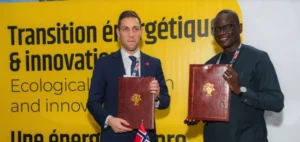
Norway plans up to $740mn to fund verified emission reductions, supporting Senegal’s entry into cooperation frameworks under the Paris Agreement.
Technip Energies strengthens its role in the Northern Lights project in Norway by supplying electric marine equipment for the transfer of liquefied CO2 at the Øygarden terminal.
An NGO identified 531 participants linked to carbon capture and storage technologies at COP30, illustrating the growing strategic interest of industry players in this technical lever within climate negotiations.
Driven by rising demand from China and India, the global carbon neutrality market is expected to grow by 7.3 % annually through 2035, supported by sustained investment in capture technologies.
Japan plans to increase its carbon capture, utilisation and storage capacity thirtyfold by 2035, but reliance on cross-border infrastructure may delay the government’s targets.
PETRONAS secures Malaysia’s first CCS permit and strengthens its upstream presence in Suriname, aligning an integrated strategy between CO₂ capture and low-cost offshore exploration.
The Peruvian government announces a 179 million tonne emissions target by 2035, integrating carbon market tools and international transfers to reach its climate goal.
The Paris Agreement Crediting Mechanism formalizes a landfill-methane methodology, imposes an investment-based additionality test, and governs issuance of traceable units via a central registry, with host-country authorizations and corresponding adjustments required.
Sinopec and BASF have reached a mutual recognition agreement on their carbon accounting methods, certified as compliant with both Chinese and international standards, amid growing industrial standardisation efforts.
NorthX Climate Tech strengthens its portfolio by investing in four carbon dioxide removal companies, reinforcing Canada’s position in a rapidly expanding global market.
With dense industrial activity and unique geological potential, Texas is attracting massive investment in carbon capture and storage, reinforced by new federal tax incentives.
GE Vernova and YTL PowerSeraya will assess the feasibility of capturing 90% of CO₂ emissions at a planned 600-megawatt gas-fired power plant in Singapore.
The carbon removal technology sector is expanding rapidly, backed by venture capital and industrial projects, yet high costs remain a significant barrier to scaling.

All the latest energy news, all the time

Annual subscription

8.25$/month*

*billed annually at 99$/year for the first year then 149,00$/year ​

Unlimited access - Archives included - Pro invoice

Monthly subscription

Unlimited access • Archives included

5.2$/month*
then 14.90$ per month thereafter

*Prices shown are exclusive of VAT, which may vary according to your location or professional status.

Since 2021: 30,000 articles - +150 analyses/week.