Bangladesh relaunches LNG imports on the spot market

Bangladesh resumes LNG imports on the spot market after a two-month pause. A change in procurement rules aims to ensure greater transparency in the supplier selection process.

Share:

Comprehensive energy news coverage, updated nonstop

Annual subscription

8.25$/month*

*billed annually at 99$/year for the first year then 149,00$/year ​

Unlimited access • Archives included • Professional invoice

OTHER ACCESS OPTIONS

Monthly subscription

Unlimited access • Archives included

5.2$/month*
then 14.90$ per month thereafter

FREE ACCOUNT

3 articles offered per month

FREE

*Prices are excluding VAT, which may vary depending on your location or professional status

Since 2021: 35,000 articles • 150+ analyses per week

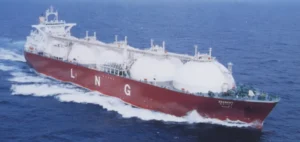
The interim government of Bangladesh has decided to resume imports of liquefied natural gas (LNG) on the spot market.
This measure comes after a two-month interruption, and is accompanied by a change in the regulatory framework to ensure transparent and competitive bidding procedures.
The Economic Affairs Committee approved a proposal from the Energy and Mineral Resources Division under the Ministry of Power, Energy and Mineral Resources, allowing 23 pre-selected companies to bid for LNG supply contracts.

End of Direct Negotiations with Suppliers

The government is switching from the emergency regime of the Quick Enhancement of Electricity and Energy Supply (Special Provision) Act 2010 (Amended 2021), better known as the Speedy Act, to the Public Procurement Rules (PPR) of 2008.
This change now prohibits any negotiations with bidders after the call for tenders, reinforcing the rigor of the process.
The Public Procurement Rules allow tenders to be limited to pre-selected suppliers, but stipulate that no further negotiations are permitted after the initial call for tenders.
Until now, it was common practice for Rupantarita Prakritik Gas Co Ltd (RPGCL) to enter into negotiations with the lowest bidder if spot prices were deemed too high.
This flexibility has now been removed, to avoid conflicts of interest and ensure more transparent commercial practices in LNG procurement.

Infrastructure problems with the Summit LNG Terminal

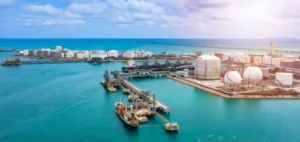
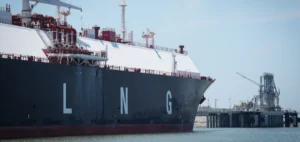
The resumption of spot LNG imports depends on the availability of regasification infrastructure.
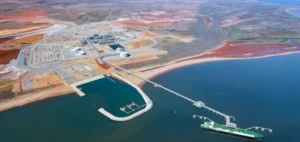
Currently, the Summit LNG terminal, with a capacity of 3.75 million metric tons per year, has been offline since May 30, following an incident during cyclone Remal.
This unavailability is complicating the resumption of LNG imports, as the terminal has not yet indicated a restart date.
This situation is impacting Bangladesh’s import capacity, requiring increased coordination to secure supplies.
The country may have to rely on other infrastructures or seek temporary alternatives to compensate for this lack of regasification capacity.

Market and investment implications

The move to a stricter tendering system under the PPR-2008 rules could influence the future strategies of market players.
By ensuring a more predictable and transparent environment, the government hopes to attract new suppliers and stabilize import costs.
However, this approach could also limit the flexibility needed in times of volatile global LNG prices.
For local and international companies involved in importing LNG into Bangladesh, these changes mean adapting to a more structured regulatory framework, potentially less favorable to rapid adjustments and bilateral negotiations.
The impacts of this regulation will need to be closely monitored to understand its repercussions on prices and supply in the medium term.
ENGIE activates key projects in Belgium, including an 875 MW gas-fired plant in Flémalle and a battery storage system in Vilvoorde, to strengthen electricity supply security and grid flexibility.
Hungary has signed a contract with US company Chevron to import 400mn m³ of LNG per year, while maintaining a structural dependence on Russian gas through a long-term agreement with Gazprom.
Chevron Australia awards Subsea7 a major contract for subsea installation on the Gorgon Stage 3 project, with offshore operations scheduled for 2028 at 1,350 metres depth.
Ovintiv has entered into an agreement with Pembina Pipeline Corporation to secure 0.5 million tonnes per annum of LNG liquefaction capacity over 12 years, strengthening its export outlook to Asian markets.
TotalEnergies has completed the sale of a minority stake in a Malaysian offshore gas block to PTTEP, while retaining its operator role and a majority share.
The European Union will apply its methane emissions rules more flexibly to secure liquefied natural gas supplies from 2027.
Venezuela has ended all energy cooperation with Trinidad and Tobago after the seizure of an oil tanker carrying crude by the United States, accusing the archipelago of participating in the military operation in the Caribbean.
National Fuel has secured $350mn in a private placement of common stock with accredited investors to support the acquisition of CenterPoint’s regulated gas business in Ohio.
GTT appoints François Michel as CEO starting January 5, separating governance roles after strong revenue and profit growth in 2024.
The United States is requesting a derogation from EU methane rules, citing the Union’s energy security needs and the technical limits of its liquefied natural gas export model.
Falcon Oil & Gas and its partner Tamboran have completed stimulation of the SS2-1H horizontal well in the Beetaloo Sub-basin, a key step ahead of initial production tests expected in early 2026.
Gasunie Netherlands and Gasunie Germany have selected six industrial suppliers under a European tender to supply pipelines for future natural gas, hydrogen and CO₂ networks.
The ban on Russian liquefied natural gas requires a legal re-evaluation of LNG contracts, where force majeure, change-in-law and logistical restrictions are now major sources of disputes and contractual repricing.
The US House adopts a reform that weakens state veto power over gas pipeline projects by strengthening the federal role of FERC and accelerating environmental permitting.
Morocco plans to commission its first liquefied natural gas terminal in Nador by 2027, built around a floating unit designed to strengthen national import capacity.
An explosion on December 10 on the Escravos–Lagos pipeline forced NNPC to suspend operations, disrupting a crucial network supplying gas to power stations in southwestern Nigeria.
At an international forum, Turkmenistan hosted several regional leaders to discuss commercial cooperation, with a strong focus on gas and alternative export corridors.
The Australian government has launched the opening of five offshore gas exploration blocks in the Otway Basin, highlighting a clear priority for southeast supply security amid risks of shortages by 2028, despite an ambitious official climate policy.
BlackRock sold 7.1% of Spanish company Naturgy for €1.7bn ($1.99bn) through an accelerated bookbuild managed by JPMorgan, reducing its stake to 11.42%.
The British company begins the initial production phase of Morocco's Tendrara gas field, activating a ten-year contract with Afriquia Gaz amid phased technical investments.

All the latest energy news, all the time

Annual subscription

8.25$/month*

*billed annually at 99$/year for the first year then 149,00$/year ​

Unlimited access - Archives included - Pro invoice

Monthly subscription

Unlimited access • Archives included

5.2$/month*
then 14.90$ per month thereafter

*Prices shown are exclusive of VAT, which may vary according to your location or professional status.

Since 2021: 30,000 articles - +150 analyses/week.