US oil industry: record production despite falling prices

In 2023, despite falling commodity prices, oil production in the United States will reach record levels, underpinned by massive investment and effective cost management.

Share:

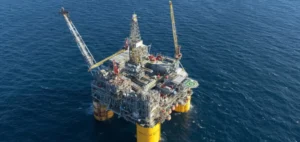
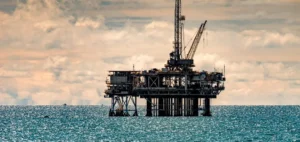
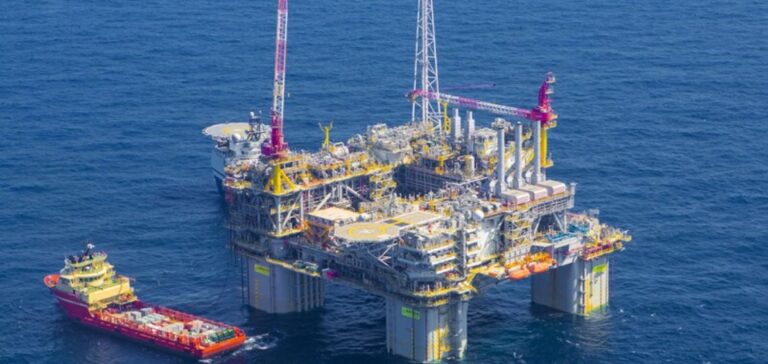
offshore platform in the Tiber fields

Comprehensive energy news coverage, updated nonstop

Annual subscription

8.25$/month*

*billed annually at 99$/year for the first year then 149,00$/year ​

Unlimited access • Archives included • Professional invoice

OTHER ACCESS OPTIONS

Monthly subscription

Unlimited access • Archives included

5.2$/month*
then 14.90$ per month thereafter

FREE ACCOUNT

3 articles offered per month

FREE

*Prices are excluding VAT, which may vary depending on your location or professional status

Since 2021: 35,000 articles • 150+ analyses per week

In 2023, the US oil and gas sector demonstrated impressive resilience despite a significant drop in commodity prices.
According to a study by Ernst & Young LLP, the fifty largest publicly traded exploration and production (E&P) companies achieved record production levels while cutting costs by 6%.
Total industry revenues reached $244.4 billion, the second-highest figure in five years, underlining the sector’s continued financial strength.
This performance was accompanied by an increased strategy of capital allocation to exploration, development and M&A activities.
Companies have taken advantage of difficult market conditions to strengthen their position, focusing on rigorous cost management and optimization of operations.

Increased investment and profits

The study also reveals that capital spending on exploration and development reached a five-year high of$93.1 billion, an increase of 28% on the previous year.
This increase reflects the sector’s financial robustness, with pre-tax profits of $83.9 billion, a level comparable to 2021.
The sector demonstrated its ability to maintain profitability, even in the absence of high raw material prices.
At the same time, acquisitions jumped 57% year-on-year, reflecting a growing appetite for strategic asset consolidation and repositioning.
Independent producers focused their efforts on increasing production while offering higher returns to their investors, confirming the vitality of the US oil and gas sector’s business fundamentals.

Production reserve and emissions management

Although total oil and gas reserves fell slightly, by 1% and 4% respectively, the sector managed to maintain a production replacement ratio of over 100% thanks to extensions and discoveries.
This ensures continuity in production capacity, despite a drop in reserves to 33.3 billion barrels for oil and 186.1 trillion cubic feet for gas.
At the same time, the industry is stepping up its efforts to manage emissions.
Eighty percent of companies surveyed have voluntarily reported their Scope 1 and 2 greenhouse gas emissions, an increase on previous years.
In addition, 42% of these companies obtained external assurance for these reports, while 64% reported having climate objectives or targets in their voluntary disclosures.

Strategic perspectives and innovations

The outlook for the US oil & gas sector remains strong, with companies continuing to strategically position themselves to meet the continuing demand for hydrocarbons, despite the ongoing energy transition.
Major transactions in the sector testify to this drive to redefine the energy landscape, by optimizing operations and integrating cutting-edge technologies.
The emphasis on innovation and strategic investment suggests that the sector is well prepared to navigate an uncertain energy future, while ensuring global energy security.
Companies are adapting, transforming and investing not only to maintain profitability, but also to meet growing demands for sustainability and energy efficiency.

The Ugandan government aims to authorise its national oil company to borrow $2 billion from Vitol to fund strategic projects, combining investments in oil infrastructure with support for national logistics needs.
British company BP appoints Meg O'Neill as CEO to lead its strategic refocus on fossil fuels, following the abandonment of its climate ambitions and the early departure of Murray Auchincloss.
The Venezuelan national oil company has confirmed the continuity of its crude exports, as the United States enforces a maritime blockade targeting sanctioned vessels operating around the country.
Baker Hughes will supply advanced artificial lift systems to Kuwait Oil Company to enhance production through integrated digital technologies.
The United States has implemented a full blockade on sanctioned tankers linked to Venezuela, escalating restrictions on the South American country's oil flows.
Deliveries of energy petroleum products fell by 4.5% in November, driven down by a sharp decline in diesel, while jet fuel continues its growth beyond pre-pandemic levels.
ReconAfrica is finalising preparations to test the Kavango West 1X well in Namibia, while expanding its portfolio in Angola and Gabon to strengthen its presence in sub-Saharan Africa.
Shell has reopened a divestment process for its 37.5% stake in Germany's PCK Schwedt refinery, reviving negotiations disrupted by the Russia-Ukraine conflict and Western sanctions.
Aliko Dangote accuses Nigeria’s oil regulator of threatening local refineries by enabling refined fuel imports, while calling for a corruption probe against its director.
Shell Offshore approves a strategic investment to extend the life of the Kaikias field through a waterflood operation, with first injection planned for 2028 from the Ursa platform.
Oil prices drop amid progress in Ukraine talks and expectations of oversupply, pushing West Texas Intermediate below $55 for the first time in nearly five years.
The US energy group plans to allocate $1.3bn to growth and $1.1bn to asset maintenance, with a specific focus on natural gas liquids and refining projects.
Venezuelan state oil group PDVSA claims it was targeted by a cyberattack attributed to foreign interests, with no impact on main operations, amid rising tensions with the United States.
BUTEC has finalised the financing of a 50 MW emergency power project in Burkina Faso, structured under a BOOT contract and backed by Banque Centrale Populaire Group.
BW Energy has signed a long-term lease agreement with Minsheng Financial Leasing for its Maromba B platform, covering $274mn of the project’s CAPEX, with no payments due before first oil.
Shell will restart offshore exploration on Namibia’s PEL 39 block in April 2026 with a five-well drilling programme targeting previously discovered zones, despite a recent $400mn impairment.
Iranian authorities intercepted a vessel suspected of fuel smuggling off the coast of the Gulf of Oman, with 18 South Asian crew members on board, according to official sources.
Harbour Energy will acquire Waldorf Energy Partners’ North Sea assets for $170mn, increasing its stakes in the Catcher and Kraken fields, while Capricorn Energy settles part of its claims.
The Big Beautiful Gulf 1 sale attracted more than $300mn in investments, with a focused strategy led by BP, Chevron and Woodside on high-yield blocks.
The United States intercepted an oil tanker loaded with Venezuelan crude and imposed new sanctions on maritime entities, increasing pressure on Nicolas Maduro’s regime and its commercial networks in the Caribbean.

All the latest energy news, all the time

Annual subscription

8.25$/month*

*billed annually at 99$/year for the first year then 149,00$/year ​

Unlimited access - Archives included - Pro invoice

Monthly subscription

Unlimited access • Archives included

5.2$/month*
then 14.90$ per month thereafter

*Prices shown are exclusive of VAT, which may vary according to your location or professional status.

Since 2021: 30,000 articles - +150 analyses/week.