The Hydrocracker Market: 125.2 billion USD by 2033

The global market for hydrocrackers, essential to the production of high-quality fuels, will reach 125.2 billion USD by 2033, driven by growing demand for cleaner energy.

Share:

Comprehensive energy news coverage, updated nonstop

Annual subscription

8.25$/month*

*billed annually at 99$/year for the first year then 149,00$/year ​

Unlimited access • Archives included • Professional invoice

OTHER ACCESS OPTIONS

Monthly subscription

Unlimited access • Archives included

5.2$/month*
then 14.90$ per month thereafter

FREE ACCOUNT

3 articles offered per month

FREE

*Prices are excluding VAT, which may vary depending on your location or professional status

Since 2021: 35,000 articles • 150+ analyses per week

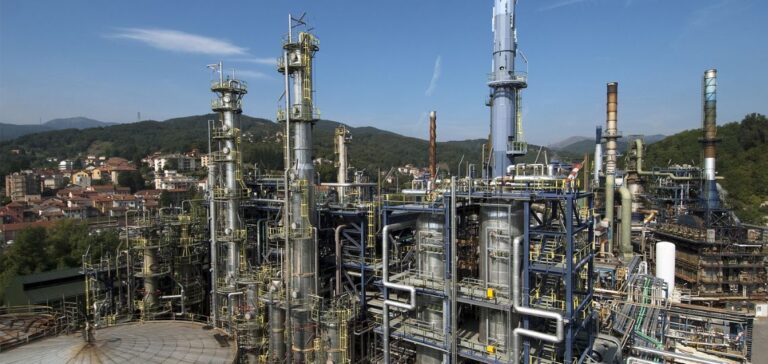
The hydrocracker market is booming, driven by the growing need to transform heavy hydrocarbons into lighter, cleaner refined products.
A key technology in the refining industry, hydrocrackers help to meet environmental regulations while optimizing the production of fuels such as diesel and jet fuel.
Refineries are increasingly adopting these units to maximize the yield of high-value-added products, particularly in regions where demand for low-sulfur fuels is rising sharply.
The hydrocracking process, which is more complex than traditional methods, is now indispensable for producing fuels that comply with stringent emission reduction standards.
Developments in associated technologies, notably catalysts, have significantly improved the efficiency of hydrocracking units, reducing operating costs and boosting the competitiveness of refineries on the world market.

Strategic investments to support growth

North America stands out as the most dynamic market, with sustained investment in refining infrastructure.
In the United States, the modernization of refineries largely includes the integration of advanced hydrocracking technologies, in response to the growing demand for clean fuels.
These investments are essential to maintain the competitiveness of our facilities in the face of market and regulatory demands.
At the same time, Asia, and India in particular, has seen a significant increase in refining capacity, strengthening its position on the world market.
The integration of cutting-edge technologies in new facilities is enabling these countries to meet the growing demand for fuels while complying with international standards for reducing CO2 emissions.

Technological Challenges and Sector Outlook

Technological advances play a crucial role in the expansion of the hydrocracker market.
Innovations in processes and catalysts are maximizing unit efficiency, reducing costs while increasing the production of high-quality refined products.
These improvements are particularly important at a time when fluctuating crude oil prices and geopolitical uncertainties require rigorous management of costs and resources.
Major market players such as Shell plc, Exxon Mobil Corporation and Chevron Lummus Global continue to develop and implement expansion and innovation strategies.
These companies are investing heavily in research and development to maintain their technological lead and meet the needs of a constantly evolving market.
The ability to produce cleaner fuels while optimizing production costs will be decisive for the sector’s future growth.

Chevron remains the only operator shipping oil from Venezuela, while cargoes bound for China have been halted for a fifth consecutive day, increasing pressure on local storage capacity.
Donald Trump says US oil companies could restart production in Venezuela within two years following the removal of Nicolás Maduro, despite the scale of investment required.
Nexera Energy has acquired producing oil properties in South Texas as part of a financial settlement with Hagco Energy and Hugocellr involving more than $600,000 in unpaid fees.
The group of major oil producers extends its stability strategy despite a drop in prices of more than 18% in 2025 and projected supply surplus for the coming year.
Amid Venezuela’s political transition, the African Energy Chamber urges international players to prioritise stability to secure oil investment and restore national production.
The Libya Energy & Economic Summit 2026 will host five leaders from the legal and advisory sectors to support the opening of the national oil market and strengthen regional cooperation.
Norwegian group Borr Drilling has announced two contractual commitments for its Ran and Odin rigs, extending its activities in the Americas through 2027.
Lane42 Investment Partners has completed the acquisition of Aqua Terra Permian, a wastewater infrastructure operator in the Permian Basin, aiming to expand its footprint in strategic midstream services.
Brent crude fell to its lowest level since 2021, as persistent oversupply throughout 2025 weighed on prices despite isolated geopolitical tensions and China’s strategic stockpiling.
India’s crude imports from Russia could hit an eighteen-month low as Reliance Industries anticipates no shipments in January due to logistical and commercial disruptions.
Former Vaalco executive Clotaire Kondja takes over as Gabon’s Oil and Gas Minister as the country faces declining investment and stagnant crude output.
Phillips 66 Limited has reached an agreement to acquire Lindsey Oil Refinery assets, which will be absorbed into the Humber Refinery to reinforce fuel supply across the United Kingdom.
The United States is pressing major American oil firms to commit significant capital in Venezuela to recover billions lost during the expropriations of the 2000s.
Beijing maintains investments and crude imports from Venezuela, while several Chinese state-owned and private companies seek to secure stakes in Caracas' reserves.
Serbia is aiming for a quick agreement between Gazprom and Hungarian group MOL on the sale of Russian-held NIS shares, key to restarting its only refinery shut down by US sanctions.
Washington has crossed a historic threshold by capturing Nicolas Maduro after years of sanctions and embargo. A look back at two decades of tensions and their implications for the global oil market.
Canadian group Saturn Oil & Gas has consolidated its subsidiaries into a single structure to optimise oil investments and reduce long-term administrative costs.
PBF Energy delays full resumption of operations at its Martinez, California refinery to February 2026 following a 2025 fire, while releasing throughput guidance for its entire refining network.
Chinese company CNOOC has started production at the Buzios6 project, raising the total capacity of the pre-salt oilfield to 1.15 million barrels per day.
Tema refinery has resumed operations at reduced capacity following a prolonged shutdown and targeted maintenance work on critical infrastructure.

All the latest energy news, all the time

Annual subscription

8.25$/month*

*billed annually at 99$/year for the first year then 149,00$/year ​

Unlimited access - Archives included - Pro invoice

Monthly subscription

Unlimited access • Archives included

5.2$/month*
then 14.90$ per month thereafter

*Prices shown are exclusive of VAT, which may vary according to your location or professional status.

Since 2021: 30,000 articles - +150 analyses/week.