Europe: Liquefied petroleum gas replaces natural gas because of costs

The continuing rise in natural gas prices in Europe is leading refineries to favor LPG as a more cost-effective alternative for their energy operations.

Share:

Comprehensive energy news coverage, updated nonstop

Annual subscription

8.25$/month*

*billed annually at 99$/year for the first year then 149,00$/year ​

Unlimited access • Archives included • Professional invoice

OTHER ACCESS OPTIONS

Monthly subscription

Unlimited access • Archives included

5.2$/month*
then 14.90$ per month thereafter

FREE ACCOUNT

3 articles offered per month

FREE

*Prices are excluding VAT, which may vary depending on your location or professional status

Since 2021: 35,000 articles • 150+ analyses per week

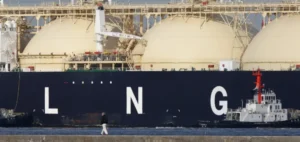
European refineries are reacting to the sharp rise in natural gas costs by adapting their energy strategies. Liquefied natural gas (LNG), whose price reached $12.397/MMBtu in August 2024, is putting intense financial pressure on these facilities.
With prices soaring 23% in one month, refineries are turning to liquefied petroleum gas (LPG), a choice dictated by the need to control operating costs.
Propane, the main component of LPG, is currently trading at $520/tonne in the strategic Amsterdam-Rotterdam-Antwerp hub.
This alternative has become particularly attractive, as it offers a stability that the natural gas market cannot guarantee due to its high volatility.
This change of direction can also be seen in LPG export volumes, which have fallen, reflecting the retention of this resource for internal use.

Economic impact and strategic choice

Switching to LPG is a pragmatic response to a tense economic situation.
By opting for this energy source, refineries avoid the exorbitant costs of natural gas, while securing their supply.
The drop in LPG exports, from 47,100 tonnes in July to 35,300 tonnes in August 2024, bears witness to refineries’ determination to prioritize domestic use of LPG.
This shift is not without consequences for the energy market.
Reduced demand for natural gas could affect LNG prices in the medium term.
In addition, the increased use of LPG could accelerate investment in suitable storage and distribution infrastructures, thereby altering the regional energy outlook.

Long-term outlook

The current situation highlights the challenges facing European refineries, caught between fluctuating energy markets and the need to maintain competitive costs.
The adoption of LPG as an alternative to natural gas could become a sustainable trend if economic and geopolitical conditions continue to support this dynamic.
It could also encourage other sectors to follow suit and optimize their energy costs.
Price trends and the reaction of refineries will be key indicators for the future of the European energy market.
As LPG positions itself as a viable solution, dependence on natural gas could diminish, leading to significant transformations in the energy landscape.

The Australian government will require up to 25% of gas extracted on the east coast to be reserved for the domestic market from 2027, in response to supply tensions and soaring prices.
Baker Hughes will deliver six gas refrigeration trains for Commonwealth LNG’s 9.5 mtpa export project in Louisiana, under a contract with Technip Energies.
Shanghai Electric begins a combined-cycle expansion project across four Iraqi provinces, aiming to boost energy efficiency by 50% without additional fuel consumption.
Zefiro Methane, through its subsidiary Plants & Goodwin, completes an energy conversion project in Pennsylvania and plans a new well decommissioning operation in Louisiana, expanding its presence to eight US states.
The Council of State has cancelled the authorisation to exploit coalbed methane in Lorraine, citing risks to the region's main aquifer and bringing an end to a legal battle that began over a decade ago.
Japanese power producer JERA will deliver up to 200,000 tonnes of liquefied natural gas annually to Hokkaido Gas starting in 2027 under a newly signed long-term sale agreement.
An agreement announced on December 17, 2025 provides for twenty years of deliveries through 2040. The package amounts to 112 billion new Israeli shekels (Israeli shekels) (NIS), with flows intended to support Egyptian gas supply and Israeli public revenues.
Abu Dhabi’s national oil company has secured a landmark structured financing to accelerate the development of the Hail and Ghasha gas project, while maintaining strategic control over its infrastructure.
U.S.-based Sawgrass LNG & Power celebrates eight consecutive years of LNG exports to The Bahamas, reinforcing its position in regional energy trade.
Kinder Morgan restored the EPNG pipeline capacity at Lordsburg on December 13, ending a constraint that had driven Waha prices negative. The move highlights the Permian’s fragile balance, operating near the limits of its gas evacuation infrastructure.
ENGIE activates key projects in Belgium, including an 875 MW gas-fired plant in Flémalle and a battery storage system in Vilvoorde, to strengthen electricity supply security and grid flexibility.
Hungary has signed a contract with US company Chevron to import 400mn m³ of LNG per year, while maintaining a structural dependence on Russian gas through a long-term agreement with Gazprom.
Chevron Australia awards Subsea7 a major contract for subsea installation on the Gorgon Stage 3 project, with offshore operations scheduled for 2028 at 1,350 metres depth.
Ovintiv has entered into an agreement with Pembina Pipeline Corporation to secure 0.5 million tonnes per annum of LNG liquefaction capacity over 12 years, strengthening its export outlook to Asian markets.
TotalEnergies has completed the sale of a minority stake in a Malaysian offshore gas block to PTTEP, while retaining its operator role and a majority share.
The European Union will apply its methane emissions rules more flexibly to secure liquefied natural gas supplies from 2027.
Venezuela has ended all energy cooperation with Trinidad and Tobago after the seizure of an oil tanker carrying crude by the United States, accusing the archipelago of participating in the military operation in the Caribbean.
National Fuel has secured $350mn in a private placement of common stock with accredited investors to support the acquisition of CenterPoint’s regulated gas business in Ohio.
GTT appoints François Michel as CEO starting January 5, separating governance roles after strong revenue and profit growth in 2024.
The United States is requesting a derogation from EU methane rules, citing the Union’s energy security needs and the technical limits of its liquefied natural gas export model.

All the latest energy news, all the time

Annual subscription

8.25$/month*

*billed annually at 99$/year for the first year then 149,00$/year ​

Unlimited access - Archives included - Pro invoice

Monthly subscription

Unlimited access • Archives included

5.2$/month*
then 14.90$ per month thereafter

*Prices shown are exclusive of VAT, which may vary according to your location or professional status.

Since 2021: 30,000 articles - +150 analyses/week.