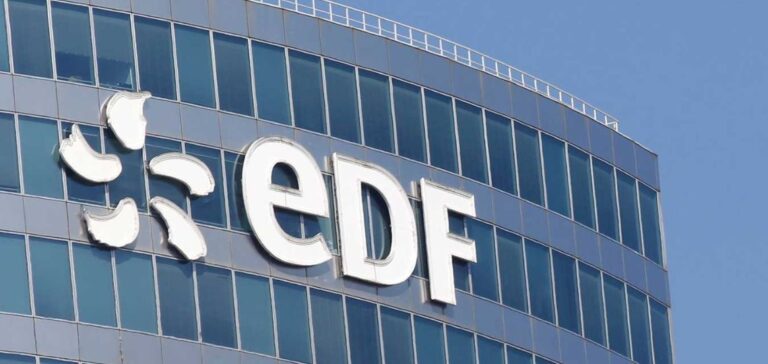
EDF abandons the race for small nuclear reactors in the UK

EDF withdraws from the competition to build small nuclear reactors in the UK, while affirming its support for the British nuclear industry and revising its SMR project.

Share:

EDF retrait réacteurs nucléaires Royaume-Uni

Comprehensive energy news coverage, updated nonstop

Annual subscription

8.25$/month*

*billed annually at 99$/year for the first year then 149,00$/year ​

Unlimited access • Archives included • Professional invoice

OTHER ACCESS OPTIONS

Monthly subscription

Unlimited access • Archives included

5.2$/month*
then 14.90$ per month thereafter

FREE ACCOUNT

3 articles offered per month

FREE

*Prices are excluding VAT, which may vary depending on your location or professional status

Since 2021: 35,000 articles • 150+ analyses per week

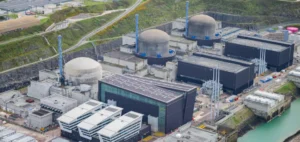
EDF recently announced its withdrawal from the race to build Small Modular Reactors (SMRs) in the UK, a project designed to diversify and modernize the UK’s energy infrastructure. This withdrawal comes at a time when the French group is revising its plans for its SMR model, the Nuward, originally scheduled for 2030. This decision could significantly alter the landscape of energy production in the UK, a country where nuclear power plays a central role in the energy transition.
EDF ‘s withdrawal comes after the UK government named six companies, including Rolls-Royce and EDF, as finalists for a tender to build SMRs. Other selected companies include GE-Hitachi, Holtec, NuScale Power and Westinghouse, highlighting intense competition in this strategic sector.

The reasons behind EDF’s revised plans

The EDF spokesman said that the group was determined to continue supporting nuclear development in the UK, in particular by extending the life of existing plants and building new facilities. However, EDF has decided to reassess the design of its Nuward SMR to improve its chances of success and the technical feasibility of the project. This revision is seen as a strategic step to align the project with current technological and economic requirements.
In addition, EDF remains open to working with the British government on large-scale nuclear power plant projects. In May, EDF expressed its willingness to work on a third mega-nuclear power plant project in Wales, in addition to Sizewell C and Hinkley Point C.

The outlook for nuclear power in the UK

With the Labour Party coming to power in the UK, government support for new nuclear power plants, including SMRs, seems to be strengthening. The Labor Party’s program stresses the importance of new power plants in achieving energy security and promoting clean energy, while creating skilled jobs. This political direction could have a positive influence on current and future projects in the UK nuclear sector.
However, EDF’s withdrawal from the SMR race leaves a gap that the other finalists will have to fill. SMRs, which are seen as an economical and flexible solution compared with traditional power plants, will still require years of development before they can be deployed commercially.
The evolution of EDF’s Nuward SMR design could also present challenges and opportunities for the nuclear industry. This revision could enable EDF to offer a more advanced solution, better adapted to the future needs of the energy market.
The future of the UK nuclear industry will therefore depend on the strategic decisions taken by the companies and the continued support of government authorities. International collaboration and technological innovation will play a crucial role in achieving the goals of energy security and carbon reduction.
Developments in the field of SMRs and large nuclear power plants will be decisive in achieving these objectives, and the actions of key players such as EDF will remain under close scrutiny.


French state utility EDF has increased the maximum estimated cost for building six new nuclear reactors to €72.8 billion ($85.29 billion), representing a 40% rise over the original figure.
US-based Holtec has signed a memorandum of understanding with Hungary’s energy group MVM to assess the deployment of its SMR-300 technology, strengthening bilateral nuclear cooperation and opening prospects for a new market in Central Europe.
California-based startup Radiant has secured $300mn to build its first factory in Tennessee and prepare for the mass production of miniature nuclear reactors for off-grid applications.
Terra Innovatum has increased its interactions with the Nuclear Regulatory Commission to advance licensing of its SOLO™ micro-modular reactor, despite the partial shutdown of the US federal government.
The US nuclear regulator has extended the operating licences of three Illinois reactors by 20 years, strengthening Constellation's long-term industrial outlook for the Clinton and Dresden sites.
The SATURNE Industrial Chair aims to develop innovative uranium extraction methods, with joint funding from Orano and the National Research Agency over a four-year period.
US-based X-energy has signed a reservation agreement with South Korea's Doosan Enerbility to secure key components for its small modular nuclear reactors.
Samsung Heavy Industries has received Approval in Principle for a floating nuclear plant featuring two SMART100 reactors, marking a step toward the commercialisation of offshore small modular reactors.
The Indian government proposes a unified legal framework for nuclear energy, aiming to boost private investment and increase installed capacity to 100 GW by 2047.
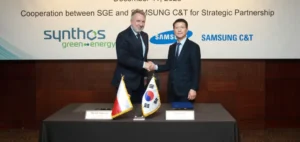
Samsung C&T strengthens its presence in modular nuclear energy in Europe by signing an agreement with Synthos Green Energy to develop up to 24 SMRs in Poland and several Central European countries.
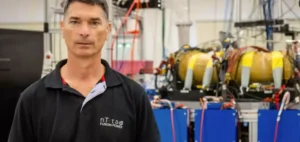
Israeli firm nT-Tao and Ben-Gurion University have developed a nonlinear control system that improves energy stability in fusion plasmas, strengthening the technical foundation of their future compact reactors.
The Indian government has introduced a bill allowing private companies to build and operate nuclear power plants, ending a state monopoly in place for over five decades.
Natura Resources enters a new regulatory phase for its molten salt reactor MSR-1, following the signing of a framework agreement with the US Department of Energy under the Reactor Pilot Program.
Norwegian Nuclear Decommissioning is surveying 22 localities to assess their interest in hosting storage facilities for radioactive waste from the country’s former research reactors.
Electricité de France's Flamanville 3 reactor has reached full power for the first time, marking a key industrial milestone in the deployment of EPRs in Europe, despite cost overruns reaching EUR23.7bn ($25.7bn).
GE Vernova Hitachi’s BWRX-300 small modular reactor has passed a key regulatory hurdle in the United Kingdom, opening the door to potential commercial deployment, despite no current plans for construction.
Molten salt reactor developer Natura Resources has acquired Shepherd Power and partnered with NOV to scale up modular reactor manufacturing by the next decade.
China National Nuclear Corporation expects commercial operation in 2026 for its ACP100 reactor, following successful cold testing and completion of critical structures in 2025.
Start-up SEATOM has been selected to join NATO's DIANA programme with its micro nuclear reactor designed for extreme environments, reinforcing its position in dual-use marine and military energy technologies.
The Estonian Ministry of Economic Affairs has opened a tender to select a site and conduct initial environmental studies for a 600 MW nuclear power plant, marking a decisive step for the country’s energy future.

All the latest energy news, all the time

Annual subscription

8.25$/month*

*billed annually at 99$/year for the first year then 149,00$/year ​

Unlimited access - Archives included - Pro invoice

Monthly subscription

Unlimited access • Archives included

5.2$/month*
then 14.90$ per month thereafter

*Prices shown are exclusive of VAT, which may vary according to your location or professional status.

Since 2021: 30,000 articles - +150 analyses/week.