2.8 GW more in Greece thanks to new solar and wind farms

Share:

Comprehensive energy news coverage, updated nonstop

Annual subscription

8.25$/month*

*billed annually at 99$/year for the first year then 149,00$/year ​

Unlimited access • Archives included • Professional invoice

OTHER ACCESS OPTIONS

Monthly subscription

Unlimited access • Archives included

5.2$/month*
then 14.90$ per month thereafter

FREE ACCOUNT

3 articles offered per month

FREE

*Prices are excluding VAT, which may vary depending on your location or professional status

Since 2021: 35,000 articles • 150+ analyses per week

The Greek government has approved four investments in new wind and solar farm projects.
With a total capacity of 2.8 GW, these projects are part of the country’s economic recovery.
Substantial investment to promote wind and solar farms

More than 2 billion euros have just been earmarked for four investment projects in renewable energy plants.
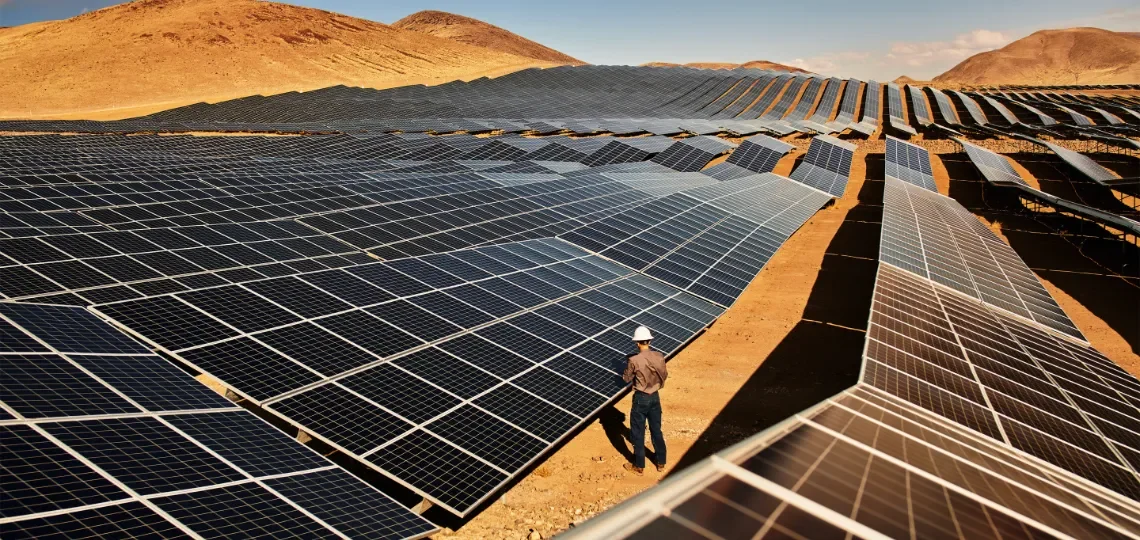
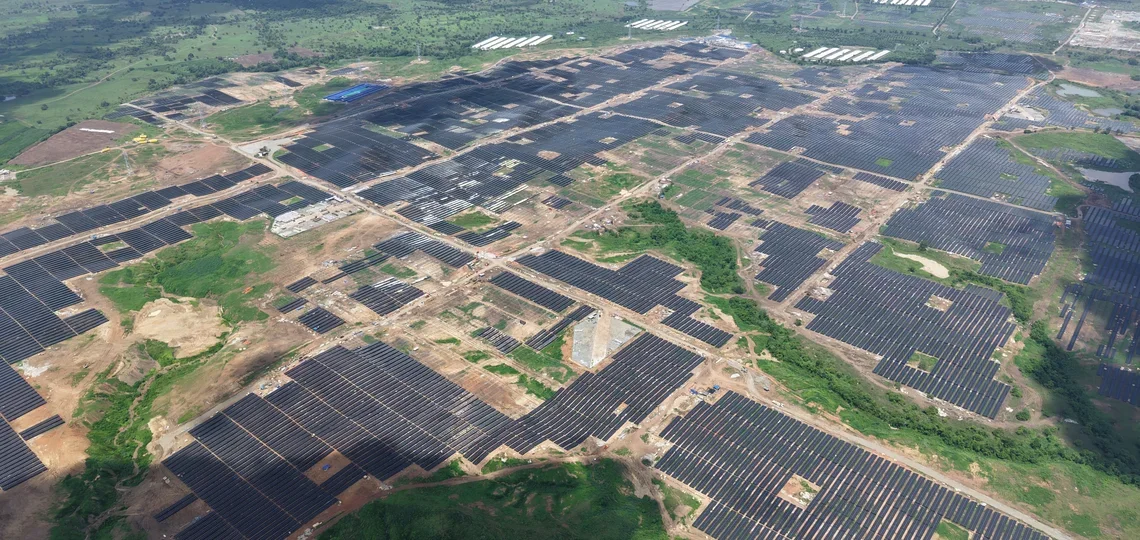
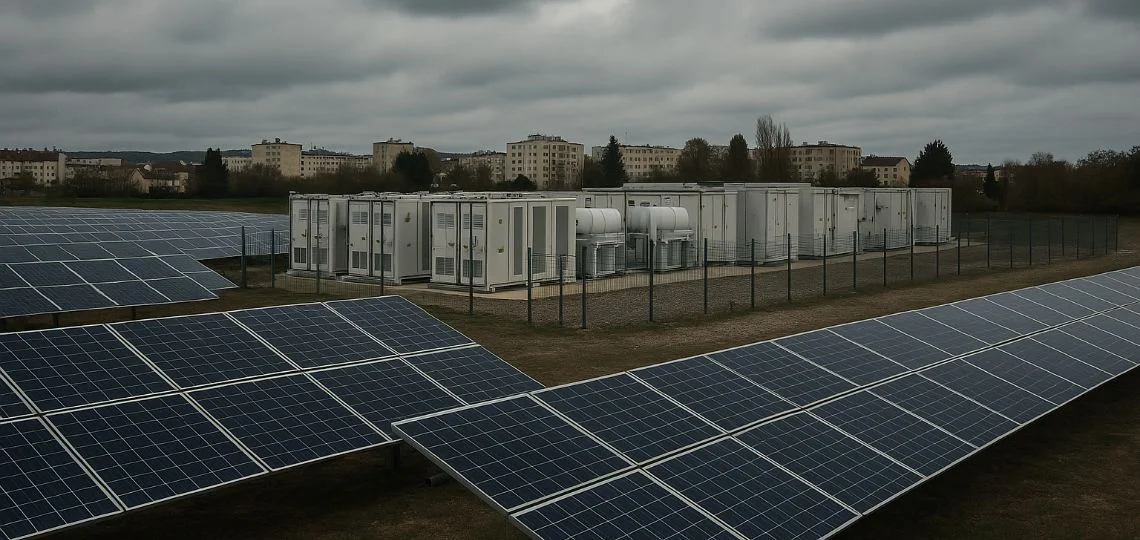
888 million euros will be invested in solar parks in 12 regions of Greece, for a total of 1.5 GW.
421.6 million euros will be invested in 37 photovoltaic plants with a total capacity of 830 MW, in Larissa, Magnesia and Kilkis.

The remainder of the investment will go towards the development of a 360 MW offshore wind project.
But also to a 120.3 MW onshore wind project in Xanthi and Rodopi.

Wind and solar farms are essential to Greece’s ecological transition.

An ambitious solar energy target

The Public Power Corporation, a Greek state-owned company, has been tasked with developing the solar parks.
As part of a wider €5 billion roadmap, it is to support the country’s move away from coal by 2028.
The company is aiming for 1.4 GW of installed photovoltaic solar capacity by 2024.

A way out of the economic crisis linked to the health crisis

The political enthusiasm for wind and solar farms in Greece is accentuated by the health crisis.
Greece sees it as a way out of the economic crisis.
The financing has been given the green light by the entire government and political players in the sector.
For the Deputy Minister of Development and Investment, Nikos Papathanasis, investment in solar projects was “imperative” for job creation and the rebound from the global pandemic.

One action sums up all of Greece’s motivations: that of the Ministry of the Environment and Energy.
It sought to shorten the lengthy licensing process for renewable energy projects.
In so doing, it has sought to free up gigawatts of installations facing waiting times of up to eight years.
Proof positive of the Greek government’s efforts to accelerate the energy transition.

Parliament approved the removal of a proposed tax increase on Superethanol-E85, ensuring a continued favourable tax regime for motorists and the agricultural sector until 2026.
The rejection of the removal of tax benefits for B100 and E85 biofuels preserves a favourable fiscal framework for an agricultural sector under pressure, despite uncertainty over actual environmental gains.
Brasília links a major tax fraud investigation to talks with Washington, combining demands for financial transparency with negotiations over U.S. access to Brazilian rare earths.
Three companies will begin methanol refuelling operations in Singapore in January 2026, marking a shift for the world’s largest bunkering hub.
London deploys a regulatory framework to secure critical mineral supplies by 2035, limiting dependence on single-country sourcing while developing a domestic lithium and tungsten industry.
Mining group BHP has re-entered talks to acquire Anglo American, months after the latter announced a copper-focused merger with Canadian firm Teck Resources.
Verso Energy assigns the front-end engineering design of the e-SAF DEZiR site to Rely, marking a major industrial step in sustainable aviation fuel production in France, with global deployment ambitions.
The Chinese giant targets 120 kt of SAF trading in 2025 and expands into European carbon markets, banking on ReFuelEU and CORSIA mandates to capture growing regulated demand.
Nineteen countries, led by Brazil, Italy, Japan and India, aim to quadruple sustainable fuel production by 2035, marking a major industrial and regulatory challenge for global energy and transport supply chains.
Clean Energy reported a net loss for the third quarter of 2025, impacted by Amazon-related charges and a decline in adjusted EBITDA, despite continued growth in renewable natural gas volumes.
Coulson Aviation has developed SafeFuel, a patented system that verifies fuel quality in real time during refuelling, reducing the risk of contamination on aircraft operating in remote environments.
Fluor Corporation will lead the front-end engineering of a UK sustainable aviation fuel plant led by LanzaJet and British Airways, with planned output of over 90,000 tonnes per year.
The French National Assembly rejected proposed tax increases on E85 and B100 biofuels in the 2026 budget after strong opposition from the agricultural and transport sectors.
The Commercial Court of Evry has delayed the review of takeover bids for Global Bioenergies, raising the possibility of judicial liquidation if no buyer emerges by November 12 at noon.
Rheinmetall forms a strategic partnership with Sunfire, Ineratec, and other companies to establish decentralized synthetic fuel production across Europe, thereby strengthening the continent’s energy independence.
Schneider Electric Canada aims to bring its Danish e-methanol plant model to the Canadian market, leveraging advanced automation to support new partnerships with heavy industry sectors.
Tenergie renovated the roof of an industrial hangar at a limestone quarry in Bouches-du-Rhône and installed a 270 kWc solar plant under a 25-year lease agreement with no upfront cost for the company.
Houston American Energy launches the first phase of its industrial project in Cedar Port, focused on converting waste into renewable fuels through an innovation centre and research hub.
Buffalo Biodiesel secures $300mn from Verite Capital to expand its used grease collection and processing operations to 25 US states and build two renewable gas plants.
The carrier uses mass balance and Book & Claim allocation to test demand, structure certified revenues, and prepare domestic capacity targeted for 2026 amid already intensifying regional competition.

All the latest energy news, all the time

Annual subscription

8.25$/month*

*billed annually at 99$/year for the first year then 149,00$/year ​

Unlimited access - Archives included - Pro invoice

Monthly subscription

Unlimited access • Archives included

5.2$/month*
then 14.90$ per month thereafter

*Prices shown are exclusive of VAT, which may vary according to your location or professional status.

Since 2021: 30,000 articles - +150 analyses/week.