Westinghouse Launches Ambitious $75 Billion Plan for 10 Nuclear Reactors
Westinghouse plans to invest $75 billion in ten nuclear reactors in the United States, responding to a presidential order aimed at significantly accelerating the expansion of nuclear energy in the country by 2030.
| Sectors | Nuclear Energy, Fission |
|---|---|
| Themes | Investments & Transactions, Financing, Project Development |
| Companies | Westinghouse, NuScale Power, Amazon, Microsoft |
| Countries | United States |
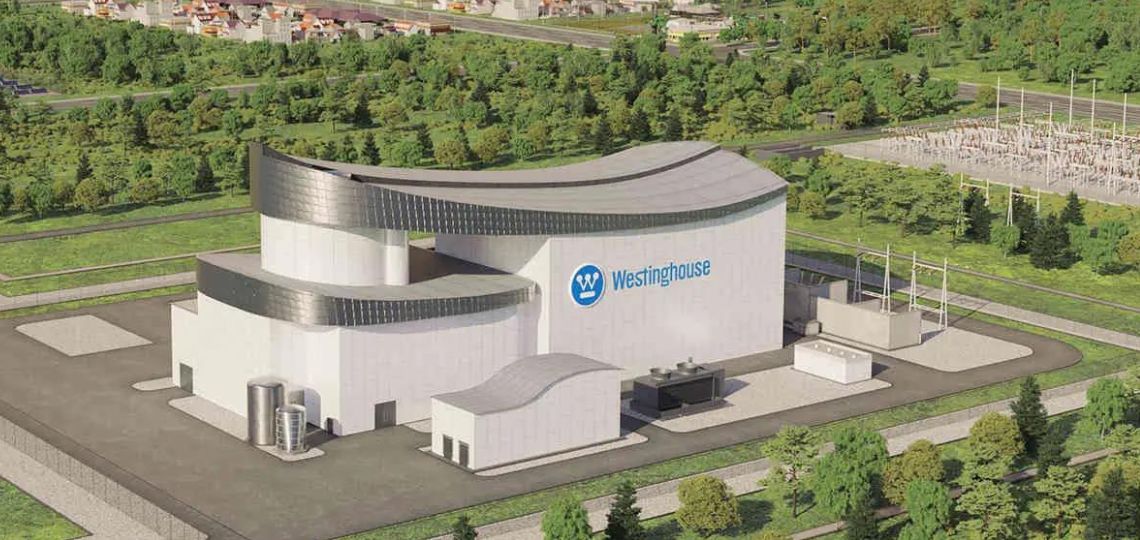
Westinghouse Electric Company, a major player in the U.S. nuclear sector, has just announced an expansion program aimed at constructing ten new nuclear reactors in the United States. This project, estimated at $75 billion, follows a recent presidential order simplifying regulatory procedures for nuclear infrastructure construction. The company’s stated goal is to commission these AP1000-type reactors, a technology already proven at multiple sites, within an accelerated timeline by 2030. To achieve this ambition, Westinghouse has already initiated detailed discussions with various stakeholders, including government agencies and private investors.
Decisive Regulatory Simplification
The presidential order behind this program significantly reduces authorization times, shortening administrative processes from several years to approximately eighteen months. This acceleration in regulatory procedures is seen as critical for meeting the infrastructure’s planned deadlines. According to Dan Sumner, interim CEO of Westinghouse, the company is particularly well-positioned to benefit from these new regulatory measures thanks to its recent experience launching reactors at the Vogtle plant in Georgia. Westinghouse views these experiences as strong evidence of its ability to manage large-scale projects while minimizing operational and financial risks.
The project also anticipates significant reliance on public financing, notably through the Loan Programs Office (LPO), a U.S. federal agency specialized in providing loans for strategic energy infrastructure projects. Westinghouse plans to complement this financing with involvement from major private tech-sector players, such as Microsoft and Amazon, who have already expressed interest in investing in reliable, large-scale energy solutions. The involvement of these companies could be crucial in securing the overall program funding and sharing the risks associated with high costs and potential construction delays.
Risks of Financial Overruns and Competition
Despite opportunities provided by the new regulatory environment, the U.S. nuclear sector remains marked by past significant budget overruns. For example, the two nuclear reactors recently built at Vogtle nearly doubled their initial budget, ultimately exceeding $30 billion. These overruns clearly illustrate the economic and operational challenges that Westinghouse’s new program could face, even with streamlined administrative procedures. The industry will closely monitor the company’s ability to maintain budgets and adhere to its announced timeline.
Additionally, Westinghouse faces increasing competition in the U.S. nuclear market, notably from Small Modular Reactors (SMRs). Companies such as NuScale Power or Holtec International are actively developing these modular technologies, promoted as less costly and quicker to deploy. Although these modular reactors currently offer limited capacity compared to Westinghouse’s AP1000 reactors, they are rapidly gaining traction due to their flexibility and reduced exposure to budgetary risks. This competitive landscape will demand rigorous cost and schedule management from Westinghouse to maintain its dominant position in the U.S. nuclear sector.
Westinghouse’s major program comes at a time when the United States seeks to strengthen its energy independence while diversifying electricity sources. Future decisions by regulators and investors will largely determine the actual realization of this substantial project.