Qatar threatens to suspend LNG exports to Europe over CSDDD directive
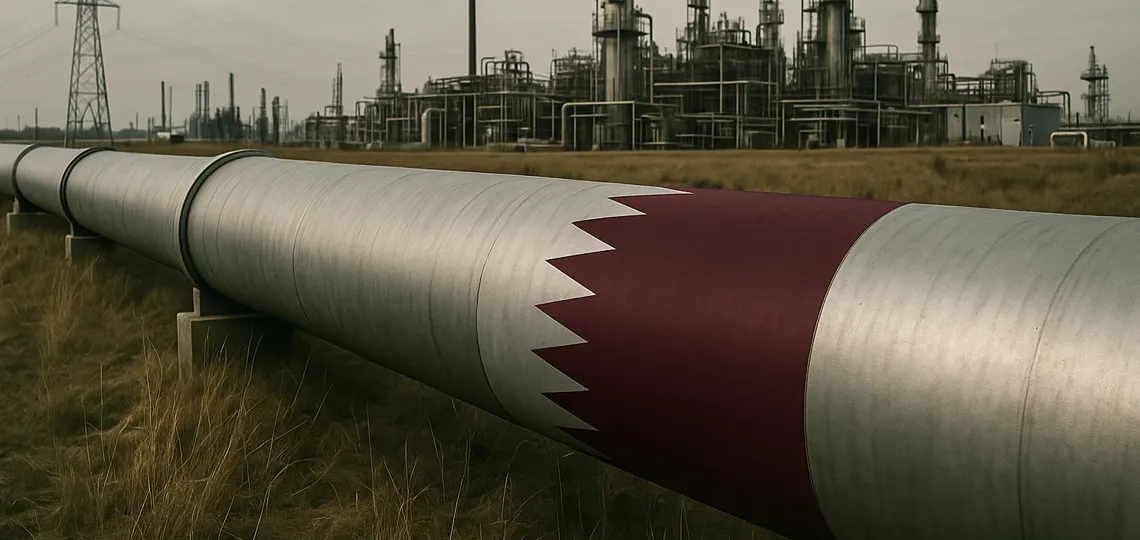
Qatar warns it could halt its liquefied natural gas (LNG) deliveries to the European Union if the CSDDD directive is not softened, a move that reignites tensions surrounding Brussels’ new sustainability regulations.
| Sectors | Gas, LNG |
|---|---|
| Themes | Policy & Geopolitics, Energy Security |
| Companies | Commission européenne, TotalEnergies, Qatarenergy, Eni, Shell |
Qatar’s Energy Minister, Saad bin Sherida Al-Kaabi, stated at the ADIPEC conference that it would “no longer be possible” for the country to continue its business with the European Union if the EU’s Corporate Sustainability Due Diligence Directive (CSDDD) remains unchanged. Adopted in 2024, this regulation requires companies operating in the EU to identify and prevent negative impacts in their supply chains, with fines of up to 5% of their global turnover.
Qatar, the world’s third-largest exporter of liquefied natural gas (LNG) behind the United States and Australia, supplied approximately 16 million tonnes of LNG to the European Union in 2024, accounting for nearly 14% of its total LNG imports. These volumes are vital for several EU member states such as Italy, Belgium, and France, where the Zeebrugge and Montoir-de-Bretagne terminals handle a significant portion of Qatari cargoes.
Regulatory Clash with Geopolitical Implications
At the heart of the dispute, Doha argues that the CSDDD and the EU’s Methane Emissions Reduction Regulation (MER) impose extraterritorial legal responsibility on producers, making contractual exchanges risky. The MER, set to gradually come into force from 2027, requires importers to demonstrate the reliability of their monitoring, reporting, and verification (MRV) systems. By 2030, cargoes exceeding an intensity methane threshold defined by the European Commission may be banned from the market.
Qatar believes these obligations are incompatible with its industrial and business practices. Doha highlights that its European clients — including Shell, TotalEnergies, and Eni — would face double risks: legal, due to potential sanctions, and economic, from possible losses in their long-term contracts. These contracts, typically lasting 27 years, guarantee a stable supply of over 10 million tonnes annually from 2026, with prices indexed to crude oil.
Market Tension and Increased Dependence
A suspension of Qatari supplies would cause an immediate imbalance in the European market. Europe currently imports nearly 40% of its gas as LNG, primarily from the United States, Qatar, and Nigeria. The loss of Qatar would force buyers to turn more to US suppliers, whose gas is 15 to 20% more expensive due to liquefaction and shipping costs. The Title Transfer Facility (TTF) benchmark price reacted immediately to the Qatari minister’s statement, rising by 3.8% in the following day’s trading.
Market operators fear increased volatility during the winter months, especially on contracts for delivery from March to June 2026, a critical period for filling European gas storage. The International Energy Agency (IEA) estimates that a Qatari withdrawal could result in a temporary price rise of 10% in European gas prices, based on cargo reallocation scenarios.
Major Contractual and Financial Implications
European buyers will now need to reassess their compliance clauses and hedging plans. Several companies have initiated discussions to include risk-sharing clauses in case of regulatory changes (“change-in-law”) and third-party environmental audits at Qatari liquefaction terminals. These adjustments are expected to increase the average cost of cargoes by $0.5 to $1 per million BTUs.
On the financial side, credit institutions are revising financing conditions for LNG-related projects, notably the North Field East and North Field South expansions, valued at $28 billion and $24 billion, respectively. Investors are concerned about the potential tightening of compliance conditions imposed on third-party operators, which could delay the planned expansion between 2026 and 2027.
Energy Policy Implications for Europe
The dispute underscores the fragility of Europe’s post-Ukraine energy strategy. The European Union has reduced its Russian imports by over 70% since 2021 and is relying on LNG to cover its annual needs of 350 billion cubic meters. The prospect of market reconfiguration, with Qatar focusing more on Asia, would heighten competition for available cargoes, particularly in China, South Korea, and India.
For Qatar, the message is as much directed at Brussels as at international investors: without a stable regulatory framework, energy flows to Europe will be redirected to more predictable markets. This statement confirms the rising prominence of energy diplomacy in which compliance becomes both a negotiation tool and a legal constraint.