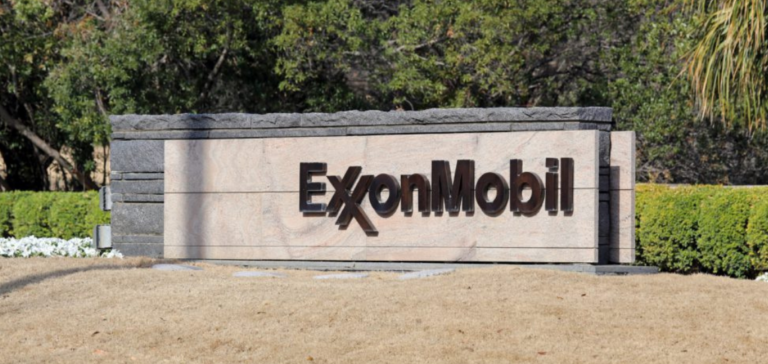
Exxon Mobil Diversifies: Lithium Production set for 2027

Exxon Mobil announces plans to produce lithium by 2027, aiming to become a supplier for electric vehicle batteries.

Share:

Exxon révolutionne l'industrie du lithium

Comprehensive energy news coverage, updated nonstop

Annual subscription

8.25$/month*

*billed annually at 99$/year for the first year then 149,00$/year ​

Unlimited access • Archives included • Professional invoice

OTHER ACCESS OPTIONS

Monthly subscription

Unlimited access • Archives included

5.2$/month*
then 14.90$ per month thereafter

FREE ACCOUNT

3 articles offered per month

FREE

*Prices are excluding VAT, which may vary depending on your location or professional status

Since 2021: 35,000 articles • 150+ analyses per week

Exxon Mobil, broadens its horizons with a bold initiative. By 2027, it plans to start producing lithium, an essential metal for electric car batteries and advanced electronics. This decision marks a turning point in Exxon’s strategy, in line with government programs to promote the use of electric vehicles and reduce fossil fuel consumption.

Objectives and Impacts of Exxon’s Lithium Initiative

The company plans to extract lithium from the brackish underground waters of a region of Arkansas known for its rich lithium deposits. This project aims to develop a domestic source of this precious metal. Dan Ammann, President of Exxon’s Low Carbon Business Unit, stresses the urgent need to increase domestic production of these critical materials. The long-term goal is to supply lithium for over a million electric vehicles a year, positioning Exxon as a leading supplier by 2030.

Investments and Key Technologies for Lithium Production

Analysts at financial firm TD Cowen estimate that to reach this target, Exxon will need to invest around $2 billion in capital expenditure. These investments could produce 50,000 tonnes of lithium, potentially generating $800 million in cash flow. However, Ammann did not reveal exactly how much Exxon plans to invest in the lithium business, or when it might become profitable.
Exxon plans to use traditional oil and gas drilling methods to access the lithium-rich salt water located some 3,000 meters below ground. It will then use direct lithium extraction (DLE) technology to separate lithium from salt water. Exxon’s Canadian subsidiary, Imperial Oil, has also invested in a lithium extraction pilot project in Alberta, Canada.

Exxon’s Strategic Positioning in the Electric Vehicle Market

In partnership with Tetra Technologies, Exxon plans to produce the metal on site and sell it under the Mobil Lithium brand. Earlier in the year, the company acquired the rights to 120,000 acres of the Smackover Formation in Arkansas, a potential hotbed of activity for brine lithium aspirants. Unlike BP and Shell, who have invested in electric vehicle charging stations, Exxon has chosen to focus exclusively on supplying lithium for electric vehicle batteries, electronic devices and energy storage systems.
According to Ammann, there are around 280 million vehicles in the USA today, of which less than 3 million are electric vehicles, or around 1% of the total.

“There’s still 99% to go, which suggests that this is a very, very important opportunity.”

he declared.

Exxon Mobil’s initiative to produce lithium represents a major step forward in the field of electrification.
The collapse in storage costs positions batteries as a key lever for dispatchable solar, but dependence on Chinese suppliers creates growing tension between competitiveness and supply chain security.
JA Solar has launched a microgrid combining 5.2 MW of solar and 2.61 MWh of storage at an industrial site in Sicily, marking its first application of the "PV+Storage+X" model in Italy.
Sinexcel has installed a 2MW/8MWh energy storage system in Matsusaka, marking a breakthrough in a regulated market after five years of technical partnerships and gradual deployment in Japan.
Inlyte Energy has successfully completed factory validation testing of its first full-scale iron-sodium battery, witnessed by Southern Company, paving the way for a pilot installation in the United States in early 2026.
Neoen begins construction of a new 305 MW stage in Australia, raising its total battery storage capacity in the country to 2 GW, and signs two additional virtual battery contracts with ENGIE.
ENGIE has awarded NHOA Energy the contract for a 320 MWh battery energy storage system in Drogenbos, marking a new step in their industrial partnership in Belgium.
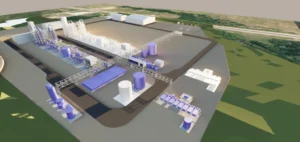
Stardust Power has completed an independent review of its lithium refinery project in Muskogee, confirming technical feasibility and compliance with industry standards for its initial production phase.
California-based battery manufacturer South 8 Technologies has secured $11mn to boost production of its LiGas cells, targeting military and space applications under extreme conditions.
Samsung SDI will supply LFP cells for energy storage systems in the United States starting in 2027, under a multi-year deal valued at $1.53bn.
Bitzero Holdings launches a new 70 MW expansion phase in Namsskogan, Norway, targeting a total capacity of 110 MW and an upgrade of its high-performance computing capabilities.
Remixpoint and Nippon Chikudenchi have formalised a partnership to develop seven 2MW/8MWh BESS facilities by October 2026 through a newly established joint venture.
UK-based Ray Systems has selected Beam Global to supply tailored battery systems for its new autonomous underwater drones, aiming to extend mission duration without compromising stealth or manoeuvrability.
Sungrow has started construction on a 200 MW/400 MWh battery storage system for ENGIE, aimed at strengthening grid stability in a state heavily reliant on renewable energy.
Blue Current secures over $80mn in funding led by Amazon to industrialise its silicon solid-state batteries for large-scale mobility and stationary applications.
AGL has begun construction of a 500 MW battery storage system in Tomago, a project valued at AUD800mn ($530.8mn), in the Hunter region, with commissioning expected in 2027.
Real estate group JALCO Holdings diversifies its activities by investing in a 2 MW/8.1 MWh battery energy storage system developed by Taoke Energy in Narita, Chiba Prefecture.
BKW is conducting feasibility studies on four sites to assess the profitability and development conditions for large-scale battery storage installations in Switzerland.
A 300 MW/1,200 MWh electrochemical energy storage facility has been commissioned in China, marking a major milestone in the country’s largest publicly funded energy infrastructure project.
Sustainable Holdings is developing a battery storage facility in Matsusaka, with operations scheduled to begin in June 2026 on Japan’s electricity market.
California-based Korbel Winery is now equipped with an integrated energy storage and intelligent control system, installed by Energy Toolbase and BPi, to optimise usage and address local grid constraints.

All the latest energy news, all the time

Annual subscription

8.25$/month*

*billed annually at 99$/year for the first year then 149,00$/year ​

Unlimited access - Archives included - Pro invoice

Monthly subscription

Unlimited access • Archives included

5.2$/month*
then 14.90$ per month thereafter

*Prices shown are exclusive of VAT, which may vary according to your location or professional status.

Since 2021: 30,000 articles - +150 analyses/week.