Sahara Group deploys seven rigs to boost oil output in Nigeria

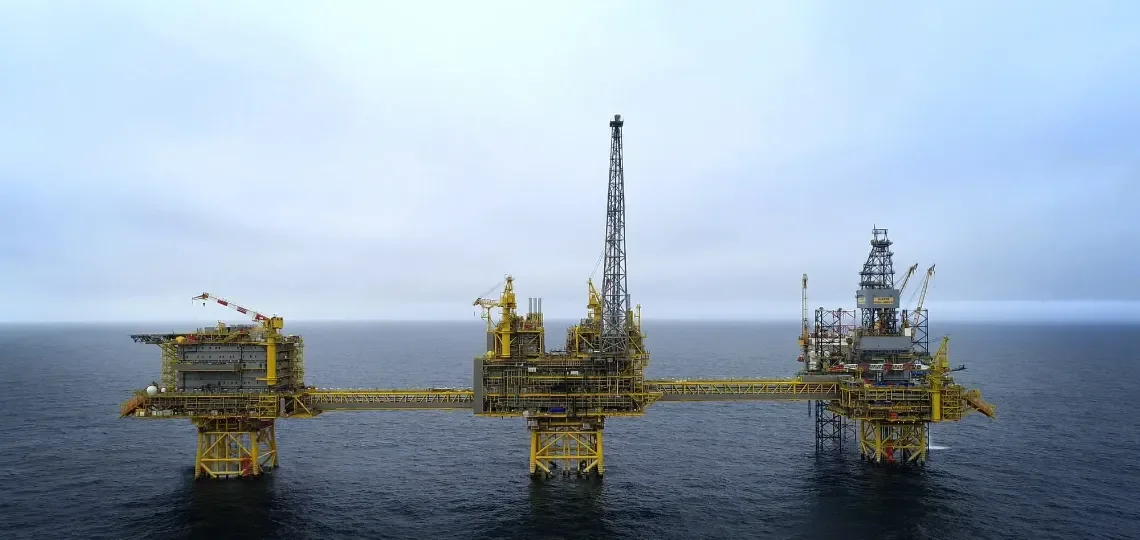
Sahara Group is making a major investment in Nigeria with seven new drilling rigs, aiming to become the country’s top private oil producer by increasing output to 350,000 barrels per day.
Share:

Comprehensive energy news coverage, updated nonstop

Annual subscription

8.25$/month*

*billed annually at 99$/year for the first year then 149,00$/year ​

Unlimited access • Archives included • Professional invoice

OTHER ACCESS OPTIONS

Monthly subscription

Unlimited access • Archives included

5.2$/month*
then 14.90$ per month thereafter

FREE ACCOUNT

3 articles offered per month

FREE

*Prices are excluding VAT, which may vary depending on your location or professional status

Since 2021: 35,000 articles • 150+ analyses per week

Energy conglomerate Sahara Group has acquired seven new drilling rigs to expand its operations in Nigeria, with two already operational. This expansion is part of a broader strategy to scale up production to 350,000 barrels per day, according to local press reports on October 6. Achieving this level would place the company as the leading private oil producer in the country, surpassing existing operators.

Investment momentum to surpass local competitors

With this production target, Sahara Group would overtake Seplat Energy, which currently produces around 130,000 barrels of oil equivalent per day, followed by First E&P (57,000 barrels per day), Heirs Energies (50,000 barrels per day), and Oando PLC (37,000 barrels of oil equivalent per day). Nigeria remains dominated by international oil companies, with national production averaging 1.43 million barrels per day, according to data published in August by the Organisation of the Petroleum Exporting Countries (OPEC).

The newly acquired units will be operated by Arahas Global Oilfield Services, a Sahara subsidiary specialised in drilling services. The L-Buba platform is already operating on a gas field, and two more rigs are expected to start operations by the end of the year, according to Nigerian media.

Integrated model backed by operational expansion

Sahara Group is pursuing an integrated strategy combining exploration, production and infrastructure development to maximise locally generated value. With current production estimated at around 100,000 barrels per day, output could triple if the new capacities are fully developed. This positioning is designed to secure a greater share of the domestic market as several international majors continue to exit the Nigerian sector.

Operational constraints, including OPEC production quotas, remain a risk factor for the group’s expansion pace. Sahara’s ability to secure the necessary investment and maintain steady technical execution will be key to achieving its targets.

Local producers seek new growth levers

Since Seplat Energy acquired ExxonMobil’s former assets, the sector has been gradually reshaped in favour of Nigerian operators. This shift is supported by increased efforts to secure upstream resources through targeted investment in equipment and related services.

For Sahara Group, this initiative serves as a strategic lever to gain a long-term foothold in the country’s oil value chain. However, Nigeria’s economic and regulatory environment, along with industry-specific technical demands, could limit the speed at which these assets are deployed.
Saudi Aramco cuts its official selling price for Arab Light crude in Asia, responding to Brent-Dubai spread pressure and potential impact of US sanctions on Russian oil.
The removal of two Brazilian refiners and Petrobras’ pricing offensive reshuffle spot volumes around Santos and Paranaguá, shifting competition ahead of a planned tax increase in early 2026.
Shell Pipeline has awarded Morrison the construction of an elevated oil metering facility at Fourchon Junction, a strategic project to strengthen crude transport capacity in the Gulf of Mexico.
An arrest warrant has been issued against Timipre Sylva over the alleged diversion of public funds intended for a modular refinery. This new case further undermines governance in Nigeria’s oil sector.
With only 35 days of gasoline left, Bulgaria is accelerating measures to secure supply before US sanctions on Lukoil take effect on November 21.
Russia is negotiating the sale of its stake in Serbian oil company NIS as US sanctions threaten the operations of the company, which plays a key role in Serbia’s economy.
TotalEnergies, QatarEnergy and Petronas have signed a production sharing contract to explore the offshore S4 block in Guyana, marking a new step in the country’s opening to operators beyond ExxonMobil.
India boosts crude imports from Angola amid tightening U.S. sanctions on Russia, seeking low-risk legal diversification as scrutiny over cargo origins increases.
The shutdown of Karlshamn-2 removes 335 MW of heavy fuel oil capacity from southern Sweden, exposing the limits of a strategic reserve model approved but inoperative, and increasing pressure on winter supply security.
The Bulgarian government has increased security around Lukoil’s Burgas refinery ahead of a state-led takeover enabled by new legislation designed to circumvent international sanctions.
Faced with US sanctions targeting Lukoil, Bulgaria adopts emergency legislation allowing direct control over the Balkans’ largest refinery to secure its energy supply.
MEG Energy shareholders have overwhelmingly approved the acquisition by Cenovus, marking a critical milestone ahead of the expected transaction closing later in November.
Petrobras reported a net profit of $6 billion in the third quarter, supported by rising production and exports despite declining global oil prices.
Swiss trader Gunvor has withdrawn its $22bn offer to acquire Lukoil’s international assets after the US Treasury announced it would block any related operating licence.
The Trump administration will launch on December 10 a major oil lease sale in the Gulf of Mexico, with a second auction scheduled in Alaska from 2026 as part of its offshore hydrocarbons expansion agenda.
The US group increased its dividend and annual production forecast, but the $1.5bn rise in costs for the Willow project in Alaska is causing concern in the markets.
Canadian producer Saturn Oil & Gas exceeded its production forecast in the third quarter of 2025, driven by a targeted investment strategy, debt reduction and a disciplined shareholder return policy.
Aker Solutions has secured a five-year brownfield maintenance contract extension with ExxonMobil Canada, reinforcing its presence on the East Coast and workforce in Newfoundland and Labrador.
With average oil production of 503,750 barrels per day, Diamondback Energy strengthens its profitability and continues its share buyback and strategic asset divestment programme.
International Petroleum Corporation exceeded its operational targets in the third quarter, strengthened its financial position and brought forward production from its Blackrod project in Canada.

All the latest energy news, all the time

Annual subscription

8.25$/month*

*billed annually at 99$/year for the first year then 149,00$/year ​

Unlimited access - Archives included - Pro invoice

Monthly subscription

Unlimited access • Archives included

5.2$/month*
then 14.90$ per month thereafter

*Prices shown are exclusive of VAT, which may vary according to your location or professional status.

Since 2021: 30,000 articles - +150 analyses/week.