Philippines: Conversion of a coal-fired power plant to 246 MW of renewable energy
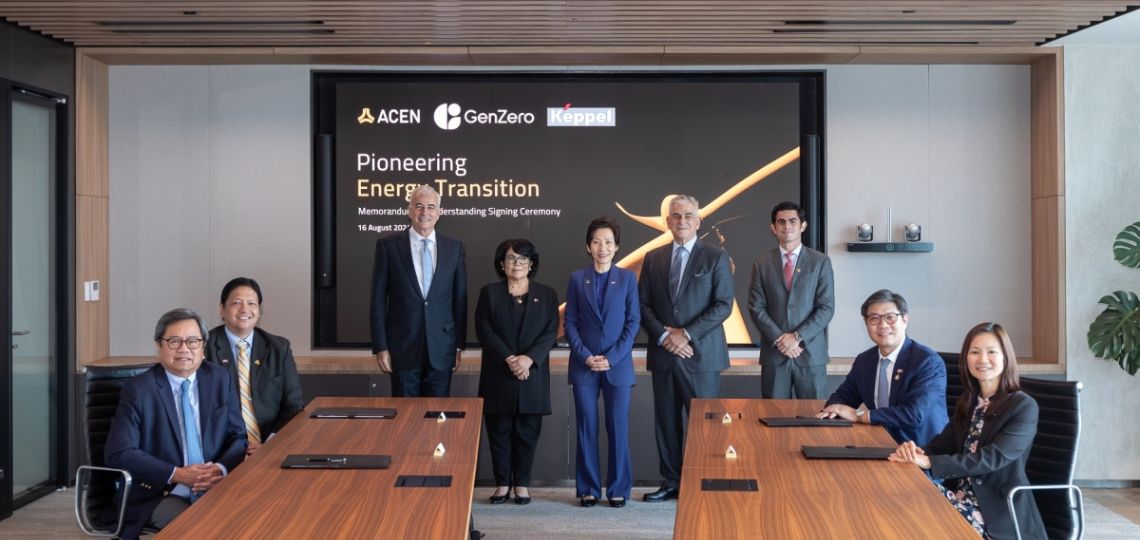
ACEN, GenZero and Keppel join forces to convert a Philippine coal-fired power plant into a renewable energy facility by 2030, using transition credits as financial leverage.
| Countries cited | Philippines |
|---|---|
| Companies cited | GenZero, ACEN, Keppel Ltd. |
| Sector | Solaire, Enjeux énergétiques |
| Theme | Développement de projets / Financement |
| Energy Plan | — |
Leading energy players ACEN, GenZero and Keppel Ltd. announce a strategic partnership to convert the South Luzon Thermal Energy Corporation (SLTEC) coal-fired power plant in Batangas, Philippines.
This innovative initiative, which involves the early closure of the plant by 2030, is based on the use of transition credits, a financial mechanism designed to accelerate the reduction of carbon emissions.
In a context where South-East Asia has one of the world’ s newest and largest fleets of coal-fired power plants, this approach marks a decisive turning point.
If successful, the SLTEC project could serve as a model for other countries in the region, demonstrating the technical and economic viability of converting traditional thermal power plants into renewable energy infrastructures.
Financial leverage for energy transformation
At the heart of this project is the transition credit mechanism.
These credits, generated by the reduction in greenhouse gas emissions during the plant’s conversion, will provide crucial funding for the decommissioning of existing infrastructure and the installation of new renewable capacity.
The project involves replacing SLTEC’s 246 MW of baseload generation with an integrated solar generation and energy storage system, tailored to the region’s fluctuating energy needs.
This approach could circumvent the financial hurdles often encountered in energy transition, while promoting faster adoption of clean technologies.
The partners hope to pave the way for future similar initiatives, both in the Philippines and in other countries where dependence on coal remains a major challenge.
Social and environmental issues
The SLTEC project involves more than just technological conversion.
It also incorporates measures to mitigate the socio-economic impacts of plant closure.
Employee retraining, asset reallocation and management of the consequences for local communities are all integral parts of the approach adopted by ACEN, GenZero and Keppel.
Compliance with environmental, social and governance (ESG) criteria is a fundamental pillar of this initiative.
At the same time, the project is supported by international initiatives such as the Rockefeller Foundation’s Coal to Clean Credit Initiative and the Monetary Authority of Singapore’s Transition Credits Coalition.
These collaborations ensure that the transition credits generated meet the highest standards of environmental integrity, while facilitating their adoption on international markets.
Towards a replicable regional strategy
The innovative approach adopted for the SLTEC plant could well serve as a model for other energy transition projects in the region.
In particular, the integration of transition credits as a financial tool overcomes economic barriers that often hold back energy conversion projects.
This mechanism could also be used to meet the requirements of Article 6 of the Paris Agreement, which allows the transfer of carbon credits between countries to meet climate targets.
The Singaporean government has expressed interest in acquiring such credits, provided they meet Singapore’s rigorous sustainability standards.
This international recognition could enhance the credibility and attractiveness of transition credits, facilitating their integration into financing strategies for decarbonization projects across Southeast Asia.