Nuclearelectrica secures €620mn for strategic Cernavoda projects

Romanian producer Nuclearelectrica has secured €620mn in funding to modernise Cernavoda unit 1 and launch the next phase of units 3 and 4, backed by a banking syndicate led by JP Morgan.
Share:

Comprehensive energy news coverage, updated nonstop

Annual subscription

8.25$/month*

*billed annually at 99$/year for the first year then 149,00$/year ​

Unlimited access • Archives included • Professional invoice

OTHER ACCESS OPTIONS

Monthly subscription

Unlimited access • Archives included

5.2$/month*
then 14.90$ per month thereafter

FREE ACCOUNT

3 articles offered per month

FREE

*Prices are excluding VAT, which may vary depending on your location or professional status

Since 2021: 35,000 articles • 150+ analyses per week

Romanian nuclear energy company Nuclearelectrica has signed two financing agreements totalling €620mn ($728mn) to support its projects at the Cernavoda site. The operation includes a €540mn ($634mn) syndicated loan for the full refurbishment of unit 1, along with an additional €80mn ($94mn) to fund the preparatory phase of units 3 and 4.

A banking consortium led by JP Morgan

Financing for unit 1 is provided by a group of nine banks, including JP Morgan SE (Germany), ING Bank NV Amsterdam-Bucharest, Citibank Europe PLC, UniCredit Bank SA, BRD Groupe Société Générale SA, Banca Transilvania SA, CEC Bank SA and Banca Comercială Română SA. For units 3 and 4, most of the same institutions are involved, excluding Citibank.

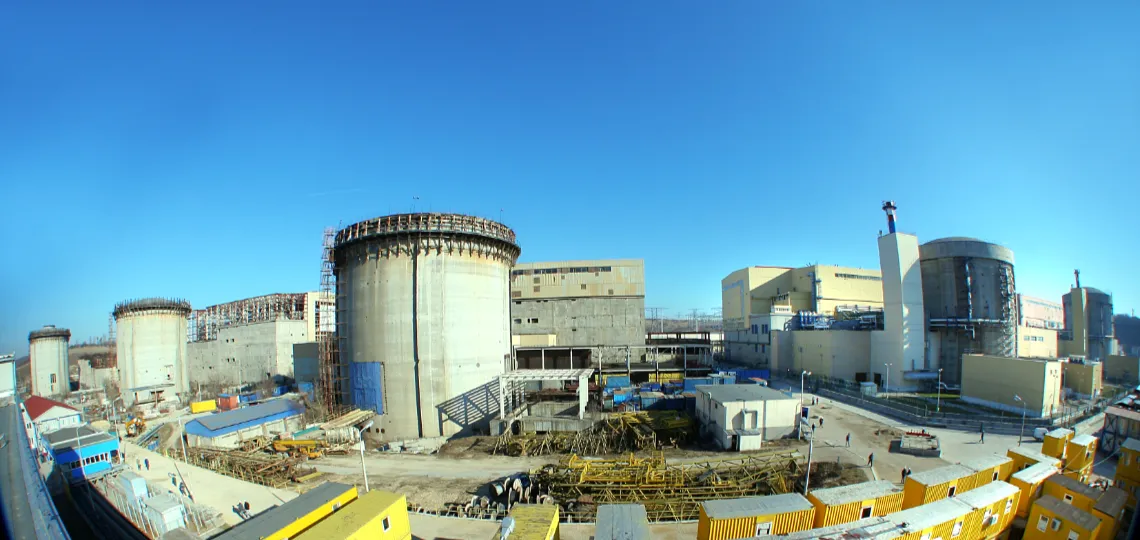
Unit 1 of Cernavoda, which began operations in 1996, is currently undergoing refurbishment as part of the second phase of a three-stage plan launched in 2017. This phase includes planning, signing engineering and construction contracts, acquiring long-cycle equipment, establishing infrastructure and securing necessary regulatory approvals.

A multi-billion euro expansion plan

The unit 1 refurbishment project is estimated at €1.9bn ($2.23bn) and was awarded in December to a consortium led by Korea Hydro & Nuclear Power, along with Candu Energy (a subsidiary of AtkinsRéalis), Canadian Commercial Corporation and Ansaldo Nucleare.

In parallel, preparation for the construction of units 3 and 4 is progressing under an Engineering, Procurement and Construction Management (EPCM) contract signed in November with the FCSA Joint Venture. This group includes Fluor, AtkinsRéalis, Ansaldo Nucleare and Sargent & Lundy Energie, with an estimated value of €3.2bn ($3.76bn).

Gradual restart of Romania’s nuclear fleet

The €80mn loan for units 3 and 4 will support the Limited Notice to Proceed phase, covering engineering work, financial structuring, compliance assessment by the European Commission under Article 43 of the Euratom Treaty, and the adoption of a Final Investment Decision.

Initial work on units 3 and 4 began in the 1980s before being halted. As of today, unit 3 is 52% complete and unit 4 is 30% complete. Nuclearelectrica targets commercial operation in 2030 for unit 3, followed by unit 4 in 2031.

The Candu reactors at the Cernavoda site, which are pressurised heavy water reactors, are designed to operate for 30 years, with the option of a 30-year extension following refurbishment. The process involves removing all fuel and heavy water, dismantling thousands of components, and replacing all 480 fuel channels and 960 feeder tubes with high-precision techniques.
The Wylfa site in Wales will host three Rolls-Royce small modular reactors from 2026, marking a strategic investment in the UK’s nuclear expansion.
EDF confirmed that the Flamanville EPR has reached a major milestone, while planning a nearly year-long shutdown in 2026 for extensive regulatory inspections and key component replacement.
EDF is opening access to its long-term nuclear supply contracts to companies consuming more than 7 GWh per year, an adjustment driven by the gradual end of the Arenh mechanism.
South Korean authorities have approved the continued operation of the Kori 2 reactor for an additional eight years, marking a key milestone in the national nuclear strategy.
A public-private consortium is developing a 5 MW thermal microreactor designed to operate without refuelling for ten years, marking a strategic step in Brazil's nuclear innovation efforts.
EDF has announced that the Flamanville EPR reactor is now operating at 80% of its capacity. The target of reaching full output by the end of autumn remains confirmed by the utility.
The accelerated approval of the Aurora facility’s nuclear safety plan marks a strategic milestone in rebuilding a domestic nuclear fuel production line in the United States.
The Industrikraft consortium will invest SEK400mn ($42.2mn) to become a shareholder in Videberg Kraft, marking a new phase in Sweden’s nuclear project led by Vattenfall on the Värö Peninsula.
MVM Group has signed an agreement with Westinghouse to secure VVER-440 fuel supplies from 2028, reducing its reliance on Russia and strengthening nuclear cooperation between Budapest and Washington.
The delivery of nuclear fuel by Russian subsidiary TVEL to the Da Lat research reactor marks a key step in strengthening the nuclear commercial partnership between Moscow and Hanoi.
US supplier X-energy has formalised a graphite supply contract with Japan's Toyo Tanso for the construction of its first four small modular reactors, in partnership with Dow and backed by the US Department of Energy.
US-based Enveniam has signed an agreement with LIS Technologies Inc. to oversee the design and construction of a new laser-based uranium enrichment facility on American soil.
A consortium led by Swedish giants such as ABB, SSAB and Volvo will invest SEK400mn to support the development of small modular nuclear reactors through a strategic partnership with Vattenfall.
Fusion Fuel Cycles has begun work on its UNITY-2 facility, a unique test bench designed to validate the full tritium fuel cycle under fusion conditions, marking a key step toward fusion energy.
Framatome will produce TRISO fuel at Romans-sur-Isère as part of a pilot project for advanced nuclear reactors, in partnership with actors such as Blue Capsule Technology.
Sweden’s parliament has approved a major reform authorising uranium extraction, opening the door to a reassessment of the economic potential of mining projects containing this strategic mineral.
South Africa's regulator has authorised Koeberg Unit 2 to operate until 2045 following maintenance work and a long-term safety assessment.
French nuclear group Orano has confirmed the release of its representative in Niger, detained since May, as tensions remain high with the country’s junta over control of uranium assets.
EDF launches a sovereign digital platform to secure data exchanges between nuclear stakeholders, aiming to accelerate the construction of future EPR2 reactors.
ONE Nuclear Energy publishes a virtual presentation for investors detailing its industrial vision, ahead of its merger with Hennessy Capital Investment Corp. VII expected in the first half of 2026.

All the latest energy news, all the time

Annual subscription

8.25$/month*

*billed annually at 99$/year for the first year then 149,00$/year ​

Unlimited access - Archives included - Pro invoice

Monthly subscription

Unlimited access • Archives included

5.2$/month*
then 14.90$ per month thereafter

*Prices shown are exclusive of VAT, which may vary according to your location or professional status.

Since 2021: 30,000 articles - +150 analyses/week.