NGE and Sade win contract for cooling system networks of EPR2 reactors

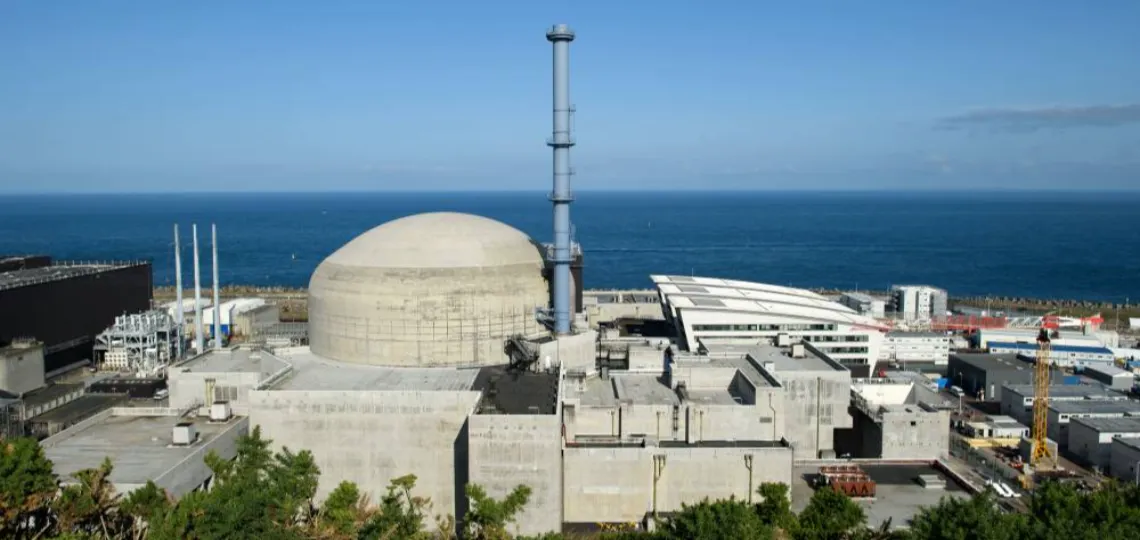
NGE, through its subsidiary Sade, has won the contract for the cooling system networks (SEC) of six EPR2 reactors in France, a key project for nuclear safety and industrial innovation.
Share:

Comprehensive energy news coverage, updated nonstop

Annual subscription

8.25$/month*

*billed annually at 99$/year for the first year then 149,00$/year ​

Unlimited access • Archives included • Professional invoice

OTHER ACCESS OPTIONS

Monthly subscription

Unlimited access • Archives included

5.2$/month*
then 14.90$ per month thereafter

FREE ACCOUNT

3 articles offered per month

FREE

*Prices are excluding VAT, which may vary depending on your location or professional status

Since 2021: 35,000 articles • 150+ analyses per week

As part of the ambitious project to construct six EPR2 nuclear reactors in France, the NGE group, through its subsidiary Sade, has secured a major contract for the cooling system networks (SEC). This contract involves the study, manufacturing, and installation of buried PEhd pipes for the emergency raw water circuit, a crucial component of the reactors’ cooling system.

The Système d’Eau de Circulation (SEC), or Water Circulation System, plays a critical role in cooling sensitive systems and components of a nuclear plant. In this context, NGE and Sade are responsible for constructing the intake and discharge pipes in PEhd specifically for the future EPR2 reactors. This cooling circuit relies on transporting external cold water to the reactor before discharging it back into the cold source.

Preparatory work, including studies and planning, began this year. To ensure the reliability of the methods and meet safety objectives, a series of large-scale feasibility demonstrations will be conducted at the Penly site by the end of the year. These “workshops” replicate real-life construction conditions and test the procedures for welding, assembly, and other key techniques.

NGE, leveraging its expertise in nuclear safety, ensures that all interventions comply with ISO 19443 standards. This certification confirms the group’s proficiency in managing the specific safety challenges posed by nuclear installations.

Additionally, this project is aligned with NGE’s strategy for local integration. It will help promote local employment through recruitment and training programs developed in cooperation with local stakeholders to ensure the success of this key infrastructure project.

A Commitment to Nuclear Safety

Executing this contract highlights NGE’s commitment to nuclear safety. Adherence to ISO 19443 standards is essential for operations on sensitive infrastructure such as nuclear plants. Every phase, from site preparation to the commissioning of pipes, is governed by strict safety protocols designed to ensure maximum protection for operators and the environment.

Feasibility Demonstrations Prior to Work Commencement

The planned demonstrations at the Penly site, which will involve recreating a section of piping under real construction conditions, play a vital role in the project. They not only test materials and methods but also validate the procedures that will be implemented across all EPR2 reactor sites. These workshops are a testament to the rigor with which NGE approaches the construction of nuclear infrastructure.

Local and Economic Impact

Beyond its technical scope, this project will have significant economic and social implications for the region. NGE and Sade’s involvement in local recruitment and training is crucial to the success of the operation. It also strengthens the local economic fabric while meeting the nuclear sector’s demands for skilled labor.
Equinix has signed a strategic agreement with French start-up Stellaria to reserve 500 MWe of advanced nuclear capacity to power its future European AI data centres starting in 2035.
Bishkek plans to host a RITM-200N small modular reactor supplied by Rosatom to address electricity shortages and deepen energy ties with Moscow, despite the risks posed by Western sanctions.
The Niigata prefectural assembly will vote on the restart of Unit 6, potentially marking TEPCO’s first reactor relaunch since the 2011 Fukushima disaster.
The Norwegian government has initiated a consultation with neighbouring countries on its modular nuclear power plant project in Aure and Heim, in accordance with the Espoo Convention.
Türkiye and South Korea have signed a memorandum of understanding to jointly explore nuclear power plant projects, marking a strategic step in the long-term development of Türkiye's energy infrastructure.
Asian Development Bank has amended its energy policy to enable funding for civil nuclear projects in developing member countries across the Asia-Pacific region.
First Hydrogen begins research with the University of Alberta to identify molten-salt mixtures simulating nuclear fuels for SMR prototypes.
Framatome has completed the manufacturing of the first nuclear fuel assemblies for the Barakah power plant, marking a key milestone in the supply agreement signed with Emirates Nuclear Energy Company in July.
A government-commissioned report proposes 47 measures to simplify nuclear regulation, reduce decommissioning costs and accelerate delivery of civilian and military projects.
The Hualong One reactor at Zhangzhou nuclear power plant has been connected to the grid, marking a major milestone in the expansion of China’s civilian nuclear programme.
Russian state nuclear group Rosatom has validated the additive manufacturing of parts for its small modular reactors, marking an industrial first for RITM-200 SMR plant equipment.
California-based Maritime Fusion, backed by Y Combinator and Trucks VC, is betting on a decentralised approach to fusion to target maritime and off-grid applications.
Bayridge Resources secures a majority stake in an advanced uranium project in Canada, strengthening its strategic presence in a geologically promising region.
A significant volume of concrete from the dismantling of the Sizewell A nuclear power plant is being transferred to support the foundations of the Sizewell C project, under a partnership between UK nuclear sector stakeholders.
Korean group KEPCO and UAE-based ENEC have signed two memorandums of understanding to expand their cooperation in civil nuclear energy, artificial intelligence, and digital technologies targeting new international markets.
The Janus programme will deploy micro nuclear power plants across nine military bases to reinforce energy autonomy for critical U.S. Army installations.
The Idaho National Laboratory has started irradiation testing on uranium-zirconium fuel samples from Lightbridge in its experimental reactor, marking a key step toward the industrial validation of advanced nuclear fuel.
NexGen Energy has opened Canadian Nuclear Safety Commission hearings for the final approval of its Rook I uranium project, following more than six years of regulatory process.
Oklo has signed a binding agreement with Siemens Energy to accelerate manufacturing of the energy conversion system for its first advanced nuclear power plant in the United States.
A security document handling incident at the nuclear power plant renews concerns about TEPCO as a key decision on restarting reactors 6 and 7 approaches in Niigata.

All the latest energy news, all the time

Annual subscription

8.25$/month*

*billed annually at 99$/year for the first year then 149,00$/year ​

Unlimited access - Archives included - Pro invoice

Monthly subscription

Unlimited access • Archives included

5.2$/month*
then 14.90$ per month thereafter

*Prices shown are exclusive of VAT, which may vary according to your location or professional status.

Since 2021: 30,000 articles - +150 analyses/week.