First Light Fusion modifies its strategy and abandons nuclear power plant plans
The British company First Light Fusion announces a major strategic shift: it will now focus on commercial partnerships for its amplification technologies, abandoning its nuclear fusion power plant project.
| Sectors | Fusion Energy, Inertial Confinement |
|---|---|
| Themes | Industry & Execution, Corporate Strategy |
| Companies | NASA |
| Countries | United Kingdom, United States |
First Light Fusion, an Oxfordshire-based company founded in 2011, has decided to shift its strategy. Rather than continuing the development of a nuclear fusion power plant, the company will now focus on commercial partnerships. The company is betting on leveraging its amplification technology, which it developed during its research for the creation of a fusion power plant. This shift aims to “capitalize on the tremendous opportunities offered by the inertial fusion market,” generating revenue earlier while reducing the need for long-term financing.
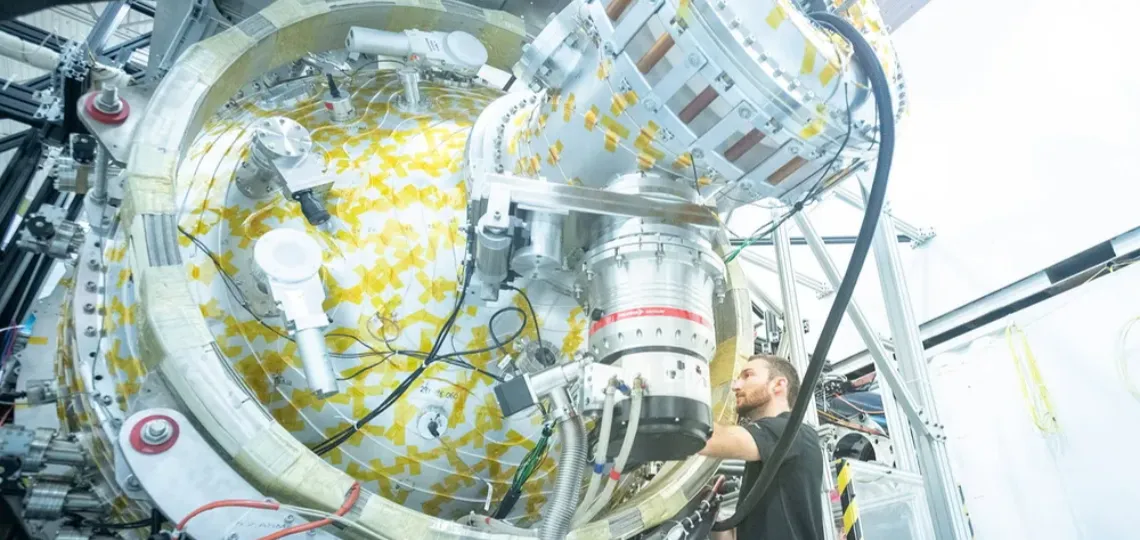
Nuclear fusion is the process by which two light nuclei combine to form a heavier nucleus, releasing a large amount of energy. First Light has focused on inertial confinement fusion, known as projectile fusion, a method that generates the extreme temperatures and pressures necessary for fusion by compressing a target containing fusion fuel using a high-speed projectile. This projectile strikes an amplifier that focuses the energy onto the fusion fuel.
In 2024, the company used this technology when it became the first private fusion company to conduct an experiment on Sandia National Laboratories’ Z machine in New Mexico. It set a new pressure record for quartz, increasing it from 1.5 terapascal to 1.85 while maintaining the necessary conditions for high-precision measurements.
Strategic Shift
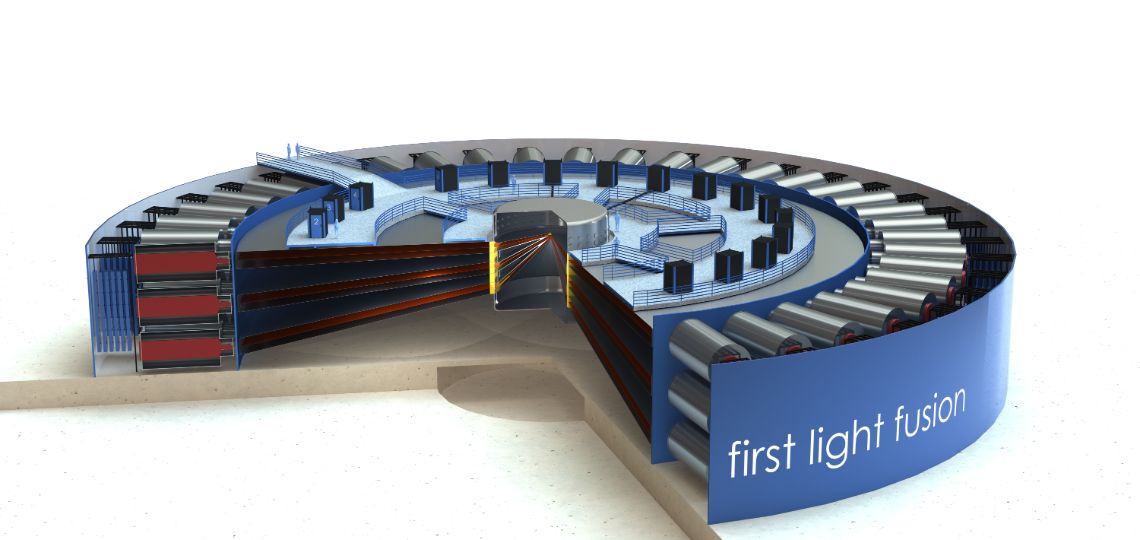
The change in strategy involves abandoning the Machine 4 project, a demonstration facility for ignition fusion, developed in collaboration with the UK Atomic Energy Authority and Tracetebel. Machine 4 was expected to achieve a stored energy of around 100 megajoules, with the capability to launch projectiles at a speed of 60 km per second. Due to First Light’s exclusive amplification technology, this impact speed would have reached approximately 200 km per second.
First Light Fusion’s new development model revolves around commercial partnerships with other fusion companies. The goal is to integrate the company’s amplification technology into fusion plants, regardless of the type of engine used. First Light plans to design targets with its technology to meet the specific needs of its partners, whether companies or academic institutions.
Partnerships in Non-Fusion Sectors
In addition to its fusion projects, First Light is also exploring partnerships in non-fusion sectors, including with companies and universities working in fields such as space exploration and defence. Its amplifier can simulate high-speed and high-pressure impacts, useful for testing materials under extreme conditions. The company is already in discussions with NASA and the Open University to explore how its technology could be used to test the resilience of materials sent into space.
First Light claims that its technology would enable other companies to access pressures that can only be replicated on large, expensive machines. Its amplifiers can double pressure levels and increase speed by 75% compared to existing gas guns, thus opening up new opportunities for research and development across several industrial sectors.
A New Profitability-Focused Strategy
First Light Fusion believes this strategic pivot will enable it to generate revenue much earlier than initially planned. This approach significantly reduces funding needs and positions the company as a key player in the innovation ecosystem. According to Bart Markus, the company’s president, this change will “accelerate our revenue generation model by a decade.” Mark Thomas, the new CEO since February, added: “Our goal is clear: to accelerate the transition to commercial fusion by using our amplification technology to make fusion energy faster, simpler, and more profitable.”