Despite ARCHES shutdown, public investment in hydrogen continues in California
The suspension of ARCHES is not slowing hydrogen initiatives in California, where public authorities are accelerating projects for production, transport and use of the fuel in local infrastructure.
| Sectors | Hydrogen Energy, Green Hydrogen |
|---|---|
| Themes | Investments & Transactions, Public Investment |
| Countries | United States |
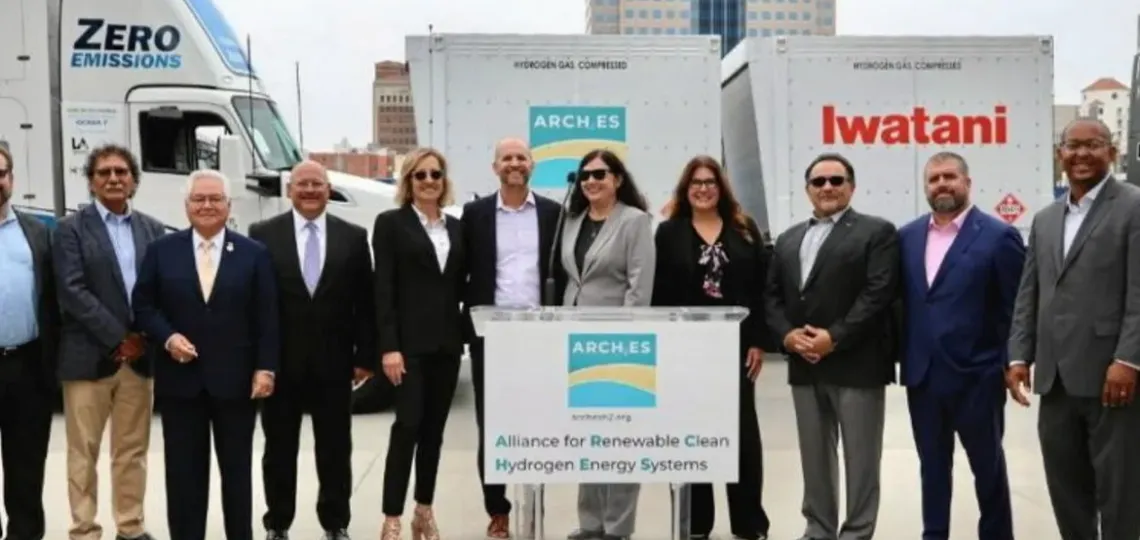
The First Public Hydrogen Authority (FPH2), the first public hydrogen authority in the United States, reaffirmed the stability of California’s hydrogen market following the suspension of operations by the Alliance for Renewable Clean Hydrogen Energy Systems (ARCHES). Despite this withdrawal, public investment in hydrogen remains strong, with active projects across several sectors.
Public infrastructure remains committed
FPH2’s recent solicitation for hydrogen supply attracted new providers ready to enter the California market. At the same time, the Los Angeles Department of Water and Power (LADWP) approved the conversion of the Scattergood plant into a hydrogen-compatible site. This will be the first large-scale project of its kind in the state, supported by municipal funding. The development aligns with growing commitments by local governments to integrate hydrogen into their energy strategies.
Ports and cities are betting on hydrogen
California’s port operators are continuing to deploy hydrogen-based technologies to improve air quality and meet local regulatory requirements. Several cities, including Lancaster, Industry, Fresno and Montebello, have launched transition programmes for hydrogen buses and fixed backup power systems. These projects are supported by local public funds, independent of cancelled federal subsidies.
A development model driven by local initiative
Created to ensure the continuity of hydrogen projects despite fluctuations in national policy, FPH2 relies on municipalities and local authorities to maintain investment momentum. The organisation works with public agencies, labour unions and municipal infrastructure to implement projects across the state. According to FPH2, hydrogen demand is expected to rise significantly, requiring deployment of all planned production facilities.
California’s hydrogen sector benefits from an active public ecosystem, from local governments to port authorities. This structure ensures continuity of projects even without direct federal support, relying on regional partnerships and targeted public funding.