Caracas ends gas trade with Trinidad and Tobago after tanker seizure

Venezuela has ended all energy cooperation with Trinidad and Tobago after the seizure of an oil tanker carrying crude by the United States, accusing the archipelago of participating in the military operation in the Caribbean.
Share:

Comprehensive energy news coverage, updated nonstop

Annual subscription

8.25$/month*

*billed annually at 99$/year for the first year then 149,00$/year ​

Unlimited access • Archives included • Professional invoice

OTHER ACCESS OPTIONS

Monthly subscription

Unlimited access • Archives included

5.2$/month*
then 14.90$ per month thereafter

FREE ACCOUNT

3 articles offered per month

FREE

*Prices are excluding VAT, which may vary depending on your location or professional status

Since 2021: 35,000 articles • 150+ analyses per week

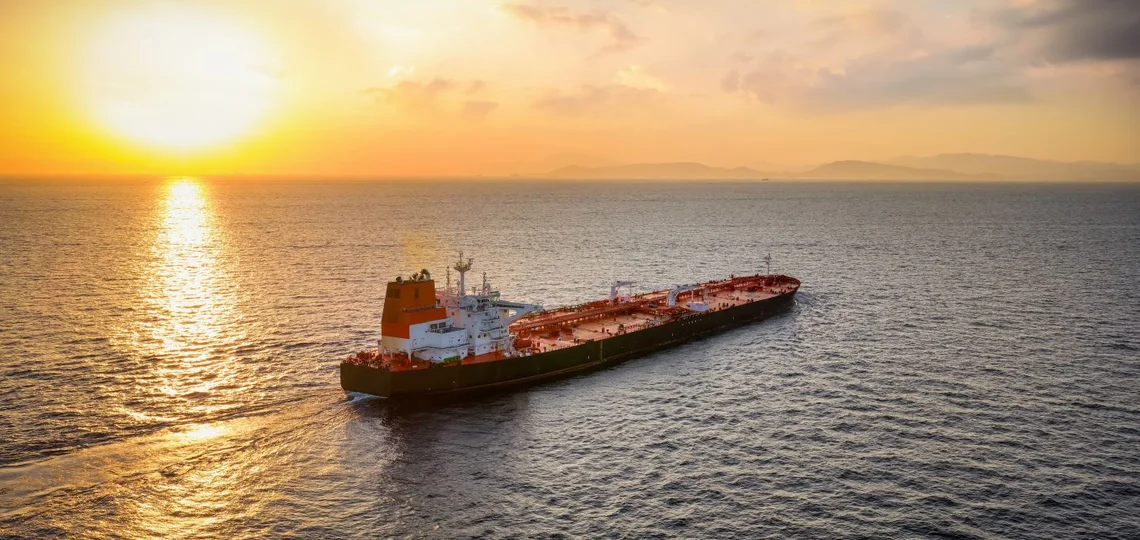
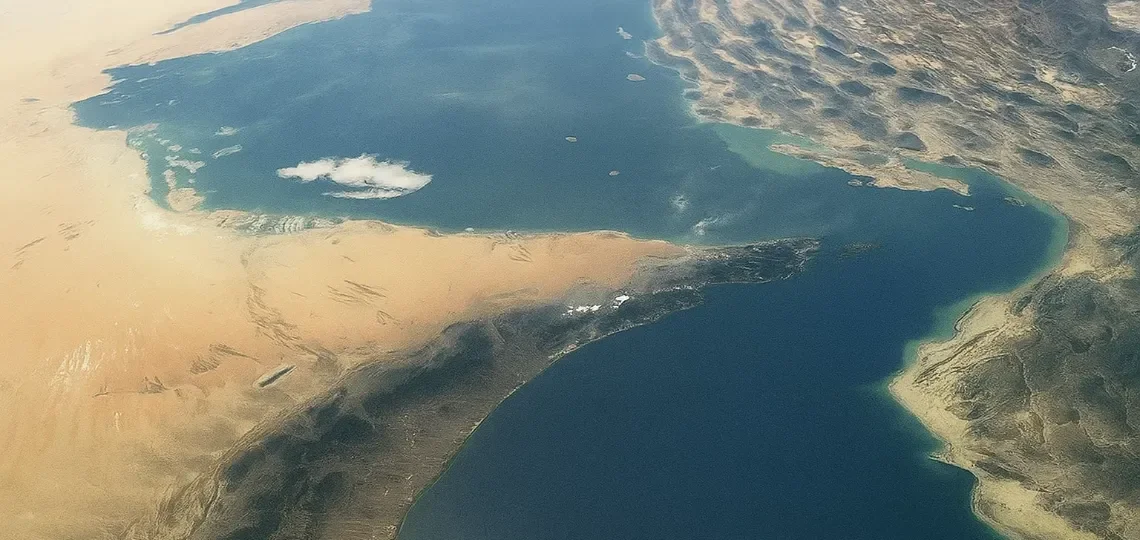
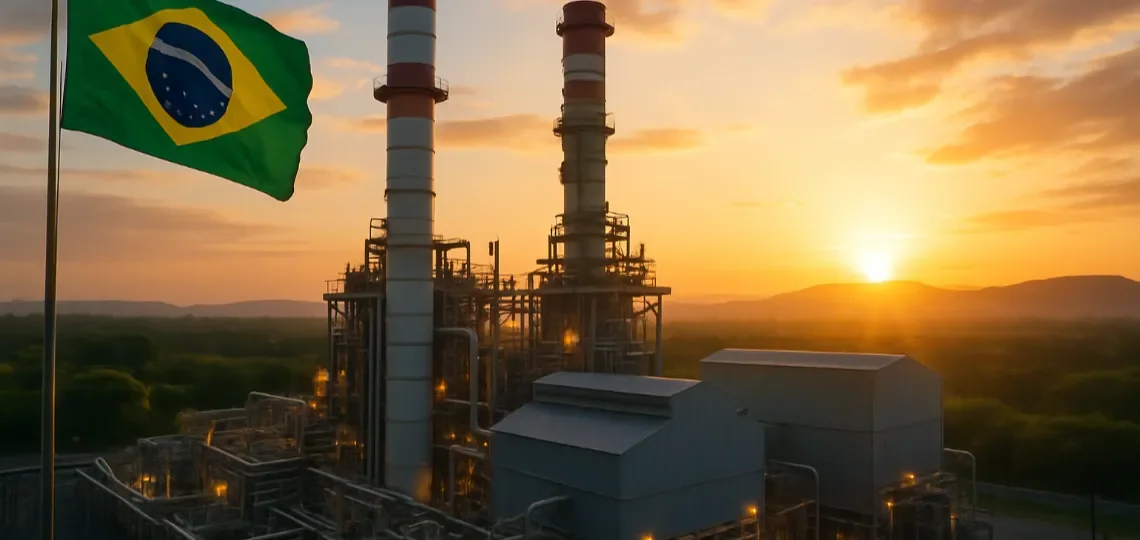
The Venezuelan government has announced the immediate suspension of all contracts and negotiations related to natural gas supply with Trinidad and Tobago. This decision follows the seizure of a vessel transporting Venezuelan crude by the United States in Caribbean waters. Caracas has formally accused the Trinidadian government of collaborating with US authorities during the operation, described by Venezuelan officials as an “act of piracy”.
An energy rupture with immediate consequences

The vessel, boarded by helicopters with soldiers rappelling onto the deck, was carrying Venezuelan oil. The intervention was condemned by Vice President Delcy Rodriguez, who also serves as Minister of Petroleum, citing “a serious violation of international law” and a direct blow to the freedom of maritime trade. President Nicolas Maduro had already suspended bilateral gas agreements in October, but this latest announcement marks a complete end to exchanges.

Trinidad’s stance and closer ties with Washington

Prime Minister Kamla Persad-Bissessar rejected the accusations, stating that her country was not involved in the dispute between Caracas and Washington. She clarified that Trinidad and Tobago does not rely on Venezuela for its natural gas needs and that efforts are underway to accelerate domestic exploration and production. At the same time, the Trinidadian government authorised temporary use of its airports by US forces for logistical operations.

Increased US military presence in the region

In recent months, the United States has stepped up its presence in the Caribbean, officially to combat drug trafficking. Military ships, including the USS Gravely destroyer, were welcomed by Trinidad and Tobago, and joint drills were held in November. A radar was also installed on the island of Tobago near a still-unfinished new airport. Caracas views this as a military pressure strategy aimed at weakening the current leadership.

Political tensions heightened by European sanctions

The energy rupture comes amid heightened diplomatic tensions. The European Union has extended until January 10, 2027, the sanctions targeting 69 Venezuelan officials. The government of Nicolas Maduro condemned the decision, calling it “illegitimate” and “contrary to international law”. At the same time, state-owned company Petroleos de Venezuela (PDVSA) announced it had suffered a cyberattack, with no significant impact on industrial operations.

GTT appoints François Michel as CEO starting January 5, separating governance roles after strong revenue and profit growth in 2024.
The United States is requesting a derogation from EU methane rules, citing the Union’s energy security needs and the technical limits of its liquefied natural gas export model.
Falcon Oil & Gas and its partner Tamboran have completed stimulation of the SS2-1H horizontal well in the Beetaloo Sub-basin, a key step ahead of initial production tests expected in early 2026.
Gasunie Netherlands and Gasunie Germany have selected six industrial suppliers under a European tender to supply pipelines for future natural gas, hydrogen and CO₂ networks.
The ban on Russian liquefied natural gas requires a legal re-evaluation of LNG contracts, where force majeure, change-in-law and logistical restrictions are now major sources of disputes and contractual repricing.
The US House adopts a reform that weakens state veto power over gas pipeline projects by strengthening the federal role of FERC and accelerating environmental permitting.
Morocco plans to commission its first liquefied natural gas terminal in Nador by 2027, built around a floating unit designed to strengthen national import capacity.
An explosion on December 10 on the Escravos–Lagos pipeline forced NNPC to suspend operations, disrupting a crucial network supplying gas to power stations in southwestern Nigeria.
At an international forum, Turkmenistan hosted several regional leaders to discuss commercial cooperation, with a strong focus on gas and alternative export corridors.
The Australian government has launched the opening of five offshore gas exploration blocks in the Otway Basin, highlighting a clear priority for southeast supply security amid risks of shortages by 2028, despite an ambitious official climate policy.
BlackRock sold 7.1% of Spanish company Naturgy for €1.7bn ($1.99bn) through an accelerated bookbuild managed by JPMorgan, reducing its stake to 11.42%.
The British company begins the initial production phase of Morocco's Tendrara gas field, activating a ten-year contract with Afriquia Gaz amid phased technical investments.
The Energy Information Administration revises its gas price estimates upward for late 2025 and early 2026, in response to strong consumption linked to a December cold snap.
Venture Global denies Shell’s claims of fraud in an LNG cargo arbitration and accuses the oil major of breaching arbitration confidentiality.
The Valera LNG carrier delivered a shipment of liquefied natural gas (LNG) from Portovaya, establishing a new energy route between Russia and China outside Western regulatory reach.
South Stream Transport B.V., operator of the offshore section of the TurkStream pipeline, has moved its headquarters from Rotterdam to Budapest to protect itself from further legal seizures amid ongoing sanctions and disputes linked to Ukraine.
US LNG exports are increasingly bypassing the Panama Canal in favour of Europe, seen as a more attractive market than Asia in terms of pricing, liquidity and logistical reliability.
Indian Oil Corporation has issued a tender for a spot LNG cargo to be delivered in January 2026 to Dahej, as Asian demand weakens and Western restrictions on Russian gas intensify.
McDermott has secured a major engineering, procurement, construction, installation and commissioning contract for a strategic subsea gas development offshore Brunei, strengthening its presence in the Asia-Pacific region.
The partnership between Fluor and JGC has handed over LNG Canada's second liquefaction unit, completing the first phase of the major gas project on Canada’s west coast.

All the latest energy news, all the time

Annual subscription

8.25$/month*

*billed annually at 99$/year for the first year then 149,00$/year ​

Unlimited access - Archives included - Pro invoice

Monthly subscription

Unlimited access • Archives included

5.2$/month*
then 14.90$ per month thereafter

*Prices shown are exclusive of VAT, which may vary according to your location or professional status.

Since 2021: 30,000 articles - +150 analyses/week.