Appalachia ramps up production: TETCO M2 basis firms, MVP advances
Producers bring volumes back after targeted reductions, taking advantage of a less discounted basis, expanding outbound capacity and rising seasonal demand, while liquefied natural gas (LNG) exports absorb surplus and support regional differentials.
| Sectors | Gas, Natural Gas |
|---|---|
| Themes | Markets & Finance, Sector Analysis |
| Companies | EQT Corporation |
| Countries | United States |
Gas production has been brought back online selectively by Appalachia operators after economically driven shut-ins. The improvement in basis at reference hubs, including Texas Eastern Transmission zone M-2 (TETCO M2, the M-2 zone of the Texas Eastern Transmission network) and Eastern Gas, South (EGS, the Eastern Gas, South hub), has reduced the appeal of tactical curtailments. Returned volumes align with a rising demand profile driven by heating and gas-fired power generation during peak periods. Capital discipline remains in place, with intra-quarter modulation prioritized to protect marginal short-term profitability.
Price framework, storage and LNG exports
The basis rebound sits alongside domestic storage levels above the five-year average, which provides an operational cushion without removing sensitivity to cold snaps. Deliveries to liquefied natural gas (LNG, liquefied natural gas) export terminals are near recent highs, limiting the build-up of unsold supply on the domestic market. The supply-demand balance benefits from new liquefaction capacity placed into service, with higher offtake stabilizing spreads between Henry Hub (HH, Henry Hub trading point) and destination markets. The export trajectory therefore supports relative firmness in regional prices despite comfortable storage.
Northeast hub differentials remain sensitive to transport constraints during consumption spikes. The Algonquin Citygate (Algonquin Citygate, trading point serving New England) typically shows strong convexity during cold waves, reflecting tighter competition between network usage and power generation. Power operators accordingly secure peaking alternative fuels when gas pressure intensifies. This hedging behavior shapes spot demand and intraday volatility, with knock-on effects on day-ahead regional indices. The combination reinforces the value of precise nomination management and logistical flexibility.
Outbound capacity: MVP already active, “MVP Boost” under review
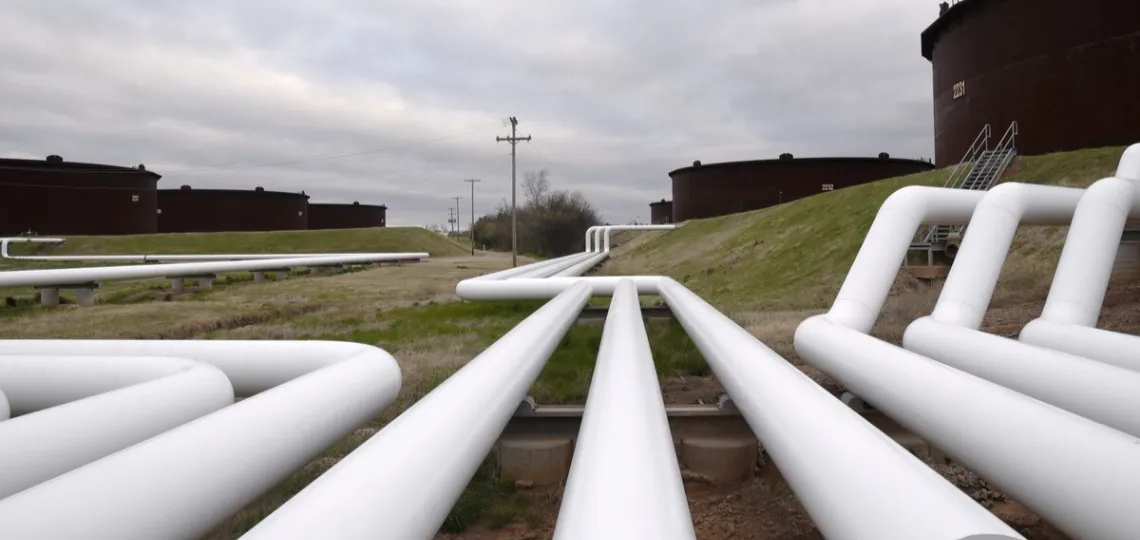
The Mountain Valley Pipeline system (MVP, Mountain Valley pipeline) now functions as a structuring outlet for basin egress. The “MVP Boost” capacity increase targets an increment of about 0.6 billion cubic feet per day, raising total capacity to roughly 2.6 billion cubic feet per day after upgrades. The authorization filing with the Federal Energy Regulatory Commission (FERC, Federal Energy Regulatory Commission) follows an open season indicating stronger shipper interest from investment-grade buyers. This prospect has an anticipatory effect on basis curves, notably at TETCO M2 and interconnections toward the Mid-Atlantic and Southeast. Operators are adjusting firm transport (FT, firm transport capacity) portfolios accordingly to secure the highest-value routes.
Beyond MVP, incremental expansions on existing systems through compression and interconnection upgrades help remove bottlenecks. Projects target capacity gains at moderate unit cost with shorter timelines than new greenfield lines. This approach favors faster paybacks consistent with the capital discipline cited by producers. The net result is better evacuation of Appalachian molecules toward structural demand centers and aggregation points connected to export terminals.
Producer strategies: modulation and maintenance mode
Leading producers, including EQT Corporation (EQT Corporation), Antero Resources Corporation (Antero Resources Corporation) and CNX Resources Corporation (CNX Resources Corporation), maintain a strategy centered on free cash flow with calibrated drilling and completion activity. Volumes are modulated in response to basis value and transport availability, with rapid restarts once marginal breakeven thresholds are met. Public guidance emphasizes a maintenance mode over the near term, limiting the risk of localized oversupply. This framework increases the value of firm transport assets and logistical options rather than a broad ramp-up in rig activity.
The merger of Chesapeake Energy Corporation (Chesapeake Energy Corporation) and Southwestern Energy Company (Southwestern Energy Company) created Expand Energy Corporation (Expand Energy Corporation), raising the presence of large operators in Appalachia. Consolidation enhances inter-basin arbitrage and nomination optimization across multiple systems. A larger integrated operator can better coordinate upstream development with outbound capacity, reducing congestion risks linked to maintenance windows. The effect on differentials includes smaller extreme discounts during temporary demand shocks.
Regional demand and downstream securing
Local distribution companies, known as LDCs (LDCs, local distribution companies), are adjusting procurement and storage positions ahead of winter peaks. Residential and commercial consumption profiles are rising, applying pressure to sensitive segments of the network. The retirement of certain legacy thermal units has increased dependence on secured gas flows and regional import infrastructure. In this context, the Everett marine terminal remains an active receipt point, providing a buffer during pipeline constraint events.
Power operators within the footprint of Independent System Operator New England (ISO-NE, Independent System Operator New England) retain fuel-flexibility plans to manage demand spikes. Temporary switches to backup fuels can occur when gas transport capacity is saturated. These operational choices affect spot demand and peak premia in the region. Coordination between LDCs and producers aims to smooth peaks through appropriately structured transport contracts and storage options.
International factors: European timetable on Russian gas
The European regulatory calendar sets a progressive ban on liquefied natural gas (LNG, liquefied natural gas) imports of Russian origin, with different deadlines for short-term and long-term contracts. This perspective increases visibility for European demand for non-Russian cargoes, lifting traction for American molecules. The resulting price signals feed back into export flows and spreads between European indices and Henry Hub (HH, Henry Hub trading point). These dynamics strengthen shipper incentives to secure firm capacity and loading slots.
The combination of sustained transatlantic demand and additional United States liquefaction capacity consolidates the domestic balance. Higher feedgas (feedgas, gas supplied to liquefaction trains) stabilizes supply absorption, reducing the likelihood of a protracted return of local prices below curtailment triggers. Producers arbitrate between domestic sales and export according to net chain differentials, prioritizing value after transport. The aggregate outcome is a less volatile Appalachian basis than in the post-summer troughs, subject to weather variability.
Operational issues and short-term risks
Maintenance windows on major transport systems can create temporary tightness, affecting nominations and interconnection availability. Early cold episodes raise convexity at sensitive hubs, with amplified effects on day-ahead indexes. Producers retain internal trigger thresholds for punctual curtailments when basis drops below marginal profitability floors. Companies simultaneously adjust basis hedges to smooth cash-flow volatility.
On the regulatory side, the trajectory of the Waste Emissions Charge (WEC, Waste Emissions Charge) for methane remains a cost parameter to monitor. The outcome of ongoing discussions on implementation and effective timing will shape cash-cost differentials across assets. Regulatory decisions on capacity expansions such as “MVP Boost” will define the near-term egress profile. These elements will influence regional differential formation and the degree of volume modulation by producers.