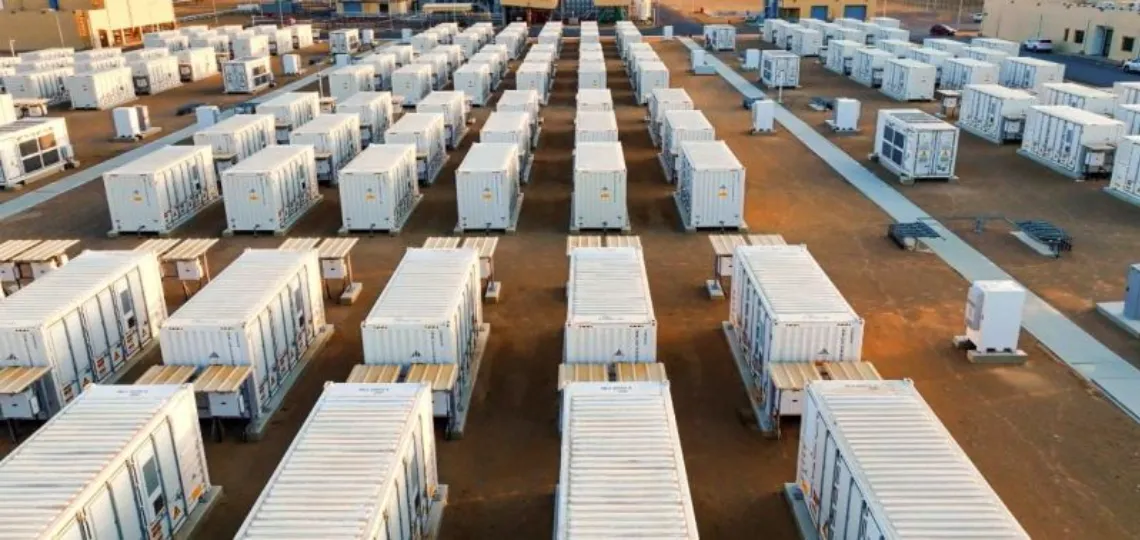
Saudi Arabia has officially connected its flagship energy storage system (ESS) project to the national grid, with a capacity of 7.8 GWh. Once fully operational, this project will become the largest battery energy storage system (BESS) currently in service worldwide. Deployed in the regions of Najran, Khamis Mushait, and Madaya, the project marks a key milestone in the country’s energy infrastructure expansion.
Accelerated logistics for large-scale deployment
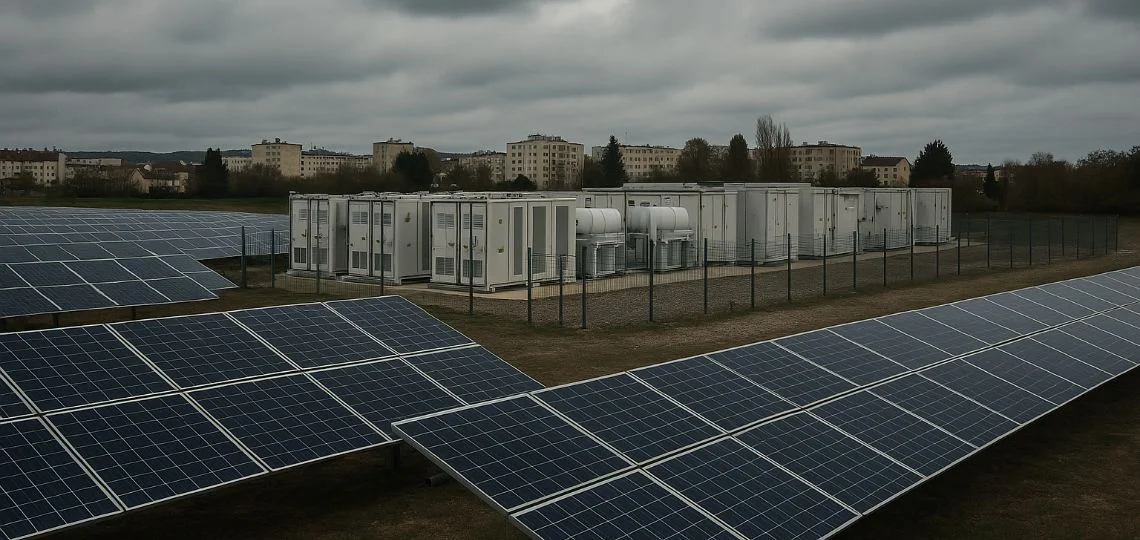
Equipment supplier Sungrow ensured the manufacturing and delivery of more than 1,500 PowerTitan 2.0 systems within 58 days, under a particularly tight schedule. This all-in-one system integrates Power Conversion Systems (PCS), pre-assembled battery containers, medium voltage transformers, and RMU units, all factory-tested. This modular configuration significantly reduced on-site installation time.
A dedicated local service team, composed of technicians based in Saudi Arabia, was mobilised for installation, commissioning, and connection to the national power grid. Their presence on-site enabled efficient coordination across the different project locations.
Storage capacity and national energy impact
The system is expected to reach an annual charge and discharge capacity of 2.2 billion kWh, equivalent to the annual electricity consumption of around 400,000 Saudi households. This project marks the beginning of large-scale energy storage deployment in the Middle East, a region still relatively under-equipped in this domain despite its energy diversification ambitions.
Energy storage is identified as a strategic lever in the country’s energy roadmap. This facility is expected to play a central role in grid stabilisation and in managing the intermittency of growing renewable energy integration.
A long-term strategy for the kingdom
The project is part of Saudi Arabia’s Vision 2030 goals, which aim to modernise national infrastructure and diversify the energy mix. It also sends a strong signal to international markets regarding the country’s willingness to invest in high-capacity storage technologies.
Full commissioning of the facility will serve as an industrial-scale test for similar future projects. The simultaneous deployment across three sites allowed this project to serve as a technical model for potential rollouts in other parts of the country.