BayWa r.e. receives DNV certification for its concrete floating wind concept

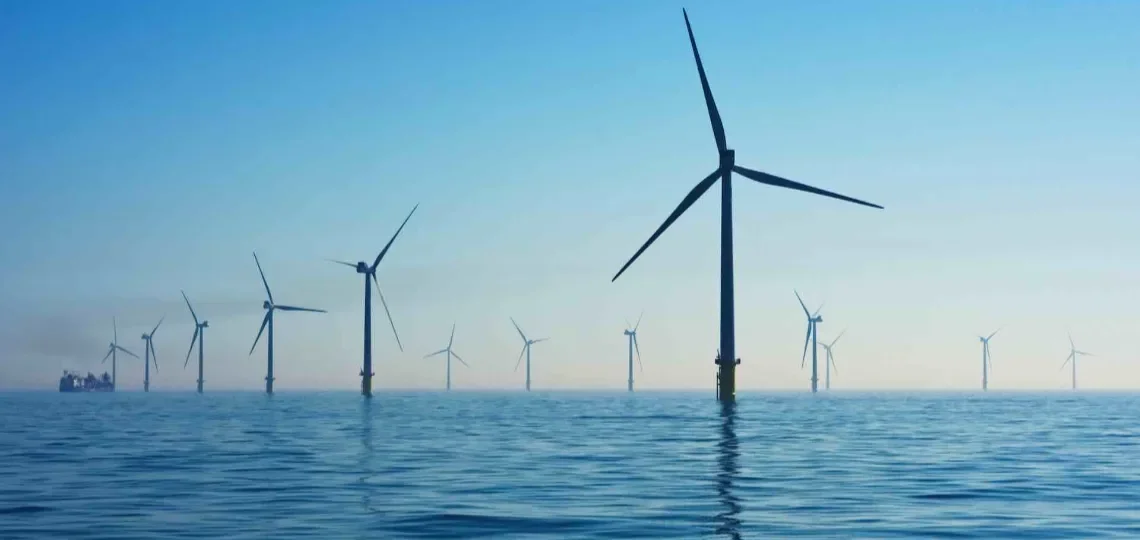
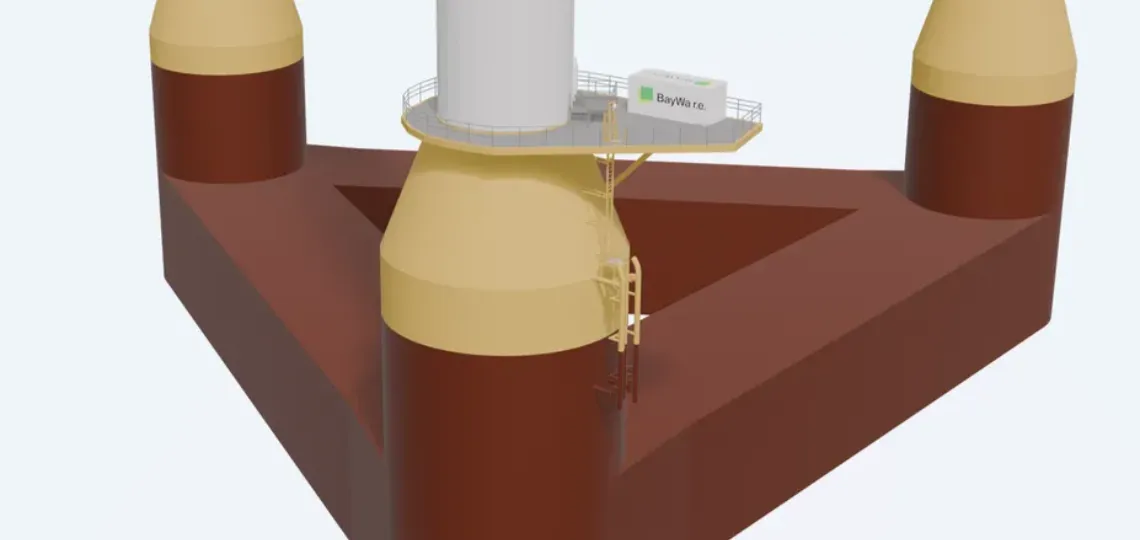
BayWa r.e. has reached a strategic milestone with the concept certification of its BayFloat floating substructure, validated by DNV according to current floating offshore wind standards.
Share:

Comprehensive energy news coverage, updated nonstop

Annual subscription

8.25$/month*

*billed annually at 99$/year for the first year then 149,00$/year ​

Unlimited access • Archives included • Professional invoice

OTHER ACCESS OPTIONS

Monthly subscription

Unlimited access • Archives included

5.2$/month*
then 14.90$ per month thereafter

FREE ACCOUNT

3 articles offered per month

FREE

*Prices are excluding VAT, which may vary depending on your location or professional status

Since 2021: 35,000 articles • 150+ analyses per week

German group BayWa r.e. has received concept certification for its BayFloat floating foundation system for offshore wind turbines, in accordance with the DNV-SE-0422:2021-09 scheme. This validation was granted by Norwegian certification body DNV following extensive internal assessments and technical feasibility checks. The certified system includes a concrete floating substructure and a mooring system designed for large-scale offshore wind farms.
Certification focused on industrialisation

The DNV-ST-0119:2021-06 standard, which governs floating wind turbine structures, was used as the main reference for this certification. The process considered requirements for industrialised fabrication, assembly, project execution and operations and maintenance (O&M), with a view to future commercial-scale deployment. The design was developed to include project-specific optimisation, enabling adaptation to existing port infrastructure and local supply chains.

Ricardo Rocha, Technical Director Offshore Wind at BayWa r.e., stated that this milestone demonstrates the maturity of their proprietary technology. He acknowledged the collaboration with Danish engineering firm Ramboll, which provided design support and engineering insights throughout the process.

Scaled model to validate constructability

The next phase of development will involve the construction of a scaled-down model to test constructability and industrialisation processes. This prototype will help identify any remaining technical challenges before a potential move to industrial scale, a key step in assessing the economic viability of the technology.

Andreas Manjock, Principal Engineer and Project Manager at DNV, highlighted the robustness of the validated design. He added that the certification confirms the technical feasibility of the BayFloat concept while laying the groundwork for future industrial deployment.

A growing global market

According to data published by Renewable UK, the global pipeline for floating wind projects reached 266 GW at the end of 2024. This figure reflects the growing interest in floating solutions, which allow wind potential to be harnessed in deep waters beyond the reach of traditional fixed-bottom foundations.

Ramboll, a specialist in offshore wind foundations, stated it had applied its latest floating-specific concrete substructure design methodologies to the project. According to Denis Matha, Global Head of Floating Wind at Ramboll, these approaches helped reduce common simplifications in the concept phase while securing the design well beyond formal requirements.

The Kagurayama onshore wind farm (61.1 MW) begins operations under a secured 2017 FIT tariff, despite grid injection limits and a multi-stakeholder local governance model.
The Trump administration has ordered the immediate halt of five major offshore wind construction sites in the Atlantic, citing national security threats and drawing mixed reactions from industry and political circles.
Policy reversals, reduced performance and corporate disengagement marked an unprecedented slowdown in wind power in 2025, although China continued its expansion at a steady pace.
The Québec government has approved three wind projects totalling 792 MW to meet growing energy demand and support regional economies in Bas-Saint-Laurent and Capitale-Nationale.
French group ENGIE has officially commissioned the Serra do Assuruá complex in the State of Bahia, making it its largest onshore wind project worldwide.
RWE signed a 15-year power purchase agreement with Indiana Michigan Power for the Prairie Creek project, aimed at supporting Indiana’s growing electricity demand starting in 2028.
EDP has signed a long-term electricity supply agreement with Energa for a 322 MW hybrid portfolio combining wind and solar, marking one of the largest contracts of its kind in Poland.
Ocean Winds has deployed a LiDAR buoy off Gippsland to collect accurate data on wind and currents, a key step in its 1.3 GW offshore wind project in Australia.
A consortium led by EDF power solutions has signed a 20-year agreement with Nama PWP to develop a 120 MW wind farm in southeastern Oman, with commissioning scheduled for Q3 2027.
Microsoft expands its partnership with Iberdrola through two new power purchase agreements in Spain, reinforcing its European energy strategy while deepening the use of cloud and artificial intelligence solutions from the US group.
Casa dos Ventos awards Vestas the supply, construction and maintenance of a 184-turbine complex in the state of Piauí, with an investment exceeding $1.01bn.
Warsaw tests long-term support for offshore wind with a structured tender to maximise competition, reduce financial risk and reassure a supply chain under pressure across Europe.
TotalEnergies has sold 50% of a portfolio of wind and solar projects in Greece to Asterion Industrial Partners, valued at €508mn ($554mn), while retaining operational control and the main share of electricity marketing.
Italy’s offshore wind rollout remains at a standstill, freezing over 18 GW of pending projects and weakening national renewable energy targets.
German manufacturer Nordex has secured an order for 34 turbines for a 200 MW project in the Canadian province of New Brunswick, marking its first entry into this region.
OX2 has started construction on three new onshore wind farms in Finland, bringing its total installed capacity in the country to 750 MW, a record level for a private energy sector player.
Italian group Enel has acquired two onshore wind farms in Germany for an enterprise value of €80mn ($86.5mn), strengthening its presence in a stable and strategic market as part of a targeted asset transfer.
EDF power solutions announces commercial operation of the San Kraal wind farm, the first unit of the 420MW Koruson 1 project, with full commissioning expected in early 2026.
Q ENERGY has announced the entry of three local and citizen-based partners into the capital of the Ventajou wind farm, marking its first strategic equity opening to institutional and community investors.
The Norwegian government has allocated two areas of the Utsira Nord project to the Equinor–Vårgrønn and EDF–Deep Wind Offshore consortia, launching a preparatory phase before a competitive state aid auction.

All the latest energy news, all the time

Annual subscription

8.25$/month*

*billed annually at 99$/year for the first year then 149,00$/year ​

Unlimited access - Archives included - Pro invoice

Monthly subscription

Unlimited access • Archives included

5.2$/month*
then 14.90$ per month thereafter

*Prices shown are exclusive of VAT, which may vary according to your location or professional status.

Since 2021: 30,000 articles - +150 analyses/week.