Eskom forecasts $937 million profit for 2026 fiscal year

South African state utility Eskom expects a second consecutive year of profit, supported by tariff increases, lower debt levels and improved operations.

Share:

Comprehensive energy news coverage, updated nonstop

Annual subscription

8.25€/month*

*billed annually at 99€/year for the first year then 149,00€/year ​

Unlimited access • Archives included • Professional invoice

OTHER ACCESS OPTIONS

Monthly subscription

Unlimited access • Archives included

5.2€/month*
then 14.90€ per month thereafter

FREE ACCOUNT

3 articles offered per month

FREE

*Prices are excluding VAT, which may vary depending on your location or professional status

Since 2021: 35,000 articles • 150+ analyses per week

South Africa’s electricity supplier Eskom expects a net profit of ZAR16bn ($937mn) by the end of its financial year in March 2026, according to a statement released on November 28. This would match the result recorded in the previous year, confirming a gradual recovery after years of losses.

Recovery supported by interim results

In the first half of the 2026 fiscal year, which ended in September, the public utility posted a net profit of ZAR24.3bn ($1.4bn), highlighting the continued improvement of its financial position. Lower borrowing costs, linked to reduced debt levels, contributed to the turnaround. Financial charges fell by 14% to ZAR15.3bn ($896mn), while revenue rose 4% to ZAR191.3bn ($11.2bn), mainly due to a 12.7% average increase in electricity tariffs introduced in April.

Improved grid stability

Between March and September, Eskom implemented load shedding on only four days, a marked improvement compared to more than 300 days of blackouts in 2023. This stabilisation helped restore confidence in the national grid. It was also cited as a factor in S&P Global Ratings’ decision to upgrade South Africa’s long-term foreign currency credit rating from BB- to BB.

Persistent structural challenges

Despite the progress, Eskom continues to face structural issues, including unpaid municipal debts, which reached ZAR105bn ($6.1bn) as of September 30. The National Treasury has introduced targeted measures to address the issue, considered critical to the company’s financial stability.

$18.7 billion investment target over five years

Eskom plans to mobilise ZAR320bn ($18.7bn) over the next five years to maintain its production and transmission infrastructure. Part of the funding will support the planned expansion of installed generation capacity from 66 gigawatts (GW) in 2024 to 107 GW by 2034. This growth is expected to facilitate the integration of renewable energy sources into the national grid.
Zenith Energy centres its strategy on a $572.65mn ICSID claim against Tunisia, an Italian solar portfolio and uranium permits, amid financial strain and reliance on capital markets.
Ivanhoe Mines expects a 67% increase in electricity consumption at its copper mine in DRC, supported by new hydroelectric, solar and imported supply sources.
Q ENERGY France and the Association of Rural Mayors of France have entered a strategic partnership to develop local electrification and support France's energy sovereignty through rural territories.
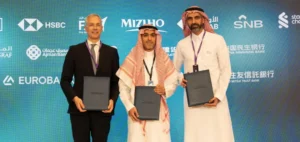
ACWA Power, Badeel and SAPCO have secured $8.2bn in financing to develop seven solar and wind power plants with a combined capacity of 15 GW in Saudi Arabia, under the national programme overseen by the Ministry of Energy.
Hydro-Québec reports a 29% increase in net income over nine months in 2025, supported by a profitable export strategy and financial gains from an asset sale.
Antin Infrastructure Partners is preparing to sell Idex in early 2026, with four North American funds competing for a strategic asset in the European district heating market.
EDF could sell up to 100% of its US renewables unit, valued at nearly €4bn ($4.35bn), to focus on French nuclear projects amid rising debt and growing political uncertainty in the United States.
Norsk Hydro plans to shut down five extrusion plants in Europe in 2026, impacting 730 employees, as part of a restructuring aimed at improving profitability in a pressured market.
The City of Paris has awarded Dalkia the concession for its urban heating network, a €15bn contract, ousting long-time operator Engie after a five-year process.
NU E Power Corp. completed the purchase of 500 MW in energy assets from ACT Mid Market Ltd. and appointed Broderick Gunning as Chief Executive Officer, marking a new strategic phase for the company.
Commodities trader BB Energy has cut over a dozen jobs in Houston and will shift some administrative roles to Europe as part of a strategic reorganisation.
Ferrari has entered into an agreement with Shell for the supply of 650 GWh of renewable electricity until 2034, covering nearly half of the energy needs of its Maranello site.
By divesting assets in Mexico, France and Eastern Europe, Iberdrola reduces exposure to non-strategic markets to strengthen its positions in regulated networks in the United Kingdom, the United States and Brazil, following a targeted capital reallocation strategy.
Iberdrola offers to buy the remaining 16.2% of Neoenergia for 32.5 BRL per share, valuing the transaction at approximately €1.03bn to simplify its Brazilian subsidiary’s structure.
Paratus Energy Services collected $38mn via its subsidiary Fontis Energy for overdue invoices in Mexico, supported by a public fund aimed at stabilising supplier payments.
CrossBoundary Energy secures a $200mn multi-project debt facility, backed by Standard Bank and a $495mn MIGA guarantee, to supply solar and storage solutions for industrial and mining clients across up to 20 African countries.
Mercuria finalises an Asian syndicated loan refinancing with a 35% increase from 2024, consolidating its strategic position in the region.
Sixty Fortune 100 companies are attending COP30, illustrating a growing disconnect between federal US policy and corporate strategies facing international climate regulations.
Tanmiah Food Company signed three memorandums of understanding to reduce its emissions and launched the region’s first poultry facility cooled by geothermal energy, in alignment with Saudi Arabia’s industrial ambitions.
Subsea7 posted higher operating profit and a record order backlog, supported by long-term contracts in the Subsea and Renewables segments.

All the latest energy news, all the time

Annual subscription

8.25€/month*

*billed annually at 99€/year for the first year then 149,00€/year ​

Unlimited access - Archives included - Pro invoice

Monthly subscription

Unlimited access • Archives included

5.2€/month*
then 14.90€ per month thereafter

*Prices shown are exclusive of VAT, which may vary according to your location or professional status.

Since 2021: 30,000 articles - +150 analyses/week.