Rolls-Royce SMR strengthens nuclear cooperation with ÚJV Řež in Czechia

Rolls-Royce SMR has expanded its partnership with ÚJV Řež to accelerate the deployment of small modular reactors, targeting the construction of several units in the Czech Republic and abroad.

Share:

Comprehensive energy news coverage, updated nonstop

Annual subscription

8.25$/month*

*billed annually at 99$/year for the first year then 149,00$/year ​

Unlimited access • Archives included • Professional invoice

OTHER ACCESS OPTIONS

Monthly subscription

Unlimited access • Archives included

5.2$/month*
then 14.90$ per month thereafter

FREE ACCOUNT

3 articles offered per month

FREE

*Prices are excluding VAT, which may vary depending on your location or professional status

Since 2021: 35,000 articles • 150+ analyses per week

UK-based Rolls-Royce SMR has signed a memorandum of understanding with Czech company ÚJV Řež to deepen their cooperation in the field of small modular reactors. The agreement covers technical and regulatory activities specific to the Czech nuclear market, including engineering services, testing, evaluation of critical components, operational support and licensing procedures.

This strengthened cooperation comes as the Czech Republic has selected Rolls-Royce SMR’s technology to provide up to 3 GW of nuclear capacity. Czech energy group ČEZ, the country’s main nuclear operator, already holds a 20% stake in Rolls-Royce SMR.

Industrial expansion around the SMR programme

In parallel with the memorandum signing, Rolls-Royce SMR held a technical conference in Prague with its suppliers, highlighting opportunities for Czech companies to join the technology’s value chain. According to ČEZ, local firms are well positioned to contribute to the construction of these units both domestically and in international markets.

ÚJV Řež, 80% owned by ČEZ, is already engaged in a contract with Rolls-Royce SMR for analysis and validation of key equipment. Its Director General, Martin Rušcák, stated that the partnership would leverage the institute’s decades of nuclear expertise and support the national industry’s export ambitions.

Aiming to reduce construction risk

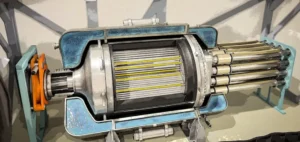
The technology developed by Rolls-Royce SMR is based on a 470 MWe pressurised water reactor designed to provide stable output for at least 60 years. The modular architecture enables 90% of the unit to be factory-built, with dimensions of around 16 metres by 4 metres. This approach is intended to reduce on-site risks and significantly shorten construction timelines.

The model has already been selected by both the Czech and UK governments for their national small modular reactor programmes. Rolls-Royce SMR Technical Director David Dodd emphasised ÚJV Řež’s reputation in the European nuclear sector and the value of this collaboration to the integrity of the technology programme.


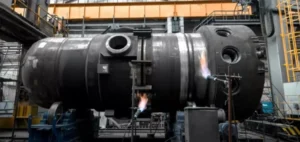
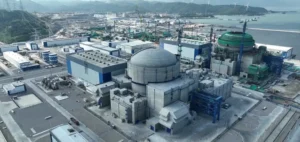
The VVER-1200 nuclear reactor at Xudabao 4 in China has completed installation of its final passive water tank, marking the end of modular construction for the second phase of the project.
Ottawa and Edmonton commit to a nuclear production roadmap by 2050, through a memorandum of understanding also covering carbon capture and an Indigenous-led pipeline project.
Niamey asserts control over its uranium resources by authorising open market sales of Somaïr’s production, formerly operated by France’s Orano, amid ongoing legal disputes.
Equinix has signed a strategic agreement with French start-up Stellaria to reserve 500 MWe of advanced nuclear capacity to power its future European AI data centres starting in 2035.
Bishkek plans to host a RITM-200N small modular reactor supplied by Rosatom to address electricity shortages and deepen energy ties with Moscow, despite the risks posed by Western sanctions.
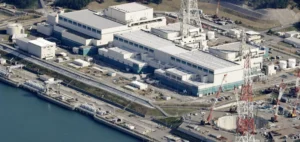
The Niigata prefectural assembly will vote on the restart of Unit 6, potentially marking TEPCO’s first reactor relaunch since the 2011 Fukushima disaster.
The Norwegian government has initiated a consultation with neighbouring countries on its modular nuclear power plant project in Aure and Heim, in accordance with the Espoo Convention.
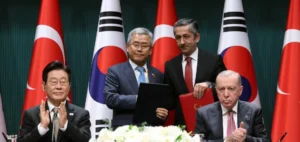
Türkiye and South Korea have signed a memorandum of understanding to jointly explore nuclear power plant projects, marking a strategic step in the long-term development of Türkiye's energy infrastructure.
Asian Development Bank has amended its energy policy to enable funding for civil nuclear projects in developing member countries across the Asia-Pacific region.
First Hydrogen begins research with the University of Alberta to identify molten-salt mixtures simulating nuclear fuels for SMR prototypes.
Framatome has completed the manufacturing of the first nuclear fuel assemblies for the Barakah power plant, marking a key milestone in the supply agreement signed with Emirates Nuclear Energy Company in July.
A government-commissioned report proposes 47 measures to simplify nuclear regulation, reduce decommissioning costs and accelerate delivery of civilian and military projects.
The Hualong One reactor at Zhangzhou nuclear power plant has been connected to the grid, marking a major milestone in the expansion of China’s civilian nuclear programme.
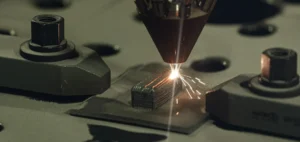
Russian state nuclear group Rosatom has validated the additive manufacturing of parts for its small modular reactors, marking an industrial first for RITM-200 SMR plant equipment.
California-based Maritime Fusion, backed by Y Combinator and Trucks VC, is betting on a decentralised approach to fusion to target maritime and off-grid applications.
Bayridge Resources secures a majority stake in an advanced uranium project in Canada, strengthening its strategic presence in a geologically promising region.
A significant volume of concrete from the dismantling of the Sizewell A nuclear power plant is being transferred to support the foundations of the Sizewell C project, under a partnership between UK nuclear sector stakeholders.
Korean group KEPCO and UAE-based ENEC have signed two memorandums of understanding to expand their cooperation in civil nuclear energy, artificial intelligence, and digital technologies targeting new international markets.
The Janus programme will deploy micro nuclear power plants across nine military bases to reinforce energy autonomy for critical U.S. Army installations.
The Idaho National Laboratory has started irradiation testing on uranium-zirconium fuel samples from Lightbridge in its experimental reactor, marking a key step toward the industrial validation of advanced nuclear fuel.

All the latest energy news, all the time

Annual subscription

8.25$/month*

*billed annually at 99$/year for the first year then 149,00$/year ​

Unlimited access - Archives included - Pro invoice

Monthly subscription

Unlimited access • Archives included

5.2$/month*
then 14.90$ per month thereafter

*Prices shown are exclusive of VAT, which may vary according to your location or professional status.

Since 2021: 30,000 articles - +150 analyses/week.