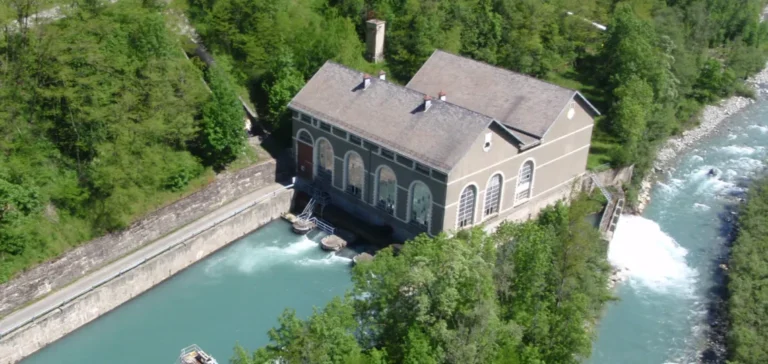
Hydrocop lève €182mn pour moderniser son parc hydroélectrique en France

Le producteur Hydrocop a levé €182mn en dette senior pour refinancer ses actifs et déployer un plan d’investissement de €35mn axé sur la modernisation et la flexibilité de ses installations hydroélectriques.

Share:

Comprehensive energy news coverage, updated nonstop

Annual subscription

8.25$/month*

*billed annually at 99$/year for the first year then 149,00$/year ​

Unlimited access • Archives included • Professional invoice

OTHER ACCESS OPTIONS

Monthly subscription

Unlimited access • Archives included

5.2$/month*
then 14.90$ per month thereafter

FREE ACCOUNT

3 articles offered per month

FREE

*Prices are excluding VAT, which may vary depending on your location or professional status

Since 2021: 35,000 articles • 150+ analyses per week

Le groupe Hydrocop, premier acteur français de la petite hydroélectricité, a levé €182mn ($198mn) en dette senior auprès du Groupe BPCE, de La Banque Postale et de BpiFrance. Cette opération vise à refinancer l’ensemble de ses actifs et à garantir une stabilité financière à long terme. Hydrocop renforce ainsi sa capacité à exécuter son plan stratégique, fondé sur l’optimisation des performances de ses centrales, leur adaptation aux exigences du réseau et l’acquisition de nouveaux ouvrages.

La levée de fonds intervient après le rachat en 2024 par Hydrocop des parts détenues par la Banque des Territoires dans sa filiale alpine, Nouvelles Énergies Hydrauliques. Le groupe consolide désormais ses opérations autour de trois axes: augmentation du productible, flexibilité du parc et croissance par développement ou acquisition de centrales.

Programme de modernisation de €35mn

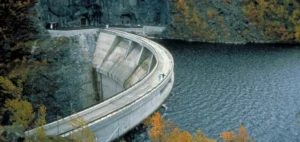
Un plan d’investissement de €35mn ($38mn) sera déployé sur trois ans pour améliorer la productivité et la résilience du parc existant. Ce programme prévoit notamment l’augmentation de la puissance sur plusieurs barrages situés sur le Lot et le Tarn, le renforcement de la stabilité du barrage de Fumel, ainsi que des travaux de continuité écologique.

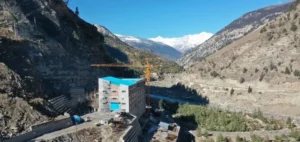
Deux aménagements à Lourdes feront l’objet d’une reconstruction intégrant des turbines ichtyocompatibles. En parallèle, la centrale de Valloirette, actuellement en phase finale de construction, représente un investissement de €9mn ($9.8mn). D’une puissance de 3 MW, elle produira 11,6 GWh par an.

Contrats long terme et réponse aux besoins du réseau

Hydrocop a conclu un contrat d’achat d’électricité de 15 ans avec ses entreprises locales d’énergie actionnaires, destinées à alimenter leurs clients en énergie renouvelable. L’optimisation des actifs permet de mieux intégrer la production au réseau tout en assurant une meilleure sécurité d’approvisionnement.

Le groupe engage également des projets d’hybridation entre centrales hydroélectriques et batteries stationnaires. Ces installations visent à lisser la production et à fournir de la puissance en période de pointe. Hydrocop prépare aussi la mise en œuvre de petites stations de transfert d’énergie par pompage (STEP), dont un premier projet adossé à un ouvrage existant.

Vers un parc plus flexible et interconnecté

Plusieurs centrales seront progressivement intégrées aux mécanismes de réserve secondaire et d’ajustement. Ces initiatives visent à apporter davantage de pilotabilité au réseau électrique tout en renforçant la valeur des actifs détenus.

Hydrocop a été accompagné dans cette opération par Astris Finance France. Frédéric Bouvier, Président du groupe, a indiqué que ce refinancement permettait de “faire bénéficier les entreprises locales actionnaires d’une production d’énergie locale et responsable”. Le Directeur général Jean-Éric Carré a souligné que les projets en cours posaient les bases d’un parc “plus efficace, plus flexible et plus utile au quotidien des territoires”.
Indian Prime Minister Narendra Modi inaugurated the Punatsangchhu-II plant in Bhutan, strengthening India’s energy presence in the Himalayas and reinforcing a strategic partnership built around electricity exports.
Mass Megawatts unveils a new low-cost hydroelectric system with a payback period of under two years at optimal sites, relying on modular structures and standardised components.
Japan’s infrastructure ministry has appointed a TEPCO Renewable Power-led consortium to build a 2.3MW power plant at Yunishigawa Dam, the first public-private partnership under the government’s new hybrid model.
Cameroon’s Ministry of Finance is negotiating a bank credit to guarantee payments owed to NHPC, as Éneo’s financial situation jeopardises the Nachtigal hydropower plant.
The Cameroonian government plans to build ten low-capacity hydropower plants over the next five years as part of a national programme to strengthen energy infrastructure across the country.
Energyminer begins installation of 124 floating generators on the Rhine in St. Goar, marking the first official permit for a large-scale hydrokinetic park in Germany.
Swedish ocean energy developer Minesto joined a high-level trade mission to South Korea to explore new cooperation opportunities in marine energy.
The Tokyo Bureau of Transportation is seeking a new electricity retailer for the output of its three hydropower plants, with a portion resold to power the city’s transport infrastructure.
Qatar’s sovereign wealth fund has raised its stake to approximately 15% in ISAGEN, one of Colombia’s leading power producers, through a $535mn investment alongside Brookfield.
New Delhi plans to allocate INR6.4tn ($77bn) to develop transmission infrastructure for 76 GW of electricity from the Brahmaputra Basin by 2047, amid growing cross-border pressures.
Moscow strengthens industrial joint ventures with Tajikistan by leveraging hydropower, agriculture, and mining in a strategy based on mutual interest and economic complementarity.
Gabon has signed a memorandum of understanding with Italy’s Todini to develop two hydropower plants in Booué and Tsengué-Lélédi, with an estimated value of $1.78 billion to address electricity shortages.
Le groupe Axian renforce son portefeuille énergétique avec le projet de barrage de Volobe à Madagascar, une initiative estimée à $670mn visant à étendre l’accès à l’électricité dans un pays en proie à de fortes tensions sociales.
Nagano Prefecture has commissioned a new 1.5MW hydropower plant to supply Seiko Epson’s Ina facility under a sleeved power purchase agreement managed by Chubu Electric Power Miraiz.
The Senate's economic affairs committee recommends including the reform of the legal framework for dams in the upcoming energy bill to avoid competitive tendering, following a principle agreement between Paris and Brussels.
The Canadian government is investing nearly CAD17mn ($12.4mn) to support two hydroelectric initiatives led by Indigenous communities in Quebec, aiming to reduce diesel dependency in remote regions.
Federal funding targets FORCE’s PICO platform and an Acadia study on fish–turbine collision risks, aiming to reduce regulatory uncertainty and accelerate industrial adoption in the Bay of Fundy.
The Norwegian operator plans to install a third turbine to capture part of today’s bypassed floodwater without changing the flow on the salmon stretch; commissioning would be at the earliest in 2030. —
Norway’s Statkraft continues its exit from the Indian market with the sale of its Tidong hydropower project to JSW Energy, which strengthens its asset portfolio in Himachal Pradesh.
Eco Wave Power and BladeRanger have unveiled a first-of-its-kind drone-powered maintenance system for onshore wave energy infrastructure, aimed at reducing operational costs and improving system performance.

All the latest energy news, all the time

Annual subscription

8.25$/month*

*billed annually at 99$/year for the first year then 149,00$/year ​

Unlimited access - Archives included - Pro invoice

Monthly subscription

Unlimited access • Archives included

5.2$/month*
then 14.90$ per month thereafter

*Prices shown are exclusive of VAT, which may vary according to your location or professional status.

Since 2021: 30,000 articles - +150 analyses/week.