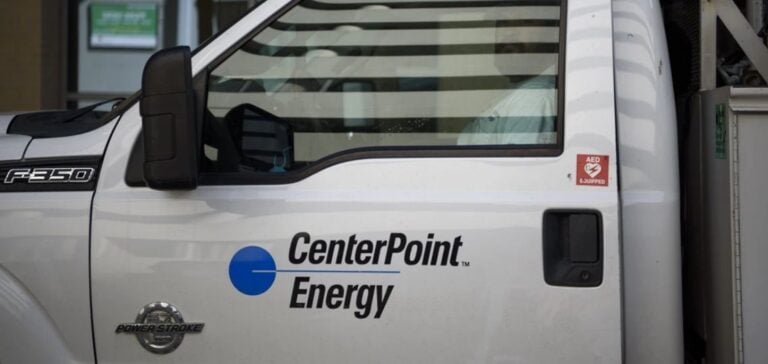
National Fuel acquires CenterPoint’s Ohio gas assets for $2.62bn

National Fuel Gas Company acquires CenterPoint Energy’s natural gas distribution business in Ohio, doubling the size of its regulated portfolio and expanding its footprint in the US Midwest.

Share:

Comprehensive energy news coverage, updated nonstop

Annual subscription

8.25€/month*

*billed annually at 99€/year for the first year then 149,00€/year ​

Unlimited access • Archives included • Professional invoice

OTHER ACCESS OPTIONS

Monthly subscription

Unlimited access • Archives included

5.2€/month*
then 14.90€ per month thereafter

FREE ACCOUNT

3 articles offered per month

FREE

*Prices are excluding VAT, which may vary depending on your location or professional status

Since 2021: 35,000 articles • 150+ analyses per week

National Fuel Gas Company announced it has entered into a definitive agreement to acquire CenterPoint Energy’s natural gas distribution operations in Ohio for a total consideration of $2.62bn. The transaction, conducted on a cash-free, debt-free basis, will allow National Fuel to double the size of its regulated rate base and increase cash flow diversity in a jurisdiction supportive of natural gas.

The deal includes all equity interests of CenterPoint Energy Resources Corp. in CNP Ohio, encompassing approximately 5,900 miles of distribution and transmission pipeline, serving nearly 335,000 residential, commercial, industrial and transportation customers. These customers collectively consume about 60 billion cubic feet of natural gas annually. Closing is expected in the fourth quarter of 2026, pending review by the Public Utilities Commission of Ohio and other standard regulatory approvals.

Strategic expansion into neighbouring state

By entering the Ohio market, National Fuel extends its operations into a third state adjacent to its current footprint in New York and Pennsylvania. The combined gas distribution portfolio will serve 1.1 million customers across three cold-weather states. The company’s consolidated regulated rate base will reach approximately $3.2bn, rebalancing its business mix towards more stable and predictable activities.

Ohio’s regulatory and political environment is considered favourable to gas infrastructure investments, with mechanisms allowing timely recovery of capital expenditures. The acquisition gives National Fuel new reinvestment opportunities for free cash flow generated from its upstream and gathering segments.

Financing structure and credit profile

The acquisition will be funded through a mix of debt, free cash flow and a limited equity issuance, with the objective of maintaining the company’s investment-grade credit rating. National Fuel expects the transaction to be immediately accretive to regulated earnings per share, excluding acquisition-related costs.

The acquisition is expected to have a neutral impact on adjusted consolidated results for fiscal 2028, the first full year post-closing, and to become accretive thereafter. By increasing its regulated revenue share, the company strengthens its financial profile and long-term dividend outlook, with an uninterrupted dividend record since 1902.

Workforce integration and service continuity

CNP Ohio employees will join National Fuel’s workforce, with the company aiming for a seamless service transition. National Fuel intends to uphold the current standards of safety and reliability for existing customers while leveraging operational and cultural compatibility between the two entities.

The acquisition represents a key step in National Fuel’s strategy to grow its regulated business by integrating adjacent assets within its historical geographic footprint.

Budapest contests the European agreement to ban Russian natural gas imports by 2027, claiming the measure is incompatible with its economic interests and the European Union's founding treaties.
The European Union has enshrined in law a complete ban on Russian gas by 2027, forcing utilities, operators, traders and states to restructure contracts, physical flows and supply strategies under strict regulatory pressure.
The partial exploitation of associated gas from the Badila field by Perenco supplies electricity to Moundou, highlighting the logistical and financial challenges of gas development in Chad.
A new regulation requires gas companies to declare the origin, volume and duration of their contracts, as the EU prepares to end Russian imports.
Saudi Aramco has launched production at the unconventional Jafurah gas field, initiating an investment plan exceeding $100bn to substitute domestic crude and increase exportable flows under OPEC+ constraints.
By mobilising long-term contracts with BP and new infrastructure, PLN is driving Indonesia’s shift toward prioritising domestic LNG use, at the centre of a state-backed investment programme supported by international lenders.
TotalEnergies, TES and three Japanese companies will develop an industrial-scale e-gas facility in the United States, targeting 250 MW capacity and 75,000 tonnes of annual output by 2030.
Argentinian consortium Southern Energy will supply up to two million tonnes of LNG per year to Germany’s Sefe, marking the first South American alliance for the European importer.
The UK government has ended its financial support for TotalEnergies' liquefied natural gas project in Mozambique, citing increased risks and a lack of national interest in continuing its involvement.
Faced with a climate- and geopolitically-constrained winter, Beijing announces expected record demand for electricity and gas, placing coal, LNG and UHV grids at the centre of a national energy stress test.
The Iraqi government and Kurdish authorities have launched an investigation into the drone attack targeting the Khor Mor gas field, which halted production and caused widespread electricity outages.
PetroChina internalises three major gas storage sites through two joint ventures with PipeChina, representing 11 Gm³ of capacity, in a CNY40.02bn ($5.43bn) deal consolidating control over its domestic gas network.
The European Union is facilitating the use of force majeure to exit Russian gas contracts by 2028, a risky strategy for companies still bound by strict legal clauses.
Amid an expected LNG surplus from 2026, investors are reallocating positions toward the EU carbon market, betting on tighter supply and a bullish price trajectory.
Axiom Oil and Gas is suing Tidewater Midstream for $110mn over a gas handling dispute tied to a property for sale in the Brazeau region, with bids due this week.
Tokyo Gas has signed a 20-year agreement with US-based Venture Global to purchase one million tonnes per year of liquefied natural gas starting in 2030, reinforcing energy flows between Japan and the United States.
Venture Global accuses Shell of deliberately harming its operations over three years amid a conflict over spot market liquefied natural gas sales outside long-term contracts.
TotalEnergies ends operations of its Le Havre floating LNG terminal, installed after the 2022 energy crisis, due to its complete inactivity since August 2024.
Golar LNG has completed a $1.2bn refinancing for its floating LNG unit Gimi, securing extended financing terms and releasing net liquidity to strengthen its position in the liquefied natural gas market.
Woodside Energy and East Timor have reached an agreement to assess the commercial viability of a 5 million-tonne liquefied natural gas project from the Greater Sunrise field, with first exports targeted between 2032 and 2035.

All the latest energy news, all the time

Annual subscription

8.25€/month*

*billed annually at 99€/year for the first year then 149,00€/year ​

Unlimited access - Archives included - Pro invoice

Monthly subscription

Unlimited access • Archives included

5.2€/month*
then 14.90€ per month thereafter

*Prices shown are exclusive of VAT, which may vary according to your location or professional status.

Since 2021: 30,000 articles - +150 analyses/week.